Author: Administrator

  • Ghanaian Businesses Expanding Into the U.S. Market Through Cultural Festivals

    Ghanaian Businesses Expanding Into the U.S. Market Through Cultural Festivals

    Ghanaian cultural festivals in the United States have matured into strategic commercial gateways, transforming community gatherings into platforms for market expansion. Ghanafest in Chicago and Ga Homowo celebrations across major American cities now function as annual entry points for Ghana domiciled companies seeking to engage the diaspora, build brand visibility, and introduce products tailored to the needs of Ghanaians abroad. These festivals attract thousands, creating a concentrated audience of consumers who maintain strong emotional and financial ties to Ghana.

    The Enterprise Insurance Stand At The Recent Homowo Celebrations In Bolingbrook

    In recent years, banks, insurance firms, media houses, and service providers from Ghana have increasingly recognized the value of these gatherings. They now travel to the United States to meet the diaspora where they are, presenting products that address real challenges faced by Ghanaians living abroad. Enterprise Life’s introduction of its AkwantuPa policy at the Homowo celebrations in Bolingbrook this year is a clear example of how Ghanaian companies are using cultural festivals to expand into the U.S. market.

    Enterprise Life’s AkwantuPa, A Case Study in Cross Border Market Strategy

    Enterprise Life’s presence at Bolingbrook demonstrates a deliberate and well informed approach to diaspora engagement. The company identified a persistent burden carried by Ghanaians abroad; the emotional and financial strain of funeral planning for loved ones in Ghana.

    AkwantuPa, branded as Insurance Beyond Borders, allows Ghanaians living abroad to insure family members in Ghana. The policy provides immediate financial support during bereavement, discounted funeral services through Enterprise Transitions, and a full refund of risk premiums after a minimum of fifteen years.

    By introducing this product at Ghanafest, Enterprise Life positioned itself as a Ghanaian company ready to serve the diaspora directly within the U.S. market. The strategy reflects an understanding that cultural festivals are not only celebrations but also commercial corridors.

    Better Terms, Bigger Benefits, Stronger Market Presence

    AkwantuPa’s strength lies in its combination of cultural relevance and financial innovation. Its benefits include:

    • Immediate support for families during bereavement
    • Discounted funeral services through Enterprise Transitions
    • Risk premium refund after fifteen years
    • Coverage up to GHS70000 for loved ones in Ghana
    • Diaspora friendly policy management designed for customers abroad

    These features make AkwantuPa one of the most diaspora responsive insurance products offered by a Ghanaian company.

    Festivals as Commercial Gateways for Ghanaian Companies

    Enterprise Life’s participation at Homowo celebrations reflects a broader trend in Ghana’s corporate landscape. Cultural festivals in the United States now provide:

    • Direct access to thousands of potential customers
    • Opportunities to build brand recognition within diaspora communities
    • Platforms for product demonstrations and customer education
    • A culturally aligned environment that encourages trust and engagement

    Ghanafest and Ga Homowo have become commercial launchpads where Ghana domiciled companies can test products, gather feedback, and establish a presence in the U.S. market without the high cost of traditional expansion. Enterprise Life’s AkwantuPa stands as a model of how Ghanaian businesses can successfully leverage these festivals to connect with customers and introduce services that meet diaspora needs.

    Their website: https://mobilife.enterprisegroup.net.gh/

  • The Man Who Outran The Internet: How Mr. CNN Became The First Digital Chronicler Of Otumfuo’s Global Journeys

    The Man Who Outran The Internet: How Mr. CNN Became The First Digital Chronicler Of Otumfuo’s Global Journeys

    Dr. Charles Nimmo Ntiamoah Mensah, affectionately known across the diaspora as Mr. CNN, emerged in the late 1990’s and late 2000’s as a force which propelled Ghanaian digital media, home and abroad , into a new age. At a time when the internet was still a cautious experiment in many Ghanaian homes, he was already shaping it into a powerful bridge between a nation and its global community.

    His rise was not accidental. It was driven by instinct, discipline, and an unrelenting belief that Ghana’s stories deserved a global stage. That conviction led him to one of the most defining chapters of his career, a chapter that would forever link his name with the Asante monarchy.

    As a journalist for Ghanaweb.com, Mr. CNN became the chronicler of Otumfuo Osei Tutu II’s international engagements, documenting the Asantehene’s travels to London, Atlanta, and Boston in 2003 and 2004. These were historic journeys, rich with diplomacy, culture, and the quiet power of a monarch strengthening ties with his people abroad. Long before social media made instant updates a norm, Mr. CNN delivered coverage that felt immediate, human, and profoundly connected.

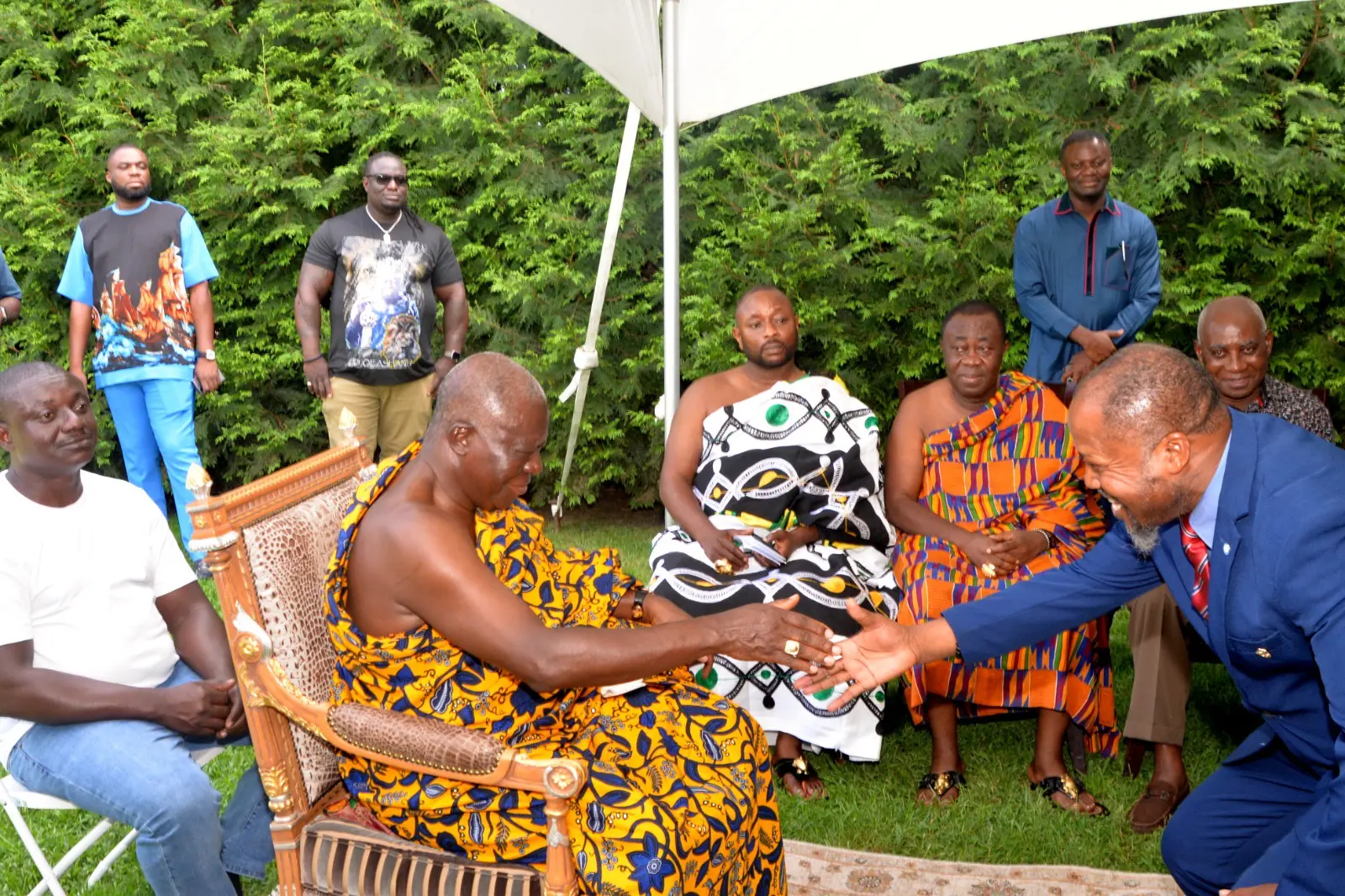
    His reporting captured not only the grandeur of the events but the intimacy of a King meeting his subjects far from home. The pinnacle of this era came when Otumfuo recently welcomed his people into his Maryland residence, a gesture of humility and unity that resonated deeply across the diaspora. In that moment, the monarch paused to acknowledge the journalist who had followed his steps with unwavering loyalty. With commendation and gratitude, Otumfuo honored Mr. CNN for his long term dedication, recognizing him as more than a reporter, but as a custodian of memory.

    Years later, Dr. Charles Nimmo Ntiamoah Mensah embraced a new calling as an ordained minister of God, yet his legacy in journalism remains indelible. He was the man who documented history before the world learned to scroll, the digital pioneer who ensured that an era would never be forgotten.

    His story stands as a testament to foresight, devotion, and the rare courage to preserve greatness in real time.

    Play

  • The Death Of Discourse And The Rise Of Dismissive Rhetoric: An op‑ed by Daniel Nii Okine

    The Death Of Discourse And The Rise Of Dismissive Rhetoric: An op‑ed by Daniel Nii Okine

    In the contemporary public square, a troubling erosion of civic engagement is underway. Increasingly, individuals confronted with an opposing viewpoint abandon the discipline of argumentation and instead resort to dismissive rhetoric. The target becomes the writer, not the reasoning. The tone becomes the battleground, not the evidence. What should be a contest of ideas collapses into a performance of avoidance.

    Common dismissals now dominate public exchanges:

    • Dismissive ad hominem such as “You clearly have no idea what you are talking about.”
    • Format attacks such as “Your write‑up is a thesis nobody asked for.”
    • Blanket invalidations such as “You sound completely confused.”
    • Tone policing such as “Calm down.”

    These are not rebuttals. They are rhetorical smokescreens designed to avoid engagement with substance.

    Anatomy Of The Evasion

    The architecture of dismissive rhetoric is predictable. When a responder lacks evidence, clarity, or the willingness to engage, they retreat into familiar fallacies.

    1. Dismissive ad hominem
      This tactic shifts attention from the validity of the argument to the perceived credibility of the speaker. It is a maneuver used when the argument itself is too inconvenient to confront.
    2. Meta‑policing
      Attacks on tone, length, or structure serve as a convenient detour away from substance. Labeling a detailed argument as “too long” is not critique; it is an admission of intellectual fatigue.
    3. Blanket invalidation
      Sweeping declarations that an author “does not know what they are talking about” offer no evidence. They function as rhetorical shortcuts meant to silence rather than engage.

    Why People Attack The Messenger

    Substantive engagement demands effort. Dismissive rhetoric demands none. This imbalance explains its popularity.

    Motivations include:

    • Ego preservation: Confronting a strong argument threatens personal certainty.
    • Low cognitive load: Insults require seconds; research requires discipline.
    • Social signaling: In many online spaces, dismissiveness is a badge of group identity.

    The Cost To Public Dialogue

    The consequences of this rhetorical decline are profound.

    • Intellectual flattening: Complex issues are reduced to simplistic narratives.
    • Self‑censorship: Thoughtful contributors withdraw, leaving discourse dominated by the least reflective voices.
    • Polarization: Personal attacks entrench positions rather than illuminate truth.

    Moving Toward Healthy Argumentation

    Disagreement is essential to democratic and intellectual life. What threatens discourse is not disagreement but the refusal to engage with substance.

    Improper Expression Proper Expression
    Blanket dismissal “I disagree because the data shows…”
    Format attack “Let us examine your second claim…”
    Ad hominem “There seems to be a contradiction between point A and point B…”

    The remedy is simple but demanding: return the conversation to evidence. When confronted with dismissive rhetoric, the most effective response is to insist on substance.

    “You have attacked my intelligence, but not my evidence. Which specific point do you disagree with, and why?”

    This question exposes evasion and re‑centers the discussion where it belongs: on ideas, not insults.

  • Goldbod Audited Accounts Dispel False Claims Of Loss — A Definitive, Evidence‑Backed Verdict By Sankofaonline’s Financial Editorial Board

    Goldbod Audited Accounts Dispel False Claims Of Loss — A Definitive, Evidence‑Backed Verdict By Sankofaonline’s Financial Editorial Board

    The audited financial statements of the Ghana Gold Board for the year ended 31 December 2025 deliver a decisive, unambiguous, and nationally consequential message: GoldBod did not record any loss. Not a single line in the Auditor‑General’s report hints at financial distress, deficit, or erosion of value. Instead, the accounts confirm a commanding surplus that places GoldBod among the most liquid, disciplined, and strategically vital public institutions in Ghana’s mineral economy.

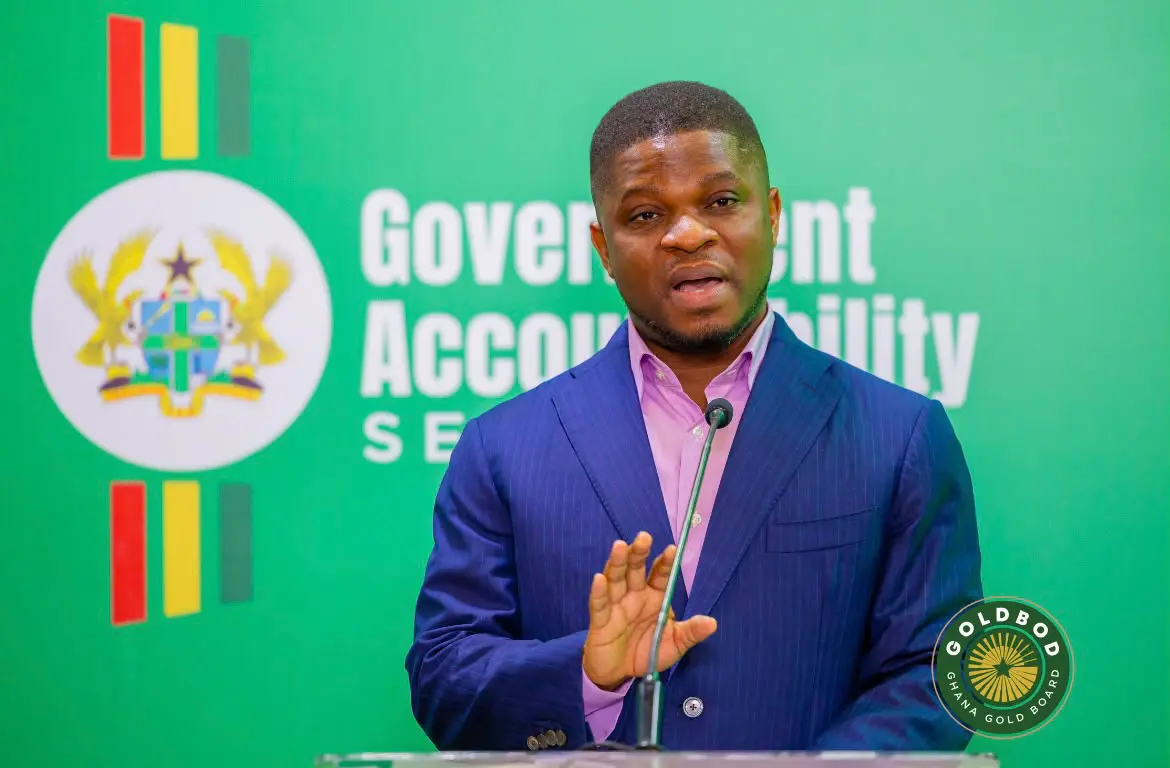
    The Chief Executive Officer of the Ghana Gold Board (GoldBod), Sammy Gyamfi

    But last year’s audit did not arrive in a vacuum. It landed in the middle of intense public debate, political accusation, and widespread misinformation, particularly claims by the Minority Leader of Parliament, Hon. Afenyo‑Markin, and others alleging that GoldBod had made losses and mismanaged public resources. These allegations generated public anxiety, media speculation, and partisan commentary.

    Given the gravity of the claims and the national importance of the gold sector, Sankofaonline’s Financial Editorial Board activated its highest review protocol. The Board undertook a painstaking, line‑by‑line examination of the audited report, cross‑checked related financial disclosures, reviewed parliamentary commentary, and analysed all available public records to determine the truthfulness of the accusations. The results are unequivocal.

    Findings from Sankofaonline’s independent financial review: Audited surplus — GoldBod posted a historic surplus of GHS 5,443,990,347 after exceptional items. This is not a marginal gain; it is a transformative financial outcome that dwarfs previous years and confirms the success of consolidating gold governance under a single statutory authority.

    Revenue strength — Total revenue reached GHS 5.55 billion, driven by GHS 970.7 million in non‑tax revenue, GHS 558.1 million from Gold Aggregation service charges, and GHS 337.4 million from assay fees. These figures reflect a sector finally formalised, disciplined, and protected from leakages.

    Cost discipline — Operational expenditure was contained at GHS 109.3 million, a reduction from the previous year. Employee compensation, specialised expenses, and goods and services were all managed with rare public‑sector prudence.

    Balance sheet strength — Total assets stood at GHS 9.55 billion, anchored by GHS 8.77 billion in cash and cash equivalents. Liabilities of GHS 3.94 billion, primarily trade payables to the Bank of Ghana, reflect the scale of operations rather than financial strain. Net assets of GHS 5.6 billion confirm liquidity, solvency, and long‑term viability.

    Policy validation — The audit confirms that establishing GoldBod as the sole authority for gold purchasing, exporting, assaying, licensing, and compliance was a strategic national intervention that has yielded immediate and substantial returns.

    Accusations versus evidence — After reviewing every claim, every figure, and every public statement, Sankofaonline’s Financial Editorial Board found no evidence whatsoever to support the allegation that GoldBod made losses. The accusations collapse under scrutiny. The audited report stands firm.

    A more persuasive truth: What the numbers actually mean- GoldBod’s 2025 performance is not just an accounting triumph; it is a national economic milestone. It proves that Ghana’s gold economy, long weakened by fragmentation, smuggling, and regulatory inconsistency, can become a disciplined engine of liquidity and macroeconomic stability when properly governed.

    It demonstrates that formalisation is not theoretical; it is profitable. Consolidation is not political; it is economically strategic. Discipline is not optional; it is transformative. GoldBod’s surplus is not merely a financial outcome; it is a policy victory, a governance success, and a national reassurance that Ghana’s mineral wealth can be protected, multiplied, and channelled toward national development.

    The final verdict and the bang :After exhaustive review, Sankofaonline’s Financial Editorial Board concludes that GoldBod did not make losses. GoldBod did not mismanage funds. GoldBod did not fail. Instead, GoldBod delivered one of the strongest audited surpluses in Ghana’s mineral governance history.

    The allegations of loss are false, misleading, and unsupported by any credible financial evidence. In an era where misinformation travels faster than facts, the 2025 audited accounts stand as a towering reminder that numbers do not lie, even when people do.

    GoldBod’s performance is not just a rebuttal. It is a national triumph, and no amount of political noise can drown out the sound of a GHS 5.44 billion surplus.

    View or download the Audited Report from Here

  • Video of Ghanaian Police Officer Defending Citizens Right to Record Police Activities Goes Viral

    Video of Ghanaian Police Officer Defending Citizens Right to Record Police Activities Goes Viral

    Sankofaonline Special Indepth Report

    A powerful and unusually candid message from within the Ghana Police Service has ignited national conversation and reshaped public debate on police accountability. A video posted by “we love Ghana” circulating across social media shows a senior police officer delivering a calm, firm and unapologetic reminder that citizens have every right to record police officers performing their duties in public spaces. His message is simple, direct and legally sound, and it has resonated across Ghana and beyond.

    In the widely shared footage, the officer states that any police officer acting lawfully should have no fear of being recorded. He addresses the tension that often arises during traffic stops and street encounters, noting that the environment is a public space and the recording device does not belong to the police. His remarks challenge a long standing pattern in which citizens attempting to film police activity face intimidation, forced deletion of footage or wrongful arrest.

    The officer’s position is not merely a personal opinion. It is grounded firmly in Ghana’s constitutional and statutory framework, which protects the public’s right to document official conduct. The legal foundation is clear and unambiguous:

    • Constitutional Protection, Article 21 clause 1 subsection f of the 1992 Constitution guarantees freedom of information, which includes recording public officials performing their duties in public spaces.
    • Public Domain Principles, under Ghanaian common law, public spaces carry no reasonable expectation of privacy, and officers operating on public roads, checkpoints or public facilities are subject to public scrutiny.
    • Police Service Act, the Police Service Act of 1970 and its regulations contain no provision that criminalizes filming an officer, provided the individual does not obstruct lawful police work.
    • Definition of Obstruction, legal experts consistently affirm that recording is not obstruction. Obstruction requires physical interference or active disruption, not passive documentation from a safe distance.

    This moment represents a significant shift in the relationship between citizens and law enforcement. By openly acknowledging that transparency strengthens public trust, the officer has reinforced a critical civic right and challenged his colleagues to uphold the highest standards of professional conduct. His message arrives at a time when smartphone cameras have become essential tools for accountability, and when public confidence in law enforcement depends increasingly on openness rather than intimidation.

    As the video continues to trend, civil society groups hope that this stance will evolve from a viral moment into a standard operational culture across the Ghana Police Service. The officer’s words carry weight because they come from within the institution itself, and they signal a growing recognition that accountability is not an adversary of policing but an ally of professionalism.

    If you want this turned into a front page headline, a broadcast script, or a Sankofaonline editorial series, choose whether you want a front page version, a broadcast script, or a special editorial series.