Category: Politics

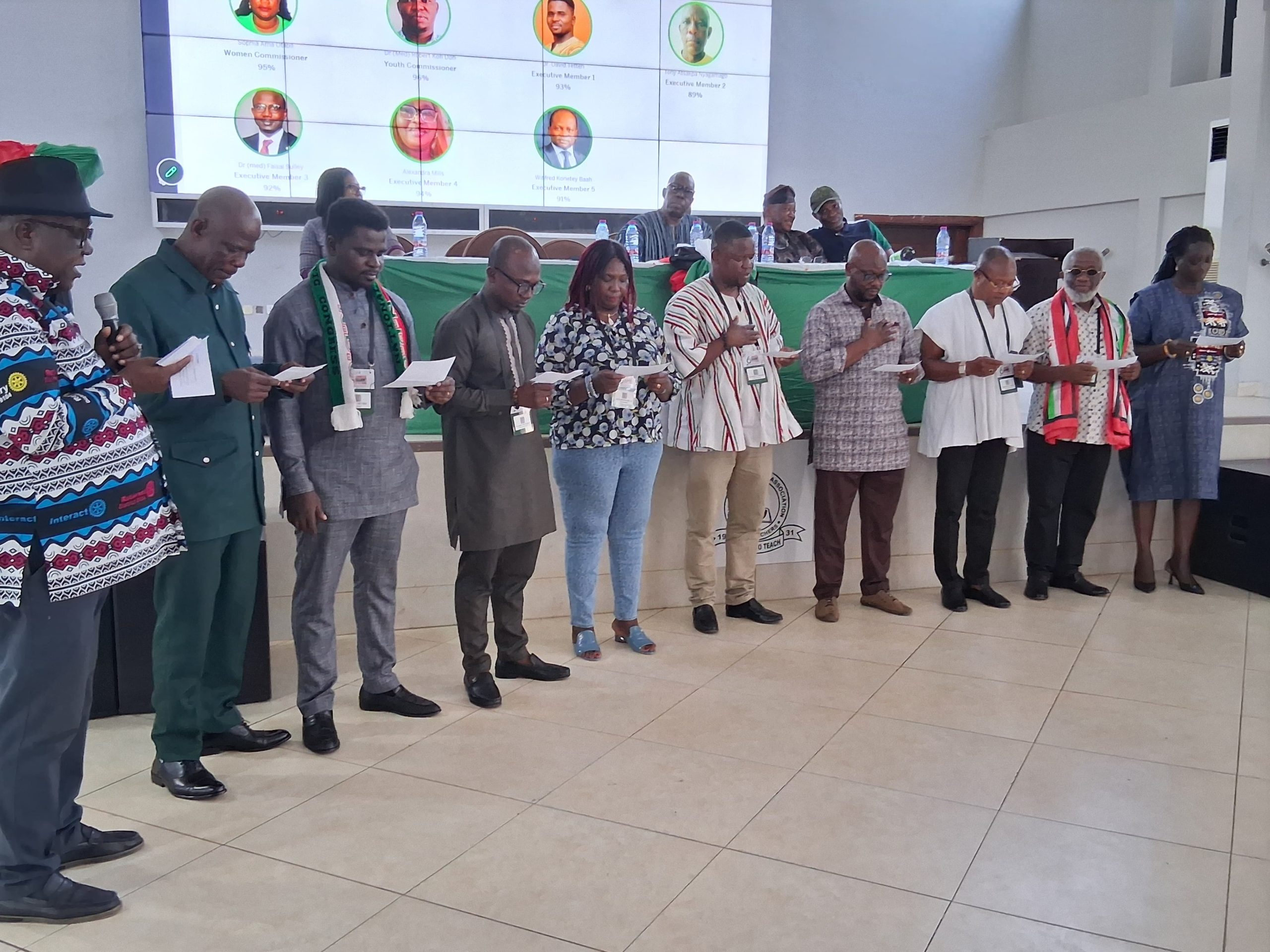
  • Dr. David Tetteh has been elected and sworn in as a member of the National Executive Committee (NEC) of the NDC Professionals Forum.

    Dr. David Tetteh has been elected and sworn in as a member of the National Executive Committee (NEC) of the NDC Professionals Forum.

    Dr. Tetteh is a pharmacist and marketing professional who currently serves as a member of the Governing Board of the National Health Insurance Authority (NHIA). 

    He brings extensive experience in pharmacy practice, pharmaceutical marketing, and health policy implementation to support ongoing reforms in Ghana’s health insurance system.

    His election as an NEC member comes at a pivotal time, as the Professionals Forum prepares to take its activities to the next level through stronger policy engagement, professional mobilisation, and strategic support for the party’s national agenda.

    Over the years, Dr. Tetteh has distinguished himself through various key roles within the NDC and the Professionals Forum, including Branch Chairman, National Operations Coordinator for the Young Professionals Forum, Director of Research for the Western North Regional Communications Bureau, and Constituency Collation Officer during the 2024 general elections.

    He has consistently championed stronger health financing, improved access to essential medicines, and evidence-based policies as core pillars of the party’s social democratic vision.

    His election therefore signals a renewed commitment by the Professionals Forum to harness the expertise of seasoned professionals with proven track records in service, research, and organisational leadership. 

    This will help deepen the Forum’s relevance, sharpen its policy proposals, and strengthen its support for an NDC government in delivering the party’s social and economic transformation agenda.

    The new executives are led by Prof. Nana Ama Browne Klutse, a distinguished academic and climate scientist, who serves as the current Chief Executive of the Environmental Protection Agency (EPA). 

    She is expected to guide the professional wing of the party towards greater relevance, cohesion, and policy influence.

    Attached is the full list of the other members of the Executive Committee.

    TOTAL NUMBER OF VOTERS1385 
    TOTAL NUMBER OF VOTED636 
    PERCENTAGE  TURNOUT45.92% 
    PRESIDENT
    Name of ContestantNUMBER OF VOTESPERCENTAGE OF VOTES
    Prof. Nana Ama Browne Kluste57791%
       
    FIRST VICE PRESIDENT
     NUMBER OF VOTES PERCENTAGE OF VOTES
    SAMUELHANS WAUKU 41465%
    MICHAEL DAMOAH22335%
       
    SECRETARY GENERAL
    EBEN-KAY-KWABENA HODO34053%
    ARNOLD APPIAH29647%
       
    DEPUTY SECRETARY GENERAL
    DR. JOSHUA  DOE60395%
       
    WOMEN COMMISSION
    SOPHIA AMA OTABIL60595%
       
    YOUTH COMMISSION
    DR. ROBERT DOH61096%
       
    EXECUTIVE MEMBERS POSTIONS
    ALEXANDRA MILLS59794%
    DR. DAVID TETEH58993%
    DR. FIASAL SULLEY58892%
    WINFRED BAAH58191%
    TONY ATSAKPA NYAGAMAGO56489%
  • NPP Chairmanship race takes structural turn as independent survey reveals clear front-runner

    NPP Chairmanship race takes structural turn as independent survey reveals clear front-runner

    The contest for the New Patriotic Party’s next National Chairman appears to be moving beyond personality politics and into a more strategic phase, according to a new independent survey analysis conducted by Sam Mbura in March 2026. With 592 respondents sampled, the findings suggest that delegates and party watchers are increasingly focused on organisational strength, unity, broad acceptability, and leadership competence rather than mere visibility or factional popularity.

    This emerging pattern indicates that respondents are assessing the race through the lens of party recovery, internal management, and electoral preparedness. Rather than rewarding noise or name recognition alone, the data suggests a preference for candidates viewed as institution-builders. That shift could become decisive as the contest matures.

    Clear front-runner emerges

    At the centre of the survey is a striking headline result: Dr. Sammy Crabbe emerges as the leading candidate with 70.8percent support, placing him far ahead of the nearest challenger, Mr. Boakye Agyarko, who records 22.6percent. Other aspirants remain in single digits. The result gives Crabbe a lead margin of 48.1 percentage points, a sizeable gap in any competitive internal political race.

    Such a margin is not merely symbolic. It suggests a strong concentration of early confidence around one candidate, especially in a field featuring several known names. In political terms, this can shape perceptions of momentum, viability, and electability. Candidates seen as capable of winning often attract undecided supporters over time.

    Graph 1: Vote Share by Candidate

    As shown in Graph 1, support is heavily concentrated around one candidate, with the rest of the field trailing significantly

    Support is highly consolidated

    The survey results suggest the race is not currently fragmented across multiple camps. Instead, support appears clustered around a single leading option. This matters because internal party elections often begin with divided camps, regional blocs, and competing power centres. Where one candidate commands more than two-thirds support at this stage, analysts often interpret it as evidence of either early consensus formation or strong perceived differentiation in leadership credentials. In this case, the numbers suggest both dynamics may be present.

    The pie chart reinforces the scale of concentration and shows how small the remaining candidate shares are in comparison.

    Graph 2: Total Vote Share Distribution

    As illustrated in Graph 2, the vote distribution is highly concentrated, indicating an early consolidation of support

    Consensus candidate indicator

    The second major indicator in the survey is perhaps even more politically important than first-choice support: second preference. Respondents were asked who they would support if their preferred candidate was unavailable. This measure is widely used in political analysis to assess coalition potential and consensus appeal.

    Here again, Dr. Crabbe leads decisively, attracting 63.0percentof second-preference support, while other candidates trail significantly. That matters because internal chairmanship races are often won not only by loyal bases but by candidates capable of drawing support across camps. A candidate who leads both first-choice and second-choice preferences is usually viewed as a bridge-builder and a broadly acceptable figure. In practical terms, it suggests someone who can unite rather than merely mobilise one faction.

    Graph 3: Second Preference Bar Chart
    As shown in Graph 3, the leading candidate also dominates second-preference choices, reinforcing a consensus-leadership narrative

    What respondents want most

    The survey also explored what respondents consider most important in choosing the next National Chairman. The findings reveal a clear hierarchy of priorities. The highest-rated attribute was Ability to Unite Party Factions at 4.88, followed closely by Strategic Direction at 4.84, Transparency at 4.84, Proven Experience at 4.82, and Trust / National Character at 4.82. Respondents also placed strong emphasis on the ability to mobilise grassroots party structures.

    These results suggest that respondents are not primarily searching for confrontation or rhetoric. Instead, they appear to value cohesion, competence, organisational discipline, and credibility. The prominence of unity as the top-rated factor implies that internal healing is a major concern within the party base.

    Graph 4: Leadership Attributes Comparison Chart
    As demonstrated in Graph 4, unity-related leadership qualities rank above all other considerations

    Importance of regional balance

    Another question in the survey focused on whether the party’s national leadership should reflect balanced regional representation. A striking 84.7percent of respondents rated this as Very Important, while only marginal numbers considered it unimportant. This indicates a politically aware respondent base that understands the symbolic and strategic value of inclusivity. In internal party politics, regional balance can influence legitimacy, ticket appeal, and national electoral competitiveness. Respondents appear to be signalling that leadership composition matters alongside individual capability.

    Graph 5: Regional Representation Importance Chart

    As shown in Graph 5, respondents overwhelmingly support balanced regional representation in national leadership

    Structural leadership decision

    Taken together, the data suggests that the NPP chairmanship contest may be evolving into a structural leadership decision rather than a simple popularity contest. Respondents appear to be asking deeper questions:

    Who can unite factions?
    Who can restore trust?
    Who can organise the grassroots?
    Who can help position the party strongly for 2028?

    When the preferred leadership attributes are compared with the vote results, there appears to be a strong alignment between what respondents say they want and whom they currently support. That may explain both the scale of the lead and the strength of second-preference support.

    What this means going forward

    Surveys are snapshots, not final verdicts. Internal races can shift rapidly as endorsements emerge, alliances change, and active delegate campaigning intensifies. However, snapshots remain useful because they reveal the direction of travel.

    In this case, the direction appears clear: toward unity, competence, broad acceptability, and strategic leadership. Any aspirant hoping to remain competitive may now need to demonstrate not only popularity, but also the ability to stabilise and rebuild the party.

    Conclusion

    Three major conclusions emerge from the Mbura survey. First, there is a clear front-runner with a commanding lead. Second, respondents strongly desire leadership capable of uniting factions and rebuilding trust. Third, broad consensus appeal may be as important as first-choice support in determining the final outcome. The race remains open in formal terms, but if this survey accurately reflects current sentiment, it has already entered a new phase—one in which party members are thinking less about personalities and more about the future architecture of victory.
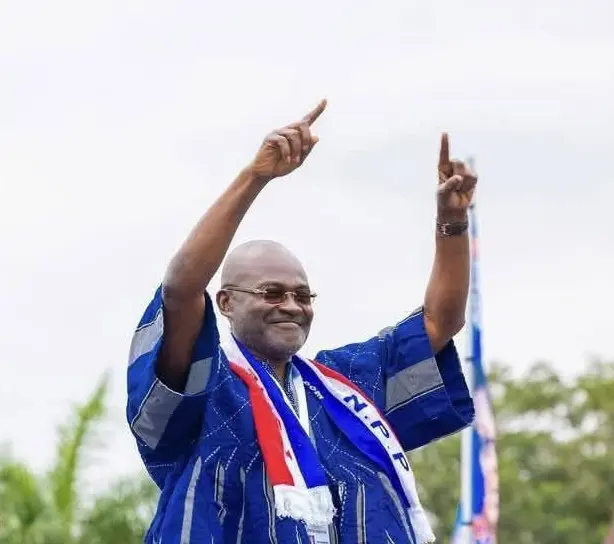
  • Secret Northern Mobilization Sparks Fresh Turmoil Around Kennedy Agyapong

    Secret Northern Mobilization Sparks Fresh Turmoil Around Kennedy Agyapong

    By Daniel Nii Okine | SankofaOnline News Desk

    Fresh reports from the Five Regions of the North suggest a quiet but coordinated mobilization effort allegedly being carried out in the name of Hon. Kennedy Ohene Agyapong, sparking curiosity and concern within NPP circles.

    According to insiders who spoke to SankofaOnline on condition of anonymity, a group of operatives has been holding closed‑door meetings with NPP supporters across the northern belt. In each constituency, the group is said to have selected three individuals to travel to Accra on the 15th of this month for what they describe as a “private engagement” with Kennedy Agyapong at the Oman FM building, Madina Zongo Junction.

    Sources claim the agenda is to build a support bloc that could later be used to announce a collective departure from the NPP. These claims, however, stand in sharp contrast to Kennedy Agyapong’s own public assurances.

    After conceding defeat to Dr. Mahamudu Bawumia in the party’s presidential primaries—widely praised as transparent and peaceful—Agyapong emphatically declared that he remains committed to the NPP and will support the flagbearer going into 2028. His spokesperson, Kwaku Kwarteng, has reinforced this message repeatedly across multiple radio platforms.

    Political watchers note that internal friction is not new to the NPP. The party secured a landslide victory in 2016 despite earlier tensions involving the then National Chairman, General Secretary, First Vice Chairman, and other senior figures.

    Observers also point to the recent example of Alan Kyerematen, whose political rebranding—from the “Afafanto” movement to “U.P. Plus”—did not fundamentally alter the NPP’s structure or momentum.

    Within this context, analysts argue that even if Kennedy Agyapong were to take a similar path, the impact would likely be short‑lived—generating media buzz for a week before fading into the broader political landscape.

    For now, the alleged northern mobilization remains unverified, and Kennedy Agyapong has not commented on the matter. Party supporters nationwide are watching closely as the date of the purported Accra meeting approaches.

  • Boakye Agyarko Formally Declares Intent to Contest NPP Chairmanship

    Boakye Agyarko Formally Declares Intent to Contest NPP Chairmanship

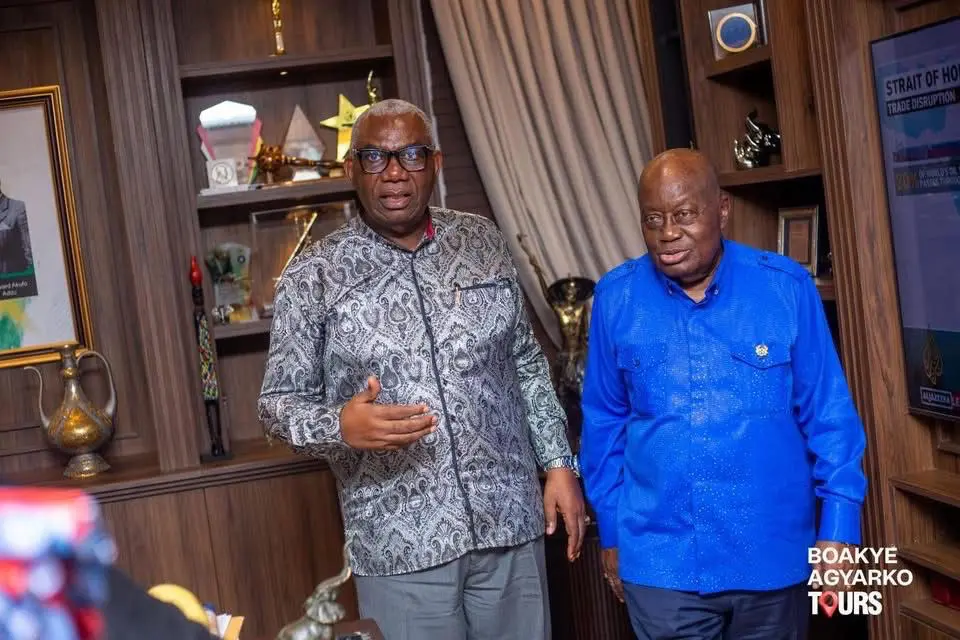
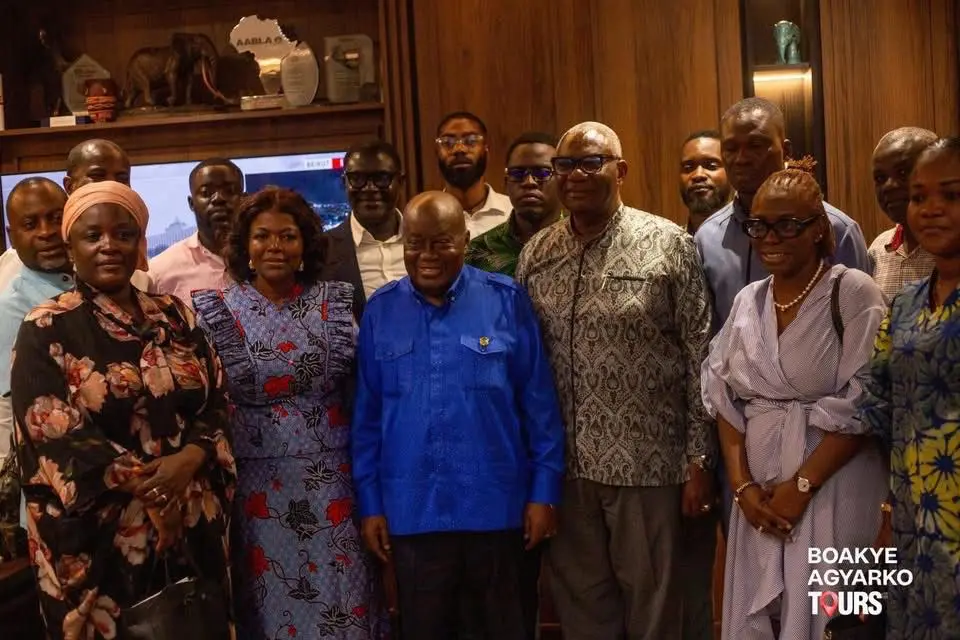
    Boakye Agyarko Kyeremanteng has officially launched his bid for the National Chairmanship of the New Patriotic Party (NPP) following a series of high-level consultative meetings with the party’s most prominent leaders. In a formal move to solidify his candidacy, Mr. Agyarko met with President Nana Addo Dankwa Akufo-Addo to inform him of his intention to seek the party’s top organizational office.

    This engagement follows a strategic sequence of discussions with former President John Agyekum Kufuor and the National Council of Elders, led by Hackman Owusu-Agyemang.
    Mr. Agyarko stated that his campaign is built upon the philosophy of honoring the party’s pioneers while positioning himself as a unifying bridge between the NPP’s historical roots and its future ambitions.

    He emphasized that his primary objective is to strengthen internal party structures to provide a robust organizational foundation for the party’s Flagbearer, Dr. Mahamudu Bawumia, ahead of the 2028 general elections.

    Expressing gratitude for the guidance and encouragement offered by these senior figures, Mr. Agyarko underscored his commitment to restoring the NPP to its full strength through unity and institutional reform.

    Ruth Abla ADJORLOLO

  • NDC Majority Caucus Demands Annulment of Ayawaso East Primaries Over Vote-Buying Allegations

    NDC Majority Caucus Demands Annulment of Ayawaso East Primaries Over Vote-Buying Allegations

    The Majority Caucus of the National Democratic Congress (NDC) in Parliament has formally called for the immediate cancellation of the party’s recently concluded parliamentary primary in the Ayawaso East Constituency.

    In a statement signed by the Majority Leader and Leader of Government Business, Mahama Ayariga, the Caucus cited widely circulated allegations of vote buying as the primary reason for the demand.

    The leadership of the Caucus expressed strong condemnation of the reported conduct, stating that such practices undermine the party’s broader agenda to reset the country’s political landscape.

    Following extensive internal deliberations involving both core and extended leadership, the Caucus resolved to petition the National Executive Committee of the NDC to take decisive action to protect the integrity of the party’s internal democratic processes.

    In addition to the call for the election to be annulled, the Caucus is demanding that any candidate found to have engaged in unethical behavior or financial inducements be disqualified from participating in any future contests.

    The statement emphasized that these measures are necessary to restore public confidence and ensure that the party maintains high ethical standards as it prepares for the upcoming general elections.

    The National Executive Committee is expected to review the matter and issue a formal response regarding the validity of the Ayawaso East results in the coming days.

    Ruth Abla ADJORLOLO