
Category: Articles

  • Beyond the Midnight Market: A Rebuttal to Nana Prof Okatakyi Amanfi VII

    Beyond the Midnight Market: A Rebuttal to Nana Prof Okatakyi Amanfi VII

    By Samuel Akpokavi

    When the Paramount Chief of the Asebu Traditional Area, Nana Prof Okatakyi Amanfi VII, posed the question, “Who buys koobi at midnight?” he delivered a culturally grounded metaphor that resonated widely. It was sharp, memorable, and rooted in the familiar cadence of rural life; yet interpreting the 24‑hour economy as midnight retail activity reduces a complex industrial policy to a village‑market anecdote, and obscures the true mechanics of modern production cycles.

    A 24‑hour economy does not envision market women sitting under lamps at 2:00 AM waiting for households to buy koobi; it envisions agrarian districts like Asebu evolving from daylight‑dependent producers into continuous processing and logistics hubs.

    1:Reimagining the Agrarian Supply Chain, Night Is for Processing

    The traditional farming rhythm, harvest at dawn, sell at noon, spoil by dusk, is precisely the bottleneck that traps rural communities in low‑value cycles.
    In a modernized agricultural system:

    • Night‑shift processing, Koobi and similar produce require cleaning, salting, drying, packaging, and cold storage; facilities operating three shifts allow afternoon harvests to be processed overnight, preventing post‑harvest losses that claim up to 40 percent of Ghana’s produce.
    • Aggregated bulk logistics, Haulage trucks move most efficiently between 10:00 PM and 5:00 AM, avoiding congestion, fuel waste, and heat damage; the midnight buyer is not a household preparing stew, it is an industrial aggregator moving tons of processed goods toward regional distribution.

    2:Infrastructure as the Equalizer

    Operationalizing a 24‑hour economy in agrarian districts requires targeted infrastructure, not merely urban lighting.

    • Time‑of‑use energy tariffs, Reducing industrial electricity tariffs during off‑peak hours makes cold storage, cassava mills, and fish‑curing units significantly cheaper to run at night.
    • Rural security architecture, Night‑patrol units and solar‑grid lighting create safe commercial corridors for shift workers and transport operators.
    • Digital financial inclusion, Mobile money and digital trade platforms operate continuously, enabling contracts, payments, and inventory management across rural‑urban boundaries.

    3:Transforming Rural Youth Employment

    A single‑shift economy limits job creation; if an agro‑processing plant operates only from 8:00 AM to 5:00 PM, it employs one crew.
    Restructuring that same plant to run around the clock yields:

    • Tripled job creation, Additional shifts expand operational, supervisory, security, and logistics roles without requiring new buildings or land.
    • Flexible income models, Youth can work evening or night shifts while using daytime hours for schooling or farming.

    The Verdict

    Nana Prof Okatakyi Amanfi VII’s question offers a valuable cultural reminder, policies must respect local realities; yet true economic leadership requires expanding those realities rather than being confined by them.

    Who buys koobi at midnight? Industrial buyers, export logistics hubs, hotel networks, processing plants, and digital supply chains.
    The 24‑hour economy does not ask Asebu to abandon its sleep patterns; it provides an industrial roadmap ensuring that Asebu’s produce, labor, and economic output retain value every hour of the day.
  • FROM FILTH TO FORTUNE: HOW GHANA’S COMMUNITY SERVICE BILL CAN FINALLY CLEAN ACCRA. 

    FROM FILTH TO FORTUNE: HOW GHANA’S COMMUNITY SERVICE BILL CAN FINALLY CLEAN ACCRA. 

    By; Harry Hammond

    gozaro007@gmail.com

    0244658466 / 0207698171

    For years, I have watched with growing concern as the sanitation crisis in our capital, Accra, deepens. The gutters choked with plastic, the heaps of refuse at Agbogbloshie, Kaneshie, Kwame Nkrumah Circle and our beaches, they tell a story of a beautiful city slowly being buried under its own waste.

    We have tried many things. The monthly National Sanitation Day. The evacuation levies. The engagement of private waste collectors. The ‘Operation Clean Your Frontage’ campaign. The results have been mixed at best, disappointing at worst. Yet we keep doing the same things, deploying the same strategies, and somehow expecting a different result. As the old saying goes, that is the definition of insanity.

    We cannot continue on this path. I believe we have just been handed a golden opportunity, perhaps the closest we have ever come to a sustainable solution, and we are not paying attention. I refer to the Community Service Bill recently signed by the President. For many, this bill is seen narrowly as a penal reform,an alternative to custodial sentences for minor offenders. That is true, but it is much more than that. If we choose to see it differently, it is a national human resource waiting to be harnessed for development. It is free, organized labour that can be deployed for public good, emerging from the misfortune of others who have fallen foul of the law.

    We have quietly told ourselves that we have lost the fight against filth. We whisper it to ourselves when we hold our noses to walk past a drain. We have normalized it. Once in a while, when cholera breaks out or the rains flood the city because the drains are blocked, we pretend to be concerned. We organize press conferences, we issue threats, we clean for a week, and then we return to business as usual. It has become, frankly, hogwash.

    But what if we did it differently this time?

    A small voice, perhaps a voice of conscience and common sense, keeps telling me: If this community service scheme is well managed, well structured, and provided with the right logistics and tools, we will be on the verge of eradicating the sanitation problem in Accra permanently. This problem can be consigned to the history books.

    Imagine this model: Under the supervision of the Department of Social Welfare, the Judicial Service, and the Metropolitan, Municipal and District Assemblies (MMDAs), persons sentenced to community service are formed into well-kitted, trained, and supervised Sanitation Brigades. They are not left to wander. They are provided with gloves, boots, wheelbarrows, shovels, tricycles, and compactors. They are assigned to specific electoral areas, working from 6am to 2pm, to desilt gutters, clear refuse heaps, clean markets, scrub pavements, and maintain public spaces. They are identifiable, accountable, and their service is tracked.

    This is not forced labour; it is lawful, corrective service sanctioned by the courts and recognized worldwide as best practice. It restores dignity to the offender by allowing them to pay back society, and it restores cleanliness to society.

    Yes, initially, this will be capital intensive. You cannot send people to clean without tools. You need personal protective equipment, you need trucks, you need coordination centres, you need supervisors, you need health screening. The state alone cannot bear this cost, especially given our current fiscal constraints.

    This is where stakeholder commitment must come in. This must be seen as a Corporate Social Responsibility (CSR) project of national importance.

    The banks, who benefit from a clean and healthy economy; the oil companies and mining companies, whose operations impact the environment; the telcos, who have branded every corner of this city; the multimedia houses, who shape public perception; and the multinational corporations who call Accra home, all must come together to fund and support this. They can adopt a district. A bank can provide 50 sets of PPE and two trucks for Ablekuma Central. A telco can fund the logistics for AyawasoWest. A mining company can sponsor the recycling and composting component. The media can provide the publicity and the social re-engineering needed to make citizens appreciate the work being done. It is a game changer because it solves three problems at once.

    First, it solves the sanitation problem with a constant, reliable workforce.

    Second, it solves the prison overcrowding problem. Our prisons were not built to hold people who failed to pay a traffic fine or who committed a minor nuisance offence.

    Third, it solves the problem of citizen attitude. When people see offenders cleaning gutters as punishment, it becomes a powerful deterrent against indiscriminate littering. It carries a moral lesson that no amount of preaching has achieved.

    Accra wants to be a modern capital. It cannot be modern with filth. We host the African Continental Free Trade Area Secretariat. We welcome investors and tourists daily. What impression does filth give?

    The Community Service Bill should not be allowed to become just another law on paper. The Ministry of Local Government, Decentralisation and Rural Development, the Ministry of Interior, the Attorney-General’s Department, and the Office of the Head of Local Government Service must sit together now and develop a comprehensive implementation framework with sanitation at its core.

    This is the time to make use of free labour for public good. This is the time to turn our misfortune into a fortune for the city.

    We have lost too many battles against filth quietly. Let us win this war openly, together.

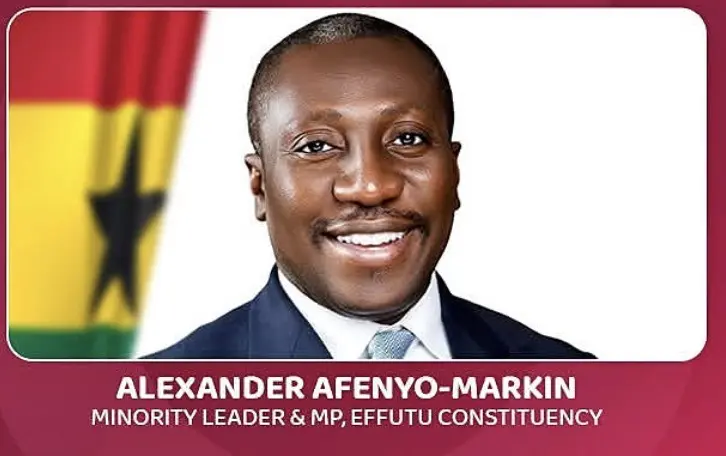
  • Turning Attacks into Resolve: The Minority Leader’s Unbroken Commitment to Accountability and Parliamentary Oversight

    Turning Attacks into Resolve: The Minority Leader’s Unbroken Commitment to Accountability and Parliamentary Oversight

    Over the past week, all manner of insults and personal attacks have been directed at me, apparently in an attempt to impugn my character and divert attention from the substantive questions I have raised. False and defamatory allegations have also been made about my motives for questioning the losses incurred under the Bank of Ghana’s Domestic Gold Purchase Programme and the role of GoldBod in those transactions.

    These allegations are entirely false, and I reject them without qualification.

    As Minority Leader in Parliament, my responsibility is to help Parliament discharge its constitutional oversight function. My actions have been guided solely by that responsibility. I have neither acted from any improper motive nor conducted myself inappropriately in the performance of my duties.

    I recognise that, in public life, those who are uncomfortable with legitimate scrutiny may push back. In some cases, they may resort to false allegations, personal attacks and ridicule in an effort to shift attention from the substantive issues and make the person asking the questions the subject of controversy.

    I remain focused. I will continue working with the Minority Caucus to initiate the necessary parliamentary processes for a full inquiry into the reported GH¢22 billion loss arising from the trading done by the GoldBod and reflected in the books of the Bank of Ghana.

    The International Monetary Fund has reported a loss of approximately US$1.7 billion under this programme in 2025. Whichever institution’s balance sheet carries that figure, it represents public money. Ghanaians are, therefore, entitled to know who the off-takers were, what discounts were applied to their purchases, on whose authority those discounts were approved, and what fees were earned from the transactions.

    They are equally entitled to a full disaggregation of the US$1.7 billion: how much arose from foreign-exchange differentials; how much resulted from the prices at which GoldBod bought and sold the gold; and what considerations informed the management decisions behind those transactions.

    These questions belong in the public record. The Minority will continue to place them there, in writing and with our sources published, so that every Ghanaian can examine the evidence and arrive at an informed judgment, rather than merely take my word or anyone else’s.

    On the defamatory statements made against me personally, I intend to pursue the appropriate legal remedies. Meanwhile, my attention, and that of the Caucus I lead, remains firmly focused on the programme, the decisions taken and the public funds involved.

    Signed
    Osahen Alexander Kwamena Afenyo-Markin
    Minority Leader

  • The Destruction of Railway Lines in the Western Region: Ghana’s Steel Arteries Under Siege

    The Destruction of Railway Lines in the Western Region: Ghana’s Steel Arteries Under Siege

    By Daniel Nii Okine

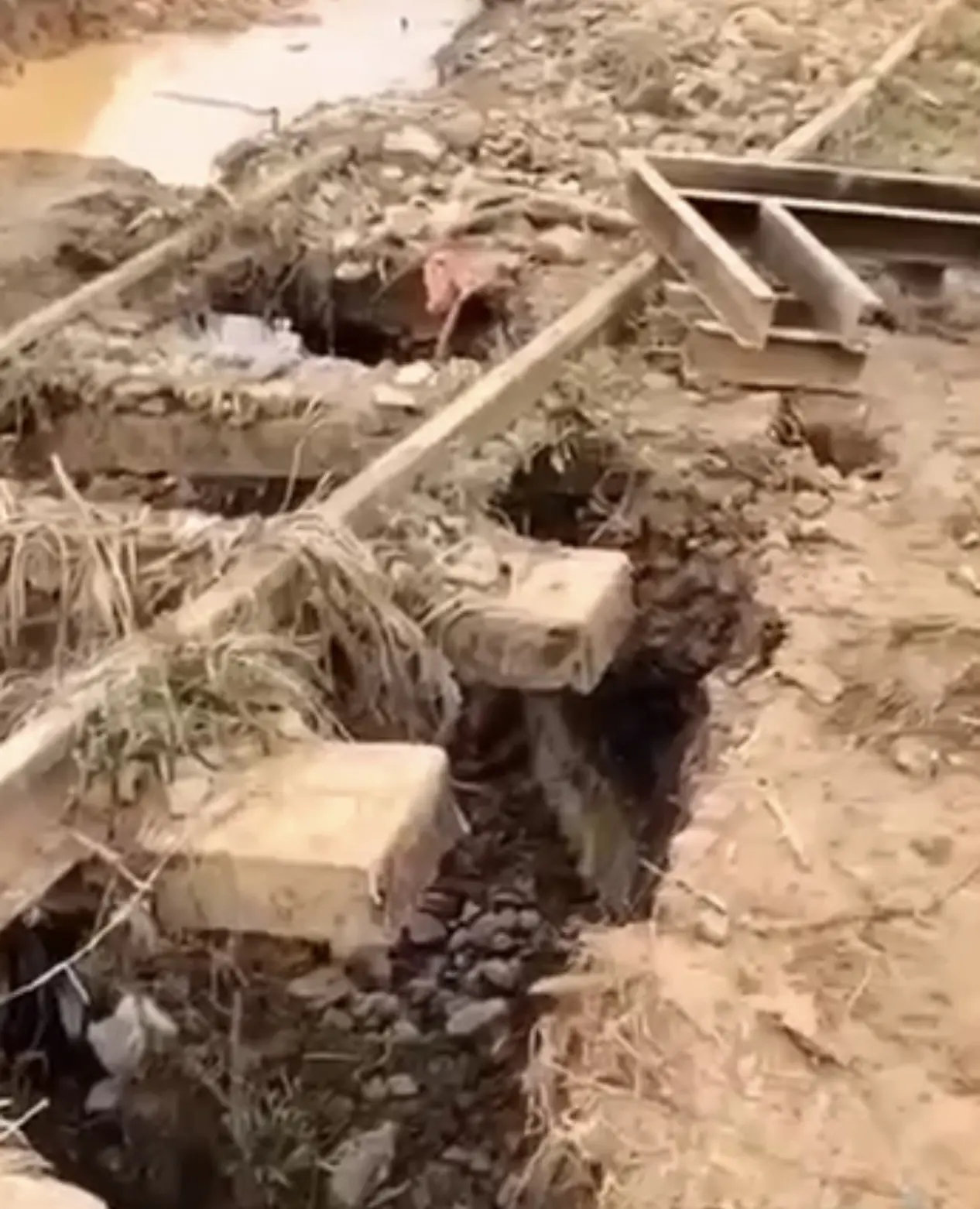
    A viral video circulating across social media has forced the nation to confront a tragedy so jarring, so senseless, that it demands immediate national outrage. Along the Takoradi to Nsuta corridor in the Western Region, railway lines built with public funds now dangle in mid‑air, suspended above deep, dangerous pits carved out by illegal miners. The earth beneath these tracks has been eaten away, leaving behind stagnant pools of polluted water and a landscape scarred by reckless excavation.

    What should be a thriving transport artery for hauling manganese to the Takoradi port or goods has been reduced to a grotesque symbol of state paralysis. The video’s contrast between a modern train and the mutilated rail line beneath it is a painful metaphor for Ghana’s condition: we speak of modernization, yet allow the foundations of our development to be destroyed in broad daylight.

    If this sight does not provoke anger, then silence becomes complicity in national decay.

    A Legacy of Political Evasion: NPP and NDC’s Shared Failure

    How does a functioning nation permit the destruction of active, high‑value infrastructure under the watch of its security apparatus? The answer lies in the bipartisan negligence of Ghana’s political leadership. Both the NPP and the NDC have treated galamsey as a political bargaining chip rather than an existential threat.

    When one party governs, the other exploits illegal mining communities for electoral gain. When power shifts, the roles reverse. The result is a cycle of political theatre, empty press briefings, and selective enforcement that emboldens illegal miners.

    Ghana has a Ministry of Railways Development, a Ministry of Lands and Natural Resources, regional security councils, police commands, military units, and national security operatives. Yet illegal miners, armed with excavators and high‑pressure hoses, operate freely on a public railway right‑of‑way. This is not a failure of capacity; it is a failure of courage.

    The estimated cost of repairing the Takoradi–Nsuta line exceeds $18 million. That bill will be paid by ordinary citizens, not the political actors who allowed this destruction to fester.

    A Global Contrast: Why This Would Be Impossible in China or Dubai

    Imagine illegal miners digging beneath a railway line in China as the presented rhetorically asked. It would be treated as a national security breach, triggering immediate and uncompromising enforcement. In Dubai, no individual could set up an illegal operation beneath a metro track without swift intervention within minutes.

    These nations understand a basic truth: infrastructure is sovereignty. To destroy a transport corridor is to sabotage the nation’s economic future.

    Yet in Ghana, illegal miners dismantle sovereign assets with impunity, while millions of citizens are left to shoulder the cost of their greed.

    The Price of National Silence

    The narrator of the viral video states plainly that silence in the face of this destruction is an endorsement of national ruin. When rail lines collapse, manganese haulage stops. When haulage stops, state revenue collapses. When revenue collapses, government borrowing increases, taxes rise, and citizens pay for repairs that should never have been necessary.

    We are financing the consequences of a criminal enterprise that benefits a reckless minority.

    A Call for Immediate National Action

    If Ghana wishes to prove that it is not a territory governed by illegal mining syndicates, decisive action is required now:

    • Permanent Security Deployment — Station military units along major infrastructure corridors, including railways, river basins, and high‑tension lines, with full authority to dismantle illegal operations immediately.
    • Prosecution of Local Enablers — Investigate and prosecute political actors, local authorities, and security officers who have shielded or profited from illegal mining.
    • Bipartisan Protection of National Assets — Declare critical infrastructure as non‑negotiable national security zones, removing political cover for offenders.

    A nation unable to protect its railway tracks cannot claim readiness for modernization. Ghana must abandon political rhetoric, enforce the law without fear or favor, and reclaim its steel arteries from the grip of destruction.

    If a nation can watch its railway lines collapse into the pits of galamsey and still pretend to have leadership, then we are not merely failing, we are surrendering our future to national saboteurs in broad daylight.

  • 24-Hr ECONOMY IN A NUTSHELL

    24-Hr ECONOMY IN A NUTSHELL

    By Amofa Baffoe, Republic of Ireland

    The 24-Hour Economy does not mean every Ghanaian must work 24 hours, nor does it mean every business must remain open throughout the night.

    It is an economic policy intended to enable and incentivise businesses and public services that can operate beyond the traditional 8am–5pm period to work multiple shifts, where economically viable.

    In practical terms:

    • A factory currently operating one 8-hour shift could be supported to operate two or three shifts, increasing production and creating additional jobs.
    • Ports, logistics, transport, manufacturing, agro-processing, healthcare, hospitality, security, digital services and selected government services can operate for extended hours or continuously, depending on demand.
    • The objective is to make better use of Ghana’s existing infrastructure and productive assets. A factory, port, processing plant or other expensive asset sitting idle for 16 hours every day represents unused productive capacity.
    • It is also intended to encourage new investment and production, particularly in agriculture and agro-processing, manufacturing, pharmaceuticals, textiles, tourism, logistics and other export-oriented industries.
    • Government’s role is to create the enabling environment- including reliable energy, security, transport, financing/investment incentives, technology and appropriate labour arrangements- to make extended operations commercially viable.
    • Most importantly, the programme is intended to create jobs by expanding productive activity, particularly opportunities for young people, while increasing exports and foreign-exchange earnings.

    So the 24-Hour Economy should not be reduced to “shops opening at midnight” or people working 24 hours without rest.

    Think of it this way: Ghana has 24 hours available every day, but much of our productive economy traditionally uses only about eight of them. The policy seeks to organise investment, infrastructure and labour so that appropriate sectors can productively use more of those hours through shifts.

    We can certainly debate whether government is implementing it effectively, how many jobs it has actually created and whether the promised investment will materialise. Those are legitimate questions.
    But first, we should distinguish the concept from its implementation.