Author: Administrator

  • Ghana Power Reset: A New Era of Energy Security and National Economic Stability

    Ghana Power Reset: A New Era of Energy Security and National Economic Stability

    By the Sankofaonline Editorial Board

    ………..projected to lower electricity tariffs by 10 to 20 percent, easing the financial burden on families… Sankofaonline

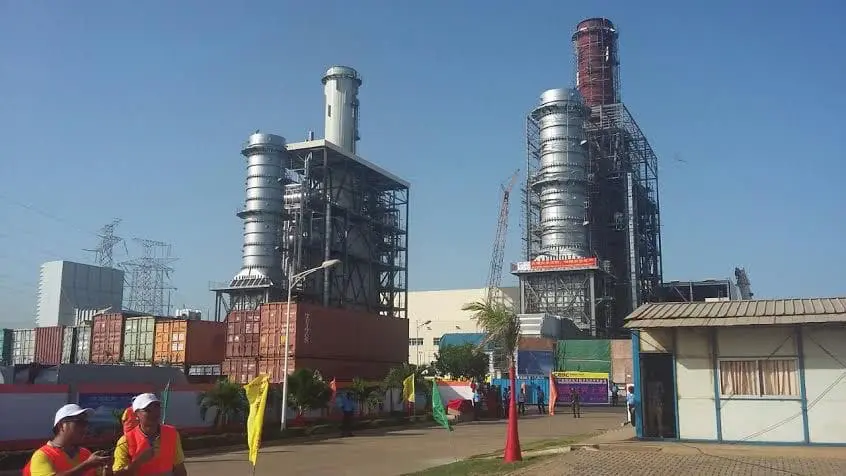
    Ghana stands at the dawn of a decisive national reset, one that promises to reshape the country’s energy landscape, strengthen fiscal stability, and expand economic opportunity for thousands of citizens. The government’s announcement of a state owned 1,200 megawatt gas fired power plant at Kafodzidzi, Abrobeano in the Central Region, together with an integrated modular gas processing facility, marks a turning point in the nation’s long struggle for reliable, affordable, and sustainable power.

    This landmark initiative reflects the enduring vision first set in motion during President John Dramani Mahama’s earlier term, when his administration initiated Ghana’s shift toward expanded generation capacity, lower electricity costs, and job creation through domestic gas infrastructure. His return to office now provides the opportunity to continue and advance that original initiative, demonstrating a continuity of purpose.

    The Ministry of Finance’s briefing to Parliament reveals the scale of this transformation. Over the next five years, the dual project is expected to generate nearly 1,000 direct jobs and unlock approximately 2 billion dollars in financial benefits through foreign exchange savings, fuel cost reductions, and statutory revenues. These gains are not speculative. They are grounded in Ghana’s transition away from expensive light crude oil toward cleaner, domestically produced natural gas.

    The implications for the national grid are profound. By replacing imported liquid fuels with indigenous gas, Ghana is positioned to reduce power generation costs by at least 75 percent. For households and manufacturers, this shift is projected to lower electricity tariffs by 10 to 20 percent, easing the financial burden on families and strengthening the competitiveness of local industries.

    Equally significant is the government’s procurement strategy. By purchasing heavy duty gas turbines directly from original equipment manufacturers, including GE Vernova, rather than through intermediaries, the state has already achieved procurement savings of 35 to 45 percent. This is fiscal discipline in action, demonstrating that prudent management of public resources can yield substantial national benefits.

    The first 600 megawatt phase of the Kafodzidzi, Abrobeano plant is scheduled for commissioning in 2028. Beyond its technical capacity, the project promises to stimulate regional development across the Central Region, injecting capital into local communities and creating skilled engineering, technical, and operational jobs. It is a model of how energy infrastructure can serve as a catalyst for broader economic renewal.

    By taking direct ownership of critical power and gas assets, Ghana is not only addressing persistent power shortfalls, it is stabilizing the Cedi through significant foreign exchange conservation. The long term effect is a more resilient economy, less vulnerable to external shocks, and better positioned to support industrial growth.

    This moment deserves national recognition. It reflects a strategic reset in Ghana’s energy policy, grounded in foresight, continuity, and disciplined investment. If executed with transparency and rigor, this project will stand as one of the most transformative interventions in Ghana’s modern history, delivering reliable power, reducing costs, creating jobs, and strengthening the nation’s economic sovereignty.

  • An Accountability Crisis: Ghana’s Political Class and the Untouchable Elite

    An Accountability Crisis: Ghana’s Political Class and the Untouchable Elite

    By Daniel Nii Okine

    The explosive confrontation between National Democratic Congress (NDC) Communications Officer Sammy Adu Gyamfi and Parliamentary Minority Leader Alexander Kwamina Afenyo‑Markin has ripped open a festering wound in Ghana’s democratic system. This is no longer a routine partisan quarrel. It is a direct assault on the credibility of Parliament, the integrity of state institutions, and the very idea that public office carries a duty of accountability.

    Gyamfi’s allegations are not the kind that can be swept aside with political spin. Accusing a sitting parliamentary leader of soliciting a GHS 10 million bribe to bury scrutiny over suspected financial irregularities is a charge that strikes at the heart of legislative oversight. Add to that the claim of substantial financial losses under Afenyo‑Markin’s leadership at the Ghana Water Company and the Electricity Company of Ghana (ECG), and the picture becomes even more damning. These are not whispers. These are accusations that demand immediate, independent, and uncompromising investigation.

    But confronting these allegations requires more than outrage. It requires asking the uncomfortable questions that Ghana’s political class consistently avoids.

    The Question of Timing:
    When did Sammy Adu Gyamfi and the NDC first obtain evidence of these alleged losses? If this information predates the current political clash, why was it not submitted to the appropriate investigative bodies? If the evidence is real, withholding it until it becomes politically useful is itself an act of irresponsibility. Ghanaians deserve to know whether this is genuine whistleblowing or strategic weaponization of information.

    Substance vs. Strategy:
    Were the losses at ECG and Ghana Water Company the result of deliberate corruption, or do they stem from chronic structural failures that have plagued these institutions for decades? The public deserves documented proof, not partisan theatrics. If corruption occurred, prosecutions must follow. If systemic inefficiencies are to blame, then Parliament must answer for its failure to reform institutions it oversees.

    This entire episode exposes a deeper rot in Ghana’s political culture, a bipartisan pact of silence that late President Jerry John Rawlings famously condemned as “scratch my back, I scratch your back.” Politicians hurl accusations at each other with theatrical fury, yet once the cameras turn away, nothing happens. No investigations. No sanctions. No consequences. The cycle repeats, and the public is expected to forget.

    The rot is further entrenched by the disturbing pattern of public officials escaping accountability for conduct that would land ordinary citizens in court. When lawmakers engage in public disorder, physical altercations, or blatant misconduct and still walk free, it sends a clear message: Ghana operates with two systems of justice, one for the governed, and one for the governing.

    Ghana cannot continue down this path. A democracy cannot survive on selective accountability, transactional silence, and performative outrage. Whether Sammy Adu Gyamfi’s allegations are ultimately proven or disproven, the state must act. Anti‑corruption agencies must investigate without fear or favor. Parliament must demonstrate that oversight is not a commodity to be traded. And political actors must understand that public office is not a shield against scrutiny.

    No individual, no matter their rank, party, or influence, should be allowed to operate above the obligations of public trust.

  • Volta Region Unveils 20 Rising Stars for National Basic School Games

    Volta Region Unveils 20 Rising Stars for National Basic School Games

    By Daniel Nii Okine

    The Volta Region has announced a formidable squad of 20 outstanding young footballers who will proudly represent the region in the soccer category at the upcoming National Basic School Games. The selection follows the conclusion of the highly competitive Volta Region Inter‑District Basic School Games, hosted by the Akatsi South District, where student‑athletes from every corner of the region showcased exceptional skill, discipline, and passion.

    For an entire week, Akatsi became the heartbeat of regional sports, drawing athletes from all districts to compete in football, athletics, volleyball, handball, and other disciplines. The tournament was more than a contest; it was a development platform, a scouting ground designed to identify and nurture grassroots talent for regional and national assignments. Coaches, scouts, and technical handlers observed every match with professional scrutiny, evaluating players on tactical intelligence, physical strength, teamwork, and raw potential , the same qualities emphasized in national youth scouting programs such as the Black Starlets talent pipeline.

    After days of intense competition, the technical team unveiled the final list of 20 players who distinguished themselves with outstanding performances:

    1. Ametefe Erasmus – North Tongu
    2. Korve Cephas – North Tongu
    3. Korve Joseph – North Tongu
    4. Amenyo Jonas – Afadjato South
    5. Ackah Godsway – Afadjato South
    6. Adzidobo Nelson – Keta
    7. Anokye Francis – North Dayi
    8. Henyo Richard – Ketu South
    9. Kototini Jude – Ketu South
    10. Tetteh Bismarck – Ho West
    11. Asembi Samuel – Ho Municipal
    12. Gbedzo Ruben – Kpando
    13. Blevi Caleb – Hohoe
    14. Normenyo Mathew – Hohoe
    15. Kugblenu Jeff – South Dayi
    16. Letsa Elisha – South Tongu
    17. Amegah Richard – South Tongu
    18. Sosu Elikplim – Ketu North
    19. Amevor Eric – Anloga
    20. Akpaglo Prince – Ziope

    The final squad reflects the region’s impressive depth of talent. North Tongu leads with three players, while Afadjato South, Ketu South, Hohoe, and South Tongu each contributed two players , a clear indication that football development is thriving across multiple districts. Every selected player earned their place through merit, consistency, and standout performances under pressure.

    With the squad now confirmed, preparations shift immediately to the next phase. The team is expected to begin camping without delay, where they will undergo tactical drills, conditioning, and team‑building exercises to sharpen their readiness for national competition. Coaches will refine strategies, strengthen cohesion, and prepare the boys to fly the flag of the Volta Region with pride and excellence.

    The journey ahead is demanding, but the promise is undeniable. These 20 young athletes represent the future of Volta football , a new generation stepping forward with talent, determination, and the opportunity to shine on the national stage. As they enter camp and prepare for the National Basic School Games, the entire region rallies behind them with confidence and anticipation.

    Volta Region has chosen its finest. Now, the nation awaits what these rising stars will deliver

  • St. John’s Grammar’s 60‑Point Earthquake at the NSMQ: A Night of Unquestionable Supremacy

    St. John’s Grammar’s 60‑Point Earthquake at the NSMQ: A Night of Unquestionable Supremacy

    By Sankofaonline Editorial Board | August 22, 2026

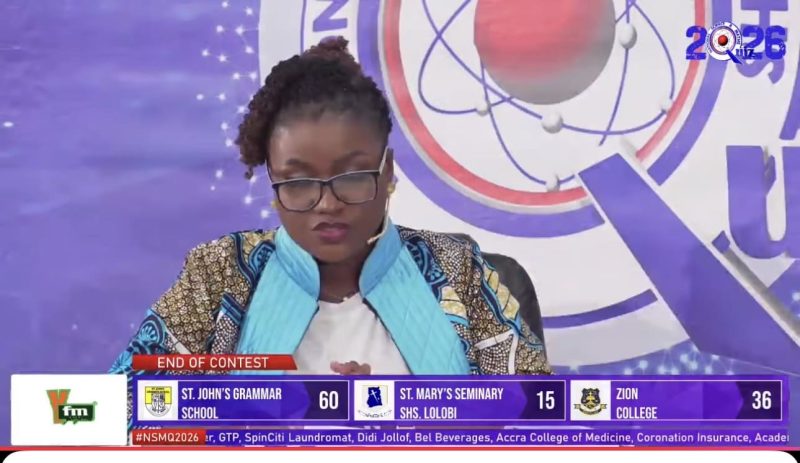
    ……. The runners up , Zion College , refused to be passive observers. Their 36‑point finish reflected grit, sharp thinking, and moments of brilliance……

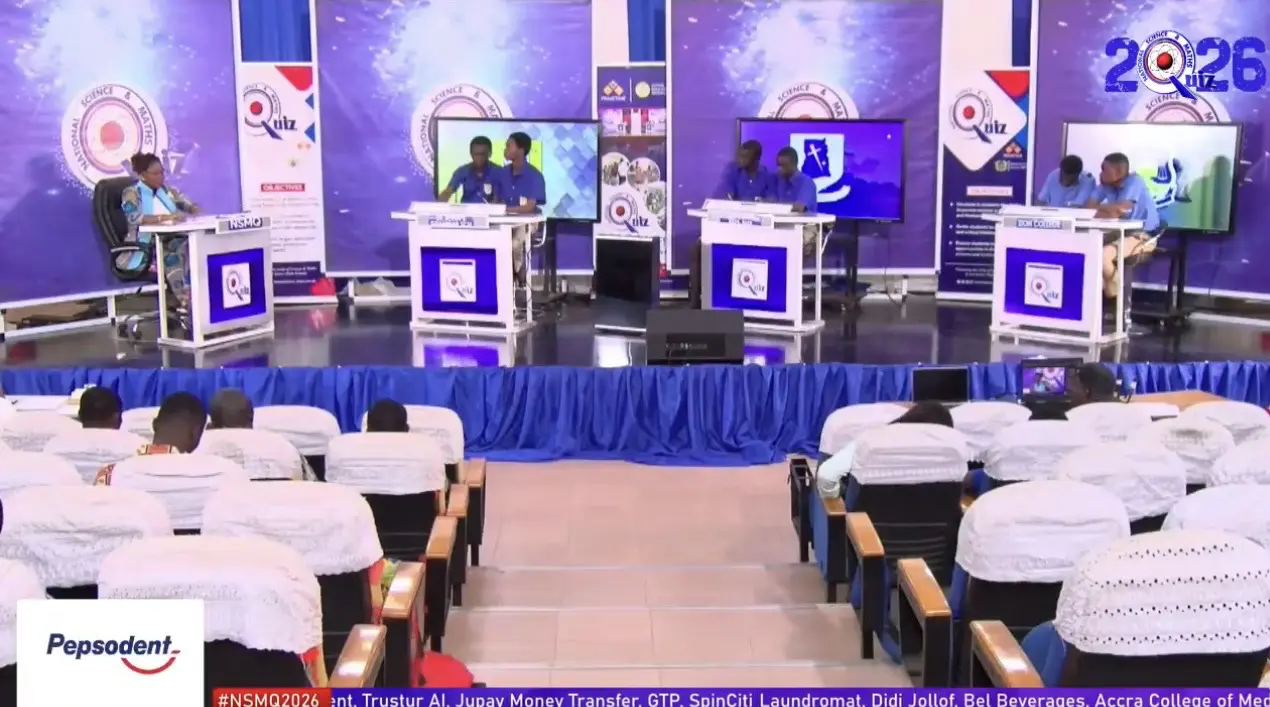
    The National Science and Maths Quiz has always been a battleground where intellect, preparation, and composure collide. Yet every so often, a contest emerges that does more than determine a winner. It defines a moment. St. John’s Grammar School delivered such a moment at the SMS Auditorium, producing a performance so commanding that it shifted the tone of the tournament and reminded the nation of what academic supremacy looks like when executed without hesitation.

    From the first bell, St. John’s Grammar demonstrated a level of readiness that made the outcome feel less like competition and more like inevitability. Their contestants approached physics problems with the calm authority of students who had rehearsed every possible twist. Chemistry equations fell before them with remarkable speed, and mathematics rounds became a showcase of disciplined precision. There was no panic, no wavering, no guesswork. Every buzz was intentional, every answer delivered with the confidence of a team that understood the weight of the moment.

    By the time the contest reached its climax, St. John’s Grammar had surged to an imposing 60 points. In NSMQ terms, crossing that threshold is not merely a victory; it is a declaration. It signals a team operating at the height of its intellectual prowess , capable of dictating the pace of the contest and forcing opponents into a reactive posture. The auditorium responded not with shock but with admiration. The performance felt less like an upset and more like the natural result of excellence meeting opportunity.

    Zion College, to their credit, refused to be passive observers. Their 36‑point finish reflected grit, sharp thinking, and moments of brilliance, particularly in the riddle and speed rounds. They fought with conviction, but they were chasing a team that had already built a lead too wide to close. Their effort was commendable, yet the shadow cast by St. John’s towering performance proved impossible to escape.

    St. Mary’s Seminary Senior High School from Lolobi entered the contest with determination, but the early rounds overwhelmed them. Their 15‑point finish was not a reflection of weakness but of the sheer intensity of the competition. They showed resilience in the latter stages, but the pace set by St. John’s Grammar left little room for recovery.

    With this victory, St. John’s Grammar advances to the next stage of the national championship. But their progression carries a deeper implication. They have not simply qualified; they have issued a warning. Any school with ambitions of lifting the NSMQ trophy must now reckon with a contender that has demonstrated both capacity and intent. St. John’s Grammar did not just win. They announced themselves as one of the most formidable forces in this year’s tournament, and their 60‑point masterclass stands as evidence that the road ahead may belong to those prepared to match their standard.

  • North Tongu Retains Basic School Men’s Soccer Title

    North Tongu Retains Basic School Men’s Soccer Title

    By Daniel Nii Okine

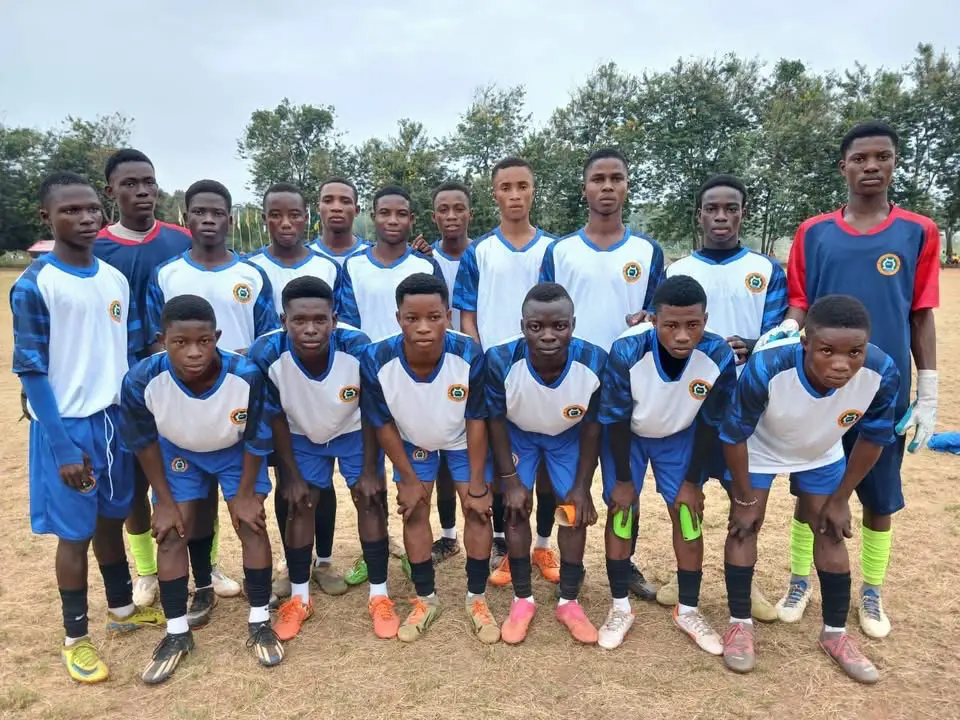
    The 2026 Volta Region Inter‑Districts Basic School Games in Akatsi delivered a thrilling Boys Soccer finale that showcased determination, skill, and the unmistakable spirit of young athletes fighting for glory. In the midst of this excitement, Ketu South District—led with admirable composure and tactical discipline by Sethson Hedo Wisdom—produced a performance that earned them a proud second‑place finish and the respect of the entire region.

    Ketu South’s journey to the finals was built on teamwork, resilience, and a refusal to be intimidated by reputation or history. Match after match, the boys displayed maturity beyond their years, advancing with confidence and proving that they belonged among the region’s elite. Their run to the championship match was not accidental; it was the product of structure, preparation, and heart.

    The final itself was a clash worthy of the occasion. Defending champions North Tongu District entered the pitch determined to protect their crown, and they struck early, taking a 1–0 lead with a sharp, clinical finish. Moments later, they doubled their advantage, pushing the scoreline to 2–0 and placing immense pressure on Ketu South. But the boys refused to fold. They regrouped, fought back, and pulled a goal to make it 2–1, igniting hope and shifting momentum.

    The closing minutes were intense. Ketu South pressed relentlessly, creating chances and forcing North Tongu onto the defensive. Every tackle, every pass, every sprint reflected the determination of a team unwilling to surrender. Yet, despite their spirited comeback, the defending champions held firm until the final whistle.

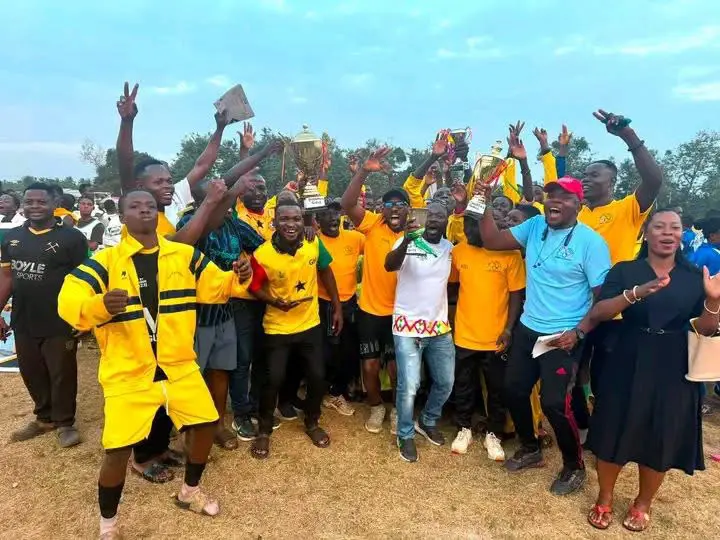
    North Tongu retained the trophy with a 2–1 victory, securing back‑to‑back regional titles. But Ketu South walked away with something equally valuable: pride, respect, and the promise of a rising football powerhouse. Their performance in Akatsi was courageous, disciplined, and inspiring. Under the leadership of Sethson Hedo Wisdom, they proved that they are not just contenders—they are a district with pedigree and a future filled with potential.

    The trophy may have stayed with North Tongu, but Ketu South’s spirit, fight, and resilience won the admiration of all. Their journey in Akatsi was a statement: they are coming, and they will be back stronger.