Author: Administrator

  • The Destruction of Railway Lines in the Western Region: Ghana’s Steel Arteries Under Siege

    The Destruction of Railway Lines in the Western Region: Ghana’s Steel Arteries Under Siege

    By Daniel Nii Okine

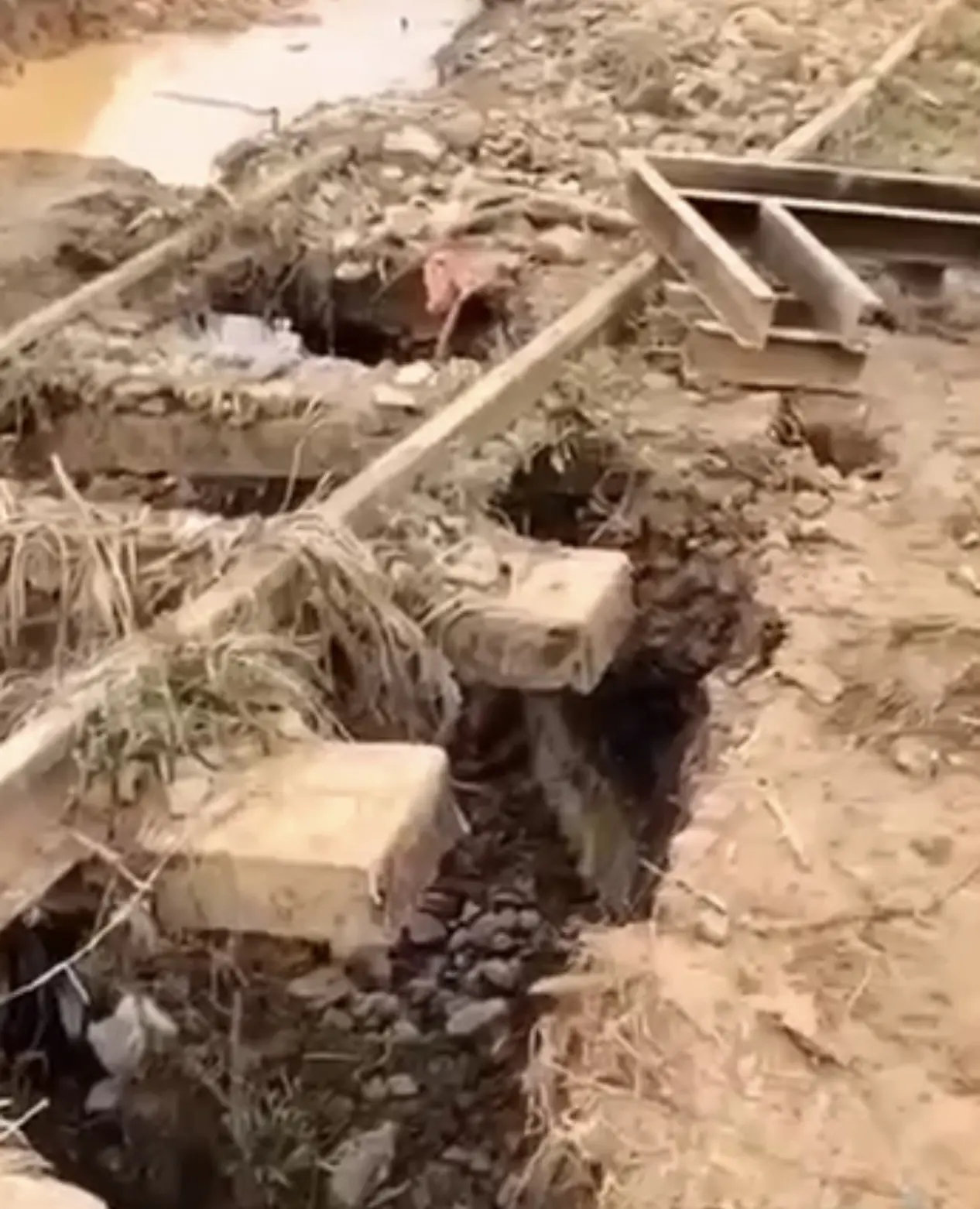
    A viral video circulating across social media has forced the nation to confront a tragedy so jarring, so senseless, that it demands immediate national outrage. Along the Takoradi to Nsuta corridor in the Western Region, railway lines built with public funds now dangle in mid‑air, suspended above deep, dangerous pits carved out by illegal miners. The earth beneath these tracks has been eaten away, leaving behind stagnant pools of polluted water and a landscape scarred by reckless excavation.

    What should be a thriving transport artery for hauling manganese to the Takoradi port or goods has been reduced to a grotesque symbol of state paralysis. The video’s contrast between a modern train and the mutilated rail line beneath it is a painful metaphor for Ghana’s condition: we speak of modernization, yet allow the foundations of our development to be destroyed in broad daylight.

    If this sight does not provoke anger, then silence becomes complicity in national decay.

    A Legacy of Political Evasion: NPP and NDC’s Shared Failure

    How does a functioning nation permit the destruction of active, high‑value infrastructure under the watch of its security apparatus? The answer lies in the bipartisan negligence of Ghana’s political leadership. Both the NPP and the NDC have treated galamsey as a political bargaining chip rather than an existential threat.

    When one party governs, the other exploits illegal mining communities for electoral gain. When power shifts, the roles reverse. The result is a cycle of political theatre, empty press briefings, and selective enforcement that emboldens illegal miners.

    Ghana has a Ministry of Railways Development, a Ministry of Lands and Natural Resources, regional security councils, police commands, military units, and national security operatives. Yet illegal miners, armed with excavators and high‑pressure hoses, operate freely on a public railway right‑of‑way. This is not a failure of capacity; it is a failure of courage.

    The estimated cost of repairing the Takoradi–Nsuta line exceeds $18 million. That bill will be paid by ordinary citizens, not the political actors who allowed this destruction to fester.

    A Global Contrast: Why This Would Be Impossible in China or Dubai

    Imagine illegal miners digging beneath a railway line in China as the presented rhetorically asked. It would be treated as a national security breach, triggering immediate and uncompromising enforcement. In Dubai, no individual could set up an illegal operation beneath a metro track without swift intervention within minutes.

    These nations understand a basic truth: infrastructure is sovereignty. To destroy a transport corridor is to sabotage the nation’s economic future.

    Yet in Ghana, illegal miners dismantle sovereign assets with impunity, while millions of citizens are left to shoulder the cost of their greed.

    The Price of National Silence

    The narrator of the viral video states plainly that silence in the face of this destruction is an endorsement of national ruin. When rail lines collapse, manganese haulage stops. When haulage stops, state revenue collapses. When revenue collapses, government borrowing increases, taxes rise, and citizens pay for repairs that should never have been necessary.

    We are financing the consequences of a criminal enterprise that benefits a reckless minority.

    A Call for Immediate National Action

    If Ghana wishes to prove that it is not a territory governed by illegal mining syndicates, decisive action is required now:

    • Permanent Security Deployment — Station military units along major infrastructure corridors, including railways, river basins, and high‑tension lines, with full authority to dismantle illegal operations immediately.
    • Prosecution of Local Enablers — Investigate and prosecute political actors, local authorities, and security officers who have shielded or profited from illegal mining.
    • Bipartisan Protection of National Assets — Declare critical infrastructure as non‑negotiable national security zones, removing political cover for offenders.

    A nation unable to protect its railway tracks cannot claim readiness for modernization. Ghana must abandon political rhetoric, enforce the law without fear or favor, and reclaim its steel arteries from the grip of destruction.

    If a nation can watch its railway lines collapse into the pits of galamsey and still pretend to have leadership, then we are not merely failing, we are surrendering our future to national saboteurs in broad daylight.


  • Southern Zone Boys’ Soccer Tournament: Drama, Brilliance, and Two Titans Marching Toward Glory

    Southern Zone Boys’ Soccer Tournament: Drama, Brilliance, and Two Titans Marching Toward Glory

    The Southern Zone Boys’ Soccer Tournament has reached its defining moment, and the journey to the grand finale has been nothing short of electrifying. From tactical brilliance to nerve‑shredding penalty shootouts, this year’s competition has showcased the finest blend of youthful talent, district pride, and football artistry. As the dust settles on the semifinals, two districts stand tall above the rest: North Tongu and Ketu South , each with a story worthy of championship folklore.

    North Tongu: The Champions Who Refuse to Blink

    The defending champions, North Tongu District, entered the tournament with the weight of expectation and the confidence of a team accustomed to high‑stakes football. Their semifinal clash with South Tongu District was a tense, tactical battle that tested discipline, endurance, and mental fortitude.

    When regulation time failed to produce a winner, the match marched into penalties , the ultimate test of nerve. North Tongu rose to the moment with championship composure, dispatching their kicks with precision and securing a commanding 3–0 victory in the shootout.

    But the true revelation of the match was their goalkeeper. His performance was nothing short of extraordinary , a display of reflexes, anticipation, and sheer courage. He turned away every South Tongu attempt, transforming the penalty shootout into a showcase of goalkeeping excellence. Observers insist he is one of the standout performers of the entire tournament, a guardian whose presence alone shifts the balance of any match.

    North Tongu’s return to the finals is not accidental. It is the product of structure, discipline, and a winning mentality that refuses to fade.

    Ketu South: Elegance, Composure, and a Statement of Intent

    On the opposite side of the bracket, Ketu South District delivered a semifinal performance defined by elegance and tactical maturity. Their encounter with Central Tongu District was a thrilling contest ,a match that swung between hope and heartbreak, culminating in a dramatic 4–3 penalty victory.

    Ketu South’s journey to the finals has been marked by fluid play, intelligent movement, and a calmness under pressure that belies their youth. Their semifinal triumph was not merely a win; it was a statement. A declaration that they are not in the finals by chance, but by merit, preparation, and football artistry.

    Their penalty execution was clinical, their teamwork cohesive, and their resilience unmistakable. If North Tongu brings the steel of champions, Ketu South brings the elegance of contenders determined to rewrite the narrative.

    A Final for the Ages: Champions vs. Conquerors

    The stage is now set for a grand finale that promises intensity, drama, and unforgettable football.

    North Tongu, the defending champions, arrive with experience, structure, and a goalkeeper in peak form.

    Ketu South, the rising force, arrive with momentum, elegance, and a hunger to claim their place in district football history.

    This is more than a match. It is a collision of styles, a test of character, and a celebration of the Southern Zone’s football excellence.

    What This Tournament Reveals About Youth Football

    Beyond the scores and celebrations, the tournament has highlighted critical themes that deserve national attention:

    • Youth development — The technical quality displayed shows the impact of structured district coaching.
    • Community pride — Districts rally behind their teams, strengthening social cohesion.
    • Talent identification — Several players, especially goalkeepers and midfielders, have shown potential for higher‑level football.
    • Sportsmanship — The tournament has been marked by discipline and respect, even in high‑pressure moments.

    The Southern Zone Boys’ Soccer Tournament is not merely a competition; it is a platform shaping the next generation of Ghanaian footballers.

    The Road Ahead

    As the final approaches, anticipation builds across the districts. Will North Tongu defend their crown, or will Ketu South rise to claim it?

    Sankofaonline will be present, documenting every moment, every cheer, and every heartbeat of the championship match.

    The Southern Zone awaits its champion.

    The boys are ready.
    The districts are watching.
    And history is calling.

  • 24-Hr ECONOMY IN A NUTSHELL

    24-Hr ECONOMY IN A NUTSHELL

    By Amofa Baffoe, Republic of Ireland

    The 24-Hour Economy does not mean every Ghanaian must work 24 hours, nor does it mean every business must remain open throughout the night.

    It is an economic policy intended to enable and incentivise businesses and public services that can operate beyond the traditional 8am–5pm period to work multiple shifts, where economically viable.

    In practical terms:

    • A factory currently operating one 8-hour shift could be supported to operate two or three shifts, increasing production and creating additional jobs.
    • Ports, logistics, transport, manufacturing, agro-processing, healthcare, hospitality, security, digital services and selected government services can operate for extended hours or continuously, depending on demand.
    • The objective is to make better use of Ghana’s existing infrastructure and productive assets. A factory, port, processing plant or other expensive asset sitting idle for 16 hours every day represents unused productive capacity.
    • It is also intended to encourage new investment and production, particularly in agriculture and agro-processing, manufacturing, pharmaceuticals, textiles, tourism, logistics and other export-oriented industries.
    • Government’s role is to create the enabling environment- including reliable energy, security, transport, financing/investment incentives, technology and appropriate labour arrangements- to make extended operations commercially viable.
    • Most importantly, the programme is intended to create jobs by expanding productive activity, particularly opportunities for young people, while increasing exports and foreign-exchange earnings.

    So the 24-Hour Economy should not be reduced to “shops opening at midnight” or people working 24 hours without rest.

    Think of it this way: Ghana has 24 hours available every day, but much of our productive economy traditionally uses only about eight of them. The policy seeks to organise investment, infrastructure and labour so that appropriate sectors can productively use more of those hours through shifts.

    We can certainly debate whether government is implementing it effectively, how many jobs it has actually created and whether the promised investment will materialise. Those are legitimate questions.
    But first, we should distinguish the concept from its implementation.

  • Respect to the Unsung Heroes of the Prison System.

    Respect to the Unsung Heroes of the Prison System.

    By; Harry Hammond I gozaro007@gmail.com / 0244658466 / 0207698171

    In the shadows of Ghana’s justice system, there’s a group of individuals who show up every day to manage the chaos, the conflicts, and the complexities that come with keeping society safe from those who’ve broken its rules. They are the prison officers; the backbone of a system that often doesn’t get the respect it deserves.

    A Job That Builds Patience, Not Just Muscles

    Prison work is not for the faint-hearted. While some careers build physical strength, this one build something far tougher: patience. Day in, day out, officers navigate a world where tensions run high, resources are scarce, and the stakes are personal. They are tasked with keeping order in environments where unpredictability is the only constant.

    Those who don’t understand the job often assume it’s about locking doors and throwing away keys. But anyone who’s ever set foot inside a prison knows it’s far more complicated. It’s about balance — restraint and firmness, empathy and authority. It’s about reading unspoken cues, diffusing rage before it erupts, and making split-second decisions that could mean the difference between safety and catastrophe.

    “Those Nobody Wants to See”

    The public rarely thinks about prisons until something goes wrong. But someone has to do the hard work of keeping those who’ve broken the law contained, rehabilitated (if possible), and away from the rest of us. Prison officers are the ones who do it, often with minimal resources and maximum scrutiny.

    They deal with individuals that society doesn’t want to think about, the violent, the troubled, the marginalized who ended up on the wrong side of the law. And they do it without the luxury of walking away at 5 PM. Theirs is a 24/7 responsibility, where “shift work” includes nights, weekends, and holidays.

    “Handle with Guts, Not Just Hands”

    Some people think prison officers should be cold, unfeeling enforcers. But the reality is that raw guts and intelligence are what get them through the day. They don’t just “manage criminals” they manage people. Broken people, angry people, sick people, desperate people.

    They do it in facilities that are often overcrowded, underfunded, and overlooked. They do it knowing that public sympathy is usually with the inmate, not the officer. And still, they show up. They separate feuding gangs, talk down suicidal inmates, and stand between violence and victims (both inside and outside the walls).

    A Call for Respect and Resources.

    To every prison officer doing this thankless job: Respect. Not just because of what you do, but because of how you do it often with professionalism and humanity, despite the system’s shortcomings. You are the thin line that ensures prisons don’t become breeding grounds for more chaos.

    But respect isn’t enough. Ghana’s prison officers need better resources, better training, and better conditions to do their jobs safely and effectively. They need society to recognize that rehabilitation is part of their mandate, and that they’re not just jailers they’re part of a system meant to reduce recidivism and restore lives.

    A System That Needs Reform, Too

    This isn’t a call to romanticize prison work. The system itself needs urgent reform overcrowding, lack of rehabilitation programs, and inadequate healthcare are ticking time bombs.

    But reform starts with acknowledging the people on the front lines. The officers who, despite it all, get the job done. Who keeps the peace. Who help inmates take steps toward redemption.

    To them: Thank you. Your work is seen. Your patience is heroic. And your contribution to society is greater than many realize.

  • Dr. Samuel Boateng launches Beyond Breach series to address AI governance, cybersecurity challenges

    Dr. Samuel Boateng launches Beyond Breach series to address AI governance, cybersecurity challenges

    … first volume in a five-part series draws diplomats, cybersecurity officials, and faith leaders across two continents

    Dr. Samuel Boateng, founder and CEO of Slamm Technologies, has officially launched ‘Beyond Breach: Where AI Meets Governance’, the first book in a five-volume series on artificial intelligence governance, cybersecurity, risk management, and responsible AI. The virtual ceremony, held on Sunday, August 2, drew a distinguished international audience spanning Ghana, the United States, and the United Kingdom.

    The ceremony opened with a prayer and introductory remarks by Reverend Ransford Obeng, General Overseer of the Calvary Charismatic Centre whose words on the book’s significance was warmly acknowledged by Lady Rosa Whitaker Duncan-Williams in her welcome address.

    The launch brought together members of the diplomatic corps, government officials, cybersecurity authorities, technology innovators, and faith leaders. Lady Rosa Whitaker Duncan-Williams, President and CEO of the Whitaker Group and principal architect of the African Growth and Opportunity Act (AGOA), delivered the welcome address, describing the book as “more than a book launch” and “an invitation to engage in one of the defining conversations of our generation.”  She commended Dr. Boateng for offering, not only analyses of AI’s risks and rewards, but practical models for how governance can be executed with discipline and impact.

    Goodwill messages were received from the Embassy of Ghana in the United States, delivered on behalf of His Excellency Ambassador, Victor Smith, by Deputy Ambassador and Deputy Chief of Mission, Her Excellency, Jane Gasu Aheto, who affirmed the mission’s full support and noted the significance of the diaspora — described by government as Ghana’s “17th region” — to national development. 

    Mr. Michael Kwakye, Principal Manager, Cybersecurity Technology Standards at the Cyber Security Authority of Ghana, also delivered remarks, expressing hope that the gathering would foster meaningful exchange of ideas on securing the nation’s digital future.

    Delivering a goodwill message, Mr. Michael Harry Yamson, Administrator of the District Assemblies Common Fund of Ghana, described the launch as timely and commended Dr. Boateng on both the book and his broader work. Recalling his earlier meeting with the author in Washington, he said Dr. Boateng’s reputation preceded him, and expressed enthusiasm about the plans the author had shared for Ghana.

    Reflecting on the significance of the book’s subject, Mr. Yamson observed that today’s world is no longer merely about knowing facts, since AI can do that, but about drawing together knowledge from across disciplines to build innovation, apply creativity, and add value that makes businesses, individuals, and countries more competitive. Work such as Dr. Boateng’s, he said, was what made those possibilities achievable, and he encouraged the author to continue on his path.

    A blessing over the book was pronounced by Archbishop Nicholas Duncan-Williams, founder and General Overseer of Action Chapel International, who prayed that the work would make a lasting difference in lives across the globe.

    The programme featured a panel discussion with Dr. Alex Mbaziira, Associate Professor of Cyber, IT and AI at Marymount University and George Mason University, and Mr. C.K. Bruce, a leading figure in Ghana’s cybersecurity industry, in conversation with the author. The panellists explored the governance challenges posed by autonomous AI agents and the accountability gap that arises when automated systems make consequential decisions, from loan approvals to insurance claims, without clear avenues for human appeal.

    Presenting the book, Dr. Boateng, also known as Dr. IT, described ‘Beyond Breach’ as a working tool rather than a theoretical text, written for executives, security professionals, compliance officers, academics, and policymakers. “As the world, especially Africa, embraces the opportunities presented by artificial intelligence, we must ensure that adoption is matched by strong governance, cybersecurity and ethical leadership. ‘Beyond Breach’ is my contribution to that conversation, providing practical guidance for organisations and policymakers navigating this new frontier,” Dr. Boateng said.

    Structured in four parts, the book addresses the global regulatory landscape from Brussels to Washington to Accra, the frameworks central to AI governance, the security of AI systems against emerging threats, and organisational structures including the role of the board and the perspectives of emerging markets.

    Dr. Boateng brings over two decades of cybersecurity leadership to the work, including prior roles at the Library of Congress, Symantec, and the Washington Metropolitan Area Transit Authority. Through the Slamm Foundation, he has provided cybersecurity and IT training to tens of thousands of people across the African diaspora at no cost. He holds a PhD from Marymount University and master’s degrees from Georgetown University and George Washington University.

    ‘Beyond Breach: Where AI Meets Governance’ is available for purchase, with a limited hardcover special edition of 100 numbered copies also released to mark the launch.

    About the Author

    Dr. Samuel Boateng (Dr. IT) is an enterprise cybersecurity executive, educator, author, and the Co-Founder/CEO of Slamm Technologies (Slamm LLC). With over 20 years of experience protecting enterprise and public-sector networks, he specializes in AI-driven SOC architecture, vulnerability management, and IT governance. He is also the host of The Dr. IT Show, an educational platform providing IT career coaching and cybersecurity awareness, and leads the Slamm Foundation’s ‘One Million Campaign’, aimed at expanding global digital literacy and building inclusive tech talent pipelines.

    About Slamm Technologies

    Slamm Technologies is a global cybersecurity, managed IT, and professional workforce development firm. Founded in 2008 in Manassas, Virginia, with key regional hubs including Accra, Ghana, Slamm offers end-to-end IT services, Security Operations Center (SOC) management, vulnerability assessments, and industry-aligned IT certifications. Through the Slamm Foundation, the company is also dedicated to advancing global digital literacy and building inclusive tech talent pipelines. 

    Dr. Samuel Boateng, founder and CEO of Slamm Technologies, with copy of the newly launched book ‘Beyond Breach Where AI Meets Governance’

    Dr. Samuel Boateng, founder and CEO of Slamm Technologies, with copy of the newly launched book ‘Beyond Breach Where AI Meets Governance’Dr. Samuel Boateng, founder and CEO of Slamm Technologies, with copy of the newly launched book ‘Beyond Breach Where AI Meets Governance’

    Dr. Samuel Boateng, founder and CEO of Slamm Technologies, with copy of the newly launched b