Author: Administrator

  • KENYA, NIGERIA AND OTHER AFRICAN NATIONS LEAD HIGH-PROFILE DELEGATIONS TO APSCA 2026 IN ACCRA

    KENYA, NIGERIA AND OTHER AFRICAN NATIONS LEAD HIGH-PROFILE DELEGATIONS TO APSCA 2026 IN ACCRA

    Senior government leaders, policymakers and public-sector executives from across Africa to converge in Ghana for the 7th Africa Public Sector Conference

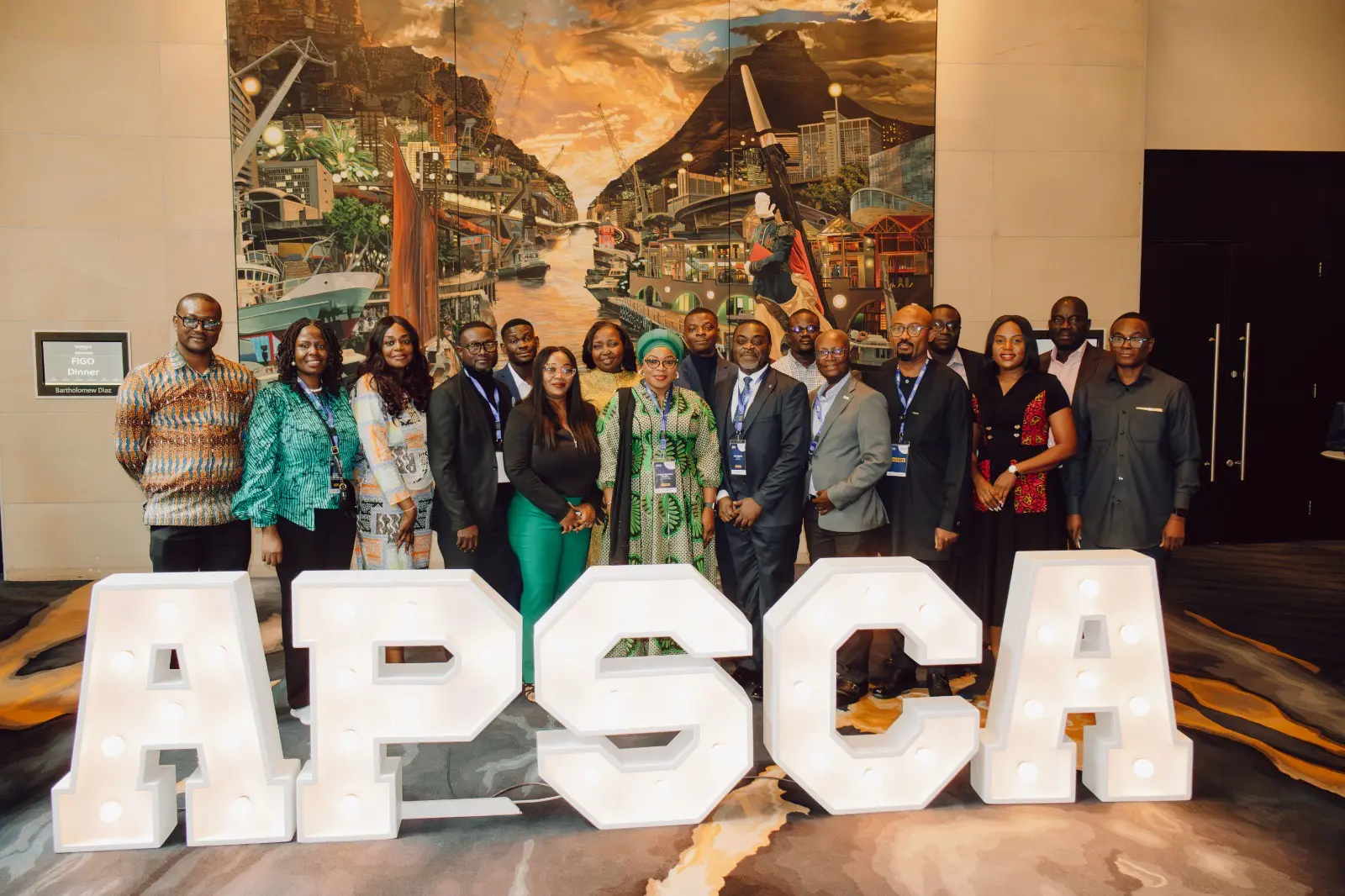
    ACCRA, GHANA — Ghana is set to welcome high-profile government leaders, policymakers, public-sector executives and institutional heads from across Africa as the 7th Africa Public Sector Conference (APSCA 2026) takes place from 14th–16th October 2026 at the Kempinski Hotel Gold Coast City, Accra.

    The three-day continental gathering will bring together senior leaders and delegations to examine the future of governance, public-sector transformation, innovation and institutional development under the theme: “Governance 2030: Resilient Institutions for a Digital, Green & Secure Africa.”

    High-level participation has already been confirmed from Kenya and Nigeria, with additional delegations expected from Rwanda, Botswana, Tanzania, Uganda, Zambia, Liberia, Zimbabwe and other African countries.

    KENYA TO LEAD HIGH-LEVEL DELEGATION

    The Kenyan delegation will be led by Hon. Felix Koskei, Chief of Staff and Head of Public Service of the Republic of Kenya, alongside senior government and public-sector leaders.

    The delegation is expected to include senior officials, CEOs and Managing Directors of public institutions and State-Owned Enterprises, policymakers and other government leaders. Kenya will also have an opportunity to showcase its public-sector innovations and institutional achievements at the Made in Africa Festival, the official African exhibition of APSCA 2026.

    NIGERIA SET FOR MAJOR REPRESENTATION

    Nigeria is expected to make a significant contribution to APSCA 2026, with Prof. Nentawe Goshwe Yilwatda, National Chairman of Nigeria’s All Progressives Congress (APC), leading a major delegation comprising senior political, government and public-sector leaders, including Governors, Ministers, Directors-General and Chief Executive Officers.

    Speaking ahead of the conference, Prof. Nentawe GoshweYilwatda, who is expected to deliver a keynote address said:

    “The APSCA platform will provide an opportunity to articulate Nigeria’s governance and development experience under the leadership of His Excellency, President Bola Ahmed Tinubu, GCFR, particularly the institutional and structural reforms being pursued under the Renewed Hope Agenda.”

    His keynote address titled: “The Party as Platform: How Governing Parties Can Architect Digital, Green and Secure Governance for 2030.” will form part of APSCA’s broader conversation on leadership, governance and institutional transformation across Africa.

    ACCRA BECOMES A MEETING POINT FOR AFRICAN LEADERS

    Returning to Ghana after four years, APSCA 2026 is expected to welcome over 400 senior delegates from more than 10 African countries, including Ministers, Heads of Public Service, CEOs of public institutions and State-Owned Enterprises, Directors-General, policymakers, regulators, development partners and private-sector leaders.

    Akin Naphtal, Chief Executive Officer and Founder of InstinctWave Group, said:

    “APSCA 2026 is bringing together some of the people, institutions and ideas shaping Africa’s future. With high-level delegations from Kenya, Nigeria and other African countries expected in Accra, this year’s conference will provide an important opportunity for leaders to move beyond dialogue and share practical experiences, build stronger partnerships and explore solutions that can be adapted across the continent.”

    12 FORUMS TO DRIVE CONTINENTAL DIALOGUE

    The conference will feature 12 specialised forums covering governance, women in the public sector, energy, procurement, public finance, trade, digital government, education, public-private partnerships, ESG and sustainability, customer experience and youth empowerment.

    MADE IN AFRICA FESTIVAL TO SHOWCASE AFRICAN INNOVATION

    A major feature of APSCA 2026 will be the Made in Africa Festival, providing participating countries, government institutions, development partners and private-sector organisations with a platform to showcase African innovation, public-sector transformation, infrastructure, trade, technology, investment opportunities and locally developed solutions.

    The country-focused exhibition will provide participating African delegations with an opportunity to showcase what their countries are doing, producing and innovating, while connecting with governments, investors, development partners and businesses from across the continent.

    APSCA 2026 takes place from 14th–16th October 2026 at the Kempinski Hotel Gold Coast City, Accra, Ghana.
  • Zoomlion Begins Disinfestation, Fumigation in Eastern Region

    Zoomlion Begins Disinfestation, Fumigation in Eastern Region

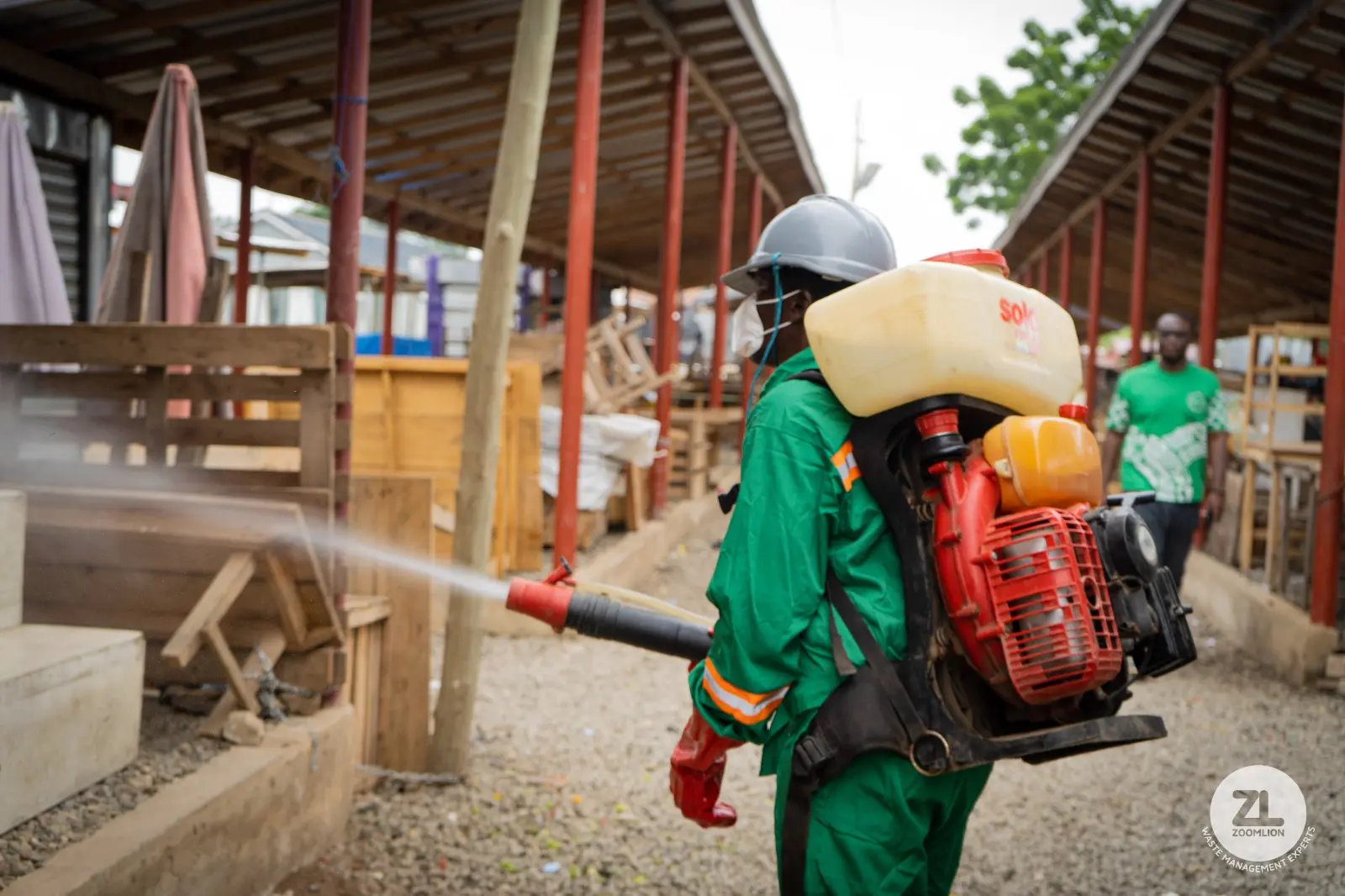
    Zoomlion Ghana Limited has commenced a disinfestation and fumigation exercise across all 33 Municipal and District Assemblies in the Eastern Region. The exercise, which started last Friday (August 21), is expected to end on September 30.

    The exercise is being carried out by the Vector Control Unit of the company in collaboration with the assemblies. It forms part of Zoomlion’s corporate social responsibility (CSR) to prevent outbreaks of cholera, malaria, typhoid and other infections following the recent floods that affected some communities in the region.

    The mass spraying exercise is focused on markets, lorry parks, places of convenience, refuse container sites and containers, particularly during the rainy season, to reduce disease-causing organisms in such places. It is also aimed at eliminating pathogens, controlling disease vectors and restoring safe conditions in all flood-affected places in the region. Such an intervention has become critical to preventing waterborne diseases.

    Briefing the media to kick-start the exercise at Agartha Market in Koforidua, the Eastern Regional Manager of Zoomlion, Cynthia Gbadago, said the exercise was in response to the floods which hit the entire country, especially the Eastern Region, to prevent waterborne diseases. She however indicated that the company realised the environment had been contaminated, hence the exercise, which she stated was the company’s corporate social responsibility to make the affected communities safe for the people.

    Mrs Gbadago stated that the company had already educated people, especially market women and residents, on the exercise to ensure that food and drinking water were properly covered. She further explained that after fumigation, people should allow between four and six hours to elapse before re-entering such places. Mrs Gbadago advised the people in the communities to protect their environment, particularly on how to properly dispose of refuse. She also asked them not to dump refuse indiscriminately within the environment to help prevent disease outbreaks in the region.

    For his part, the Eastern Regional Environmental Officer, Prince Osei Kissi, lauded Zoomlion, which had been a partner of the assemblies, for its support for the exercise. He gave the assurance that his outfit would continue to support the company to carry out the exercise to render the communities free from waterborne diseases.

    At the Agartha Market in Koforidua, a trader, Georgina Agbesi, was hopeful that the fumigation exercise would get rid of harmful insects like mosquitoes and cockroaches, as well as rodents such as mice, in the market. Another trader at the market, Afia Adutwumwaa, appealed to the government to provide places of convenience and also prevent the place from flooding whenever it rained heavily. The two traders expressed their appreciation to Zoomlion and the assemblies for the fumigation exercise.

  • The 1.7 billion Question: Why Currency Intervention Protects Ghanaian Households, Businesses, and the National Economy

    The 1.7 billion Question: Why Currency Intervention Protects Ghanaian Households, Businesses, and the National Economy

    By: Sankofaonline Economic Analysis Desk

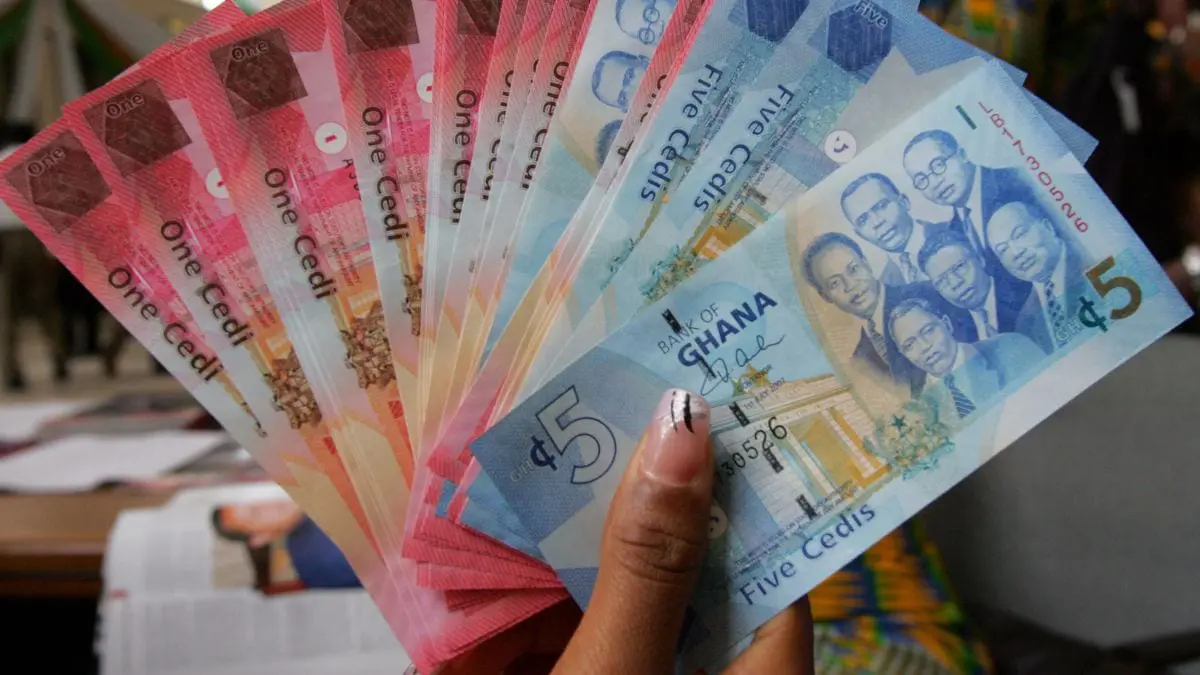
    A currency is not an abstract symbol. It is the foundation upon which every price in the economy rests. When the Cedi weakens, the cost of imported goods rises, domestic producers face higher input costs, and households feel the pressure in food, fuel, medicine, rent, and transportation. When the Cedi stabilizes, prices stabilize. This is why a government’s decision to intervene in the foreign exchange market is not merely a technical maneuver; it is a direct act of protecting the Ghanaian consumer and the Ghanaian business.

    A stabilization intervention,specifically,
    releasing dollars into the market, is a deliberate, internationally recognized policy instrument. It is used by central banks across the world to prevent sudden depreciation and restore confidence. When Ghana intervenes to support the Cedi, it is not improvising. It is executing a structured economic strategy designed to protect the price of imports, the cost of domestic production, and the purchasing power of citizens.

    To understand why intervention is essential, one must first understand the mechanics of pricing. Ghana imports fuel, pharmaceuticals, machinery, spare parts, raw materials, and food items. These goods are priced in dollars. When the Cedi falls, importers must pay more Cedis for the same quantity of goods. They pass these costs to consumers. Prices rise. Inflation accelerates. The cost of living becomes unpredictable. A currency left to “hold itself” becomes a direct threat to household stability.

    Intervention interrupts this chain reaction. By releasing dollars into the market, the government increases supply, reduces panic, and prevents speculative hoarding. This stabilizes the exchange rate. When the exchange rate stabilizes, importers can plan. Businesses can price goods more predictably. Retailers avoid sudden markups. Consumers avoid sudden shocks. The entire economy breathes easier because the foundation of pricing,the exchange rate, has been defended.

    The impact extends beyond imports. Domestic producers rely on imported inputs: fuel for transport, machinery for production, chemicals for agriculture, and spare parts for maintenance. When the Cedi weakens, their costs rise. They raise prices. Domestic goods become more expensive. Intervention protects them too. By stabilizing the Cedi, the government stabilizes the cost structure of domestic production. This keeps local goods affordable and prevents inflation from spreading across sectors.

    Critics often argue that intervention is not a long‑term plan. This misunderstands the architecture of economic policy. Stabilization is the first phase of any credible long‑term plan. You cannot pursue industrial expansion, export diversification, or productivity reforms while the currency is collapsing. You must first stop the fall, then rebuild.

    Intervention is not the absence of a plan; it is the beginning of the plan. It is the necessary groundwork upon which long‑term reforms can be built.

    The psychological dimension is equally important. Markets respond to confidence. Investors respond to clarity. Households respond to predictability. When the government intervenes, it sends a message: the state is present, alert, and unwilling to allow market turbulence to dictate national destiny. This confidence stabilizes expectations, and stable expectations stabilize prices. A currency is not merely a medium of exchange; it is a symbol of national stability. Protecting it is an act of sovereignty.

    The consequences of non‑intervention are well‑known. A currency allowed to “hold itself” becomes a casualty of external shocks and internal speculation. Import prices rise sharply. Domestic goods become more expensive. Businesses struggle to plan. Households lose purchasing power. The national mood becomes unsettled. In such conditions, the absence of intervention is not neutrality, it is negligence.

    A responsible government does not wait for a perfect long‑term blueprint before acting to prevent collapse. It intervenes immediately to stop the fall, then builds the long‑term plan on a foundation of stability. This is the architecture of sound economic policy: stabilize first, reform second. Intervention is not a sign of weakness. It is a demonstration of leadership. It is the assertion that the state will not allow market turbulence to erode the living standards of its people.

    A policy that holds the Cedi from losing value is a policy that stabilizes the price of imports, protects domestic production, and shields households from inflation. A policy that allows the Cedi to “hold itself” is an abdication of duty. Stabilization is not improvisation; it is a deliberate choice. And in moments when the Cedi faces pressure, intervention is not merely an option,it is the only responsible path.

    Let us end by stating clearly that the 1.7 billion dollars was not stolen; it stabilized the Cedi.

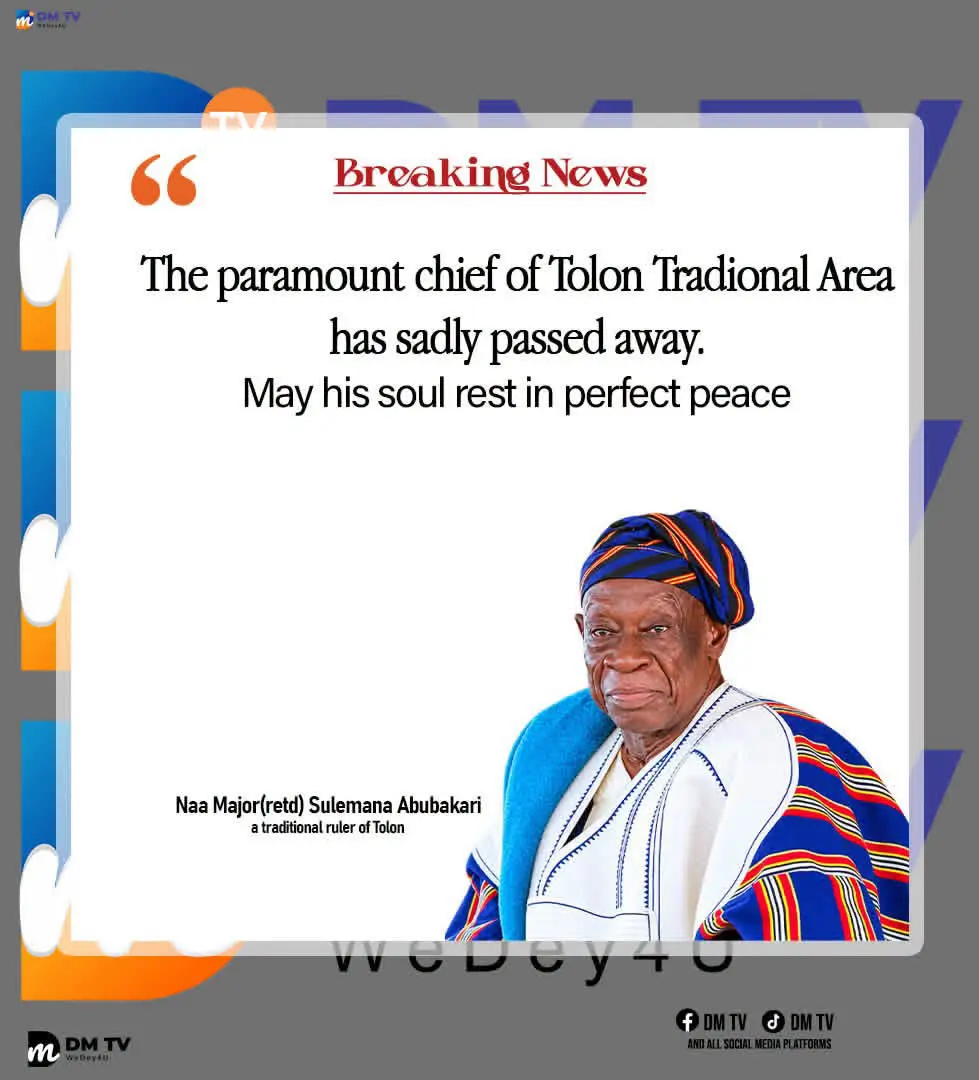
  • TRIBUTE TO THE LATE TOLON NAA, MAJOR (RTD) ABUBAKARI SULEMANA

    TRIBUTE TO THE LATE TOLON NAA, MAJOR (RTD) ABUBAKARI SULEMANA

    From: Friends of the Rawlingses

    Today, we mourn a great soldier, a traditional leader, and a key figure in the life story of our hero, Flt. Lt. Jerry John Rawlings.

    The passing of Tolon Naa, Major (Rtd) Abubakari Sulemana, has closed a powerful chapter in Ghana’s military and political history. He was not just a chief. He was the man destiny placed directly opposite Rawlings on the morning of May 15, 1979.

    We, the Friends of Rawlings, pay this tribute with honesty, respect and reconciliation.

    1. THE MAN WHO ARRESTED RAWLINGS AND SAVED HIS LIFE_

    On May 15, 1979, when our young, idealistic Air Force pilot attempted to overthrow the SMC II regime of General Akuffo because of the corruption and rot in the country, it was Major Sulemana, then Commanding Officer of the Recce Regiment, who foiled the attempt.

    He went through a hail of bullets at the Air Force Base, seized Rawlings’ weapon and arrested him personally. He did not kill him on the spot as many would have done. He put him in his own command car, drove him to his office at Burma Camp and protected him.

    He told Rawlings: “Rawlings, guns cannot solve Ghana’s problem.”

    Rawlings asked for whiskey, and Major Sulemana went to his own house to bring him a bottle. He then handed him over alive to Major General Odartey-Wellington. That act of professionalism is why Rawlings lived to lead the June 4th Revolution.

    1. HE DENIED TORTURING OUR HERO

    For 40 years, the story was told that Rawlings was tortured and his nails removed after the May 15th arrest. Major Sulemana stood firm and clarified history:

    “I gave Rawlings whiskey, never tortured him. I wish Rawlings could come back and tell you. They are all lies. I never hurt him. If they tortured him at the MI area, I don’t know. But from the airport base to my office, nothing happened to him.”

    He insisted Rawlings was his friend. They rode horses together at Burma Camp. They sat in his house and discussed Ghana. “Very gentle. Not a devil,” he said of Rawlings.

    That truth matters to us.

    1. THE COST HE PAID AFTER JUNE 4.

    After June 4, 1979 and December 31, 1981, Major Sulemana paid a heavy price for doing his duty as a soldier. He was forced into exile in 1982 by the PNDC government and lived away from Dagbon and Tolon for 18 years until his return in 2000.

    Yet he never harbored bitterness. In his last interviews, he prayed for Rawlings after his death in 2020, asking God to forgive him for all his mistakes, and he warned that evil men around Rawlings had used him for dirty work.

    1. FROM SOLDIER TO CHIEF

    Born in 1943 at Tali, near Tolon, first son of Tolon Naa Alhassan Sulemana, commissioned in 1963 as one of Nkrumah’s own escort officers, to becoming Commanding Officer of the Armoured Recce Regiment, to becoming a member of President Kufuor’s National Security Advisory Corps in 2001, to finally being enskinned as Tolon Naa in 2019 by Yaa Naa Abukari Mahama II, his life was service.

    He was a bridge between two eras – the old professional Ghana Army and the revolutionary era of Rawlings.

    Today, the soldier who arrested Rawlings and the pilot he arrested have both gone to meet their Maker. History has reconciled them.

    We, Friends of Rawlings, extend our deepest condolences to the Tolon Traditional Area, his family and the Ghana Armed Forces.

    May his soul rest in peace. May the gallant Tolon Naa and our Founder, JJ, find peace together.

    Damirifa Due! Rest Well, Naa Major.

  • The Senyo Hosi Accusation And The Rising Crisis Of Evidence Free Journalism In Ghana

    The Senyo Hosi Accusation And The Rising Crisis Of Evidence Free Journalism In Ghana

    Sankofaonline News Editorial: August 24, 2026

    Ghana is witnessing a troubling transformation in its public discourse, a transformation where accusations are now treated as facts, and facts are treated as optional. The recent attempt to drag Senyo Hosi into a fabricated gold trading controversy is not an isolated incident; it is a symptom of a national decay in journalistic discipline. When a man must publicly deny involvement in a contract he never pursued, never discussed, and never even knew existed, it reveals how dangerously easy it has become for anyone to be thrust into scandal without a single verified document or credible source.

    In responding to the allegation, Senyo Hosi stated plainly that he has not landed any contract to provide a platform for buying and selling gold from banks, and that he did not know banks in Ghana supply gold to Goldbod. His statement is factual, direct, and unambiguous. Yet the very need for such a statement exposes the deeper rot: accusations now precede investigation, and rumors now outrun truth. Ghana has entered a space where reputations can be bruised before evidence is even requested, let alone produced.

    This is not journalism. It is carelessness masquerading as reporting. The duty of the press is to interrogate claims, not to amplify gossip. Journalists must return to the discipline of fact verification, the rigor of demanding evidence, and the responsibility of cross-checking information with credible sources. Ethical reporting also requires that accused persons be given a fair opportunity to respond, a standard of balanced journalism that is increasingly ignored in the rush to publish sensational headlines.

    The consequences of irresponsible reporting are not abstract. They are real, personal, and lasting. False accusations stain reputations, destabilize families, disrupt businesses, and distort public perception. In sensitive sectors such as gold trading, where regulatory scrutiny is already intense, reckless reporting can ignite unnecessary controversy and undermine confidence in national systems. The damage inflicted by misinformation does not evaporate when the truth emerges; it lingers, reshapes narratives, and leaves scars that cannot easily be erased.

    Sankofaonline rejects this descent into evidence free journalism. We will not publish allegations without documentation. We will not amplify claims that lack proof. We will not allow our platform to become a megaphone for rumor merchants. Our commitment is to investigative rigor, documented facts, balanced reporting, and accountability grounded in truth rather than speculation. Ghana deserves journalism that strengthens democracy, not journalism that weaponizes hearsay.

    The accusation against Senyo Hosi should serve as a national warning. If this trend continues, any citizen, public figure or private individual, can be dragged into controversy without justification. Journalism must not become a marketplace where reputations are auctioned off to the highest rumor. The nation must insist on truth first, evidence first, and integrity always.

    And Ghana’s media‑oversight institutions , the National Media Commission, the Ghana Journalists Association, and every regulatory body tasked with safeguarding standards , must not remain aloof while yellow journalism flourishes unchecked. Their silence is becoming complicity. They must act, and act decisively, to restore discipline, enforce ethical guidelines, and protect the public from reckless reportage. Oversight cannot be passive when misinformation is active. The guardians of Ghana’s media space must rise to their mandate, or risk watching the credibility of the entire profession collapse under the weight of unverified accusations.