Category: Opinions

  • Turning Attacks into Resolve: The Minority Leader’s Unbroken Commitment to Accountability and Parliamentary Oversight

    Turning Attacks into Resolve: The Minority Leader’s Unbroken Commitment to Accountability and Parliamentary Oversight

    Over the past week, all manner of insults and personal attacks have been directed at me, apparently in an attempt to impugn my character and divert attention from the substantive questions I have raised. False and defamatory allegations have also been made about my motives for questioning the losses incurred under the Bank of Ghana’s Domestic Gold Purchase Programme and the role of GoldBod in those transactions.

    These allegations are entirely false, and I reject them without qualification.

    As Minority Leader in Parliament, my responsibility is to help Parliament discharge its constitutional oversight function. My actions have been guided solely by that responsibility. I have neither acted from any improper motive nor conducted myself inappropriately in the performance of my duties.

    I recognise that, in public life, those who are uncomfortable with legitimate scrutiny may push back. In some cases, they may resort to false allegations, personal attacks and ridicule in an effort to shift attention from the substantive issues and make the person asking the questions the subject of controversy.

    I remain focused. I will continue working with the Minority Caucus to initiate the necessary parliamentary processes for a full inquiry into the reported GH¢22 billion loss arising from the trading done by the GoldBod and reflected in the books of the Bank of Ghana.

    The International Monetary Fund has reported a loss of approximately US$1.7 billion under this programme in 2025. Whichever institution’s balance sheet carries that figure, it represents public money. Ghanaians are, therefore, entitled to know who the off-takers were, what discounts were applied to their purchases, on whose authority those discounts were approved, and what fees were earned from the transactions.

    They are equally entitled to a full disaggregation of the US$1.7 billion: how much arose from foreign-exchange differentials; how much resulted from the prices at which GoldBod bought and sold the gold; and what considerations informed the management decisions behind those transactions.

    These questions belong in the public record. The Minority will continue to place them there, in writing and with our sources published, so that every Ghanaian can examine the evidence and arrive at an informed judgment, rather than merely take my word or anyone else’s.

    On the defamatory statements made against me personally, I intend to pursue the appropriate legal remedies. Meanwhile, my attention, and that of the Caucus I lead, remains firmly focused on the programme, the decisions taken and the public funds involved.

    Signed
    Osahen Alexander Kwamena Afenyo-Markin
    Minority Leader

  • An Accountability Crisis: Ghana’s Political Class and the Untouchable Elite

    An Accountability Crisis: Ghana’s Political Class and the Untouchable Elite

    By Daniel Nii Okine

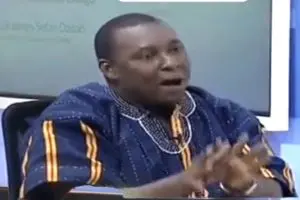
    The explosive confrontation between National Democratic Congress (NDC) Communications Officer Sammy Adu Gyamfi and Parliamentary Minority Leader Alexander Kwamina Afenyo‑Markin has ripped open a festering wound in Ghana’s democratic system. This is no longer a routine partisan quarrel. It is a direct assault on the credibility of Parliament, the integrity of state institutions, and the very idea that public office carries a duty of accountability.

    Gyamfi’s allegations are not the kind that can be swept aside with political spin. Accusing a sitting parliamentary leader of soliciting a GHS 10 million bribe to bury scrutiny over suspected financial irregularities is a charge that strikes at the heart of legislative oversight. Add to that the claim of substantial financial losses under Afenyo‑Markin’s leadership at the Ghana Water Company and the Electricity Company of Ghana (ECG), and the picture becomes even more damning. These are not whispers. These are accusations that demand immediate, independent, and uncompromising investigation.

    But confronting these allegations requires more than outrage. It requires asking the uncomfortable questions that Ghana’s political class consistently avoids.

    The Question of Timing:
    When did Sammy Adu Gyamfi and the NDC first obtain evidence of these alleged losses? If this information predates the current political clash, why was it not submitted to the appropriate investigative bodies? If the evidence is real, withholding it until it becomes politically useful is itself an act of irresponsibility. Ghanaians deserve to know whether this is genuine whistleblowing or strategic weaponization of information.

    Substance vs. Strategy:
    Were the losses at ECG and Ghana Water Company the result of deliberate corruption, or do they stem from chronic structural failures that have plagued these institutions for decades? The public deserves documented proof, not partisan theatrics. If corruption occurred, prosecutions must follow. If systemic inefficiencies are to blame, then Parliament must answer for its failure to reform institutions it oversees.

    This entire episode exposes a deeper rot in Ghana’s political culture, a bipartisan pact of silence that late President Jerry John Rawlings famously condemned as “scratch my back, I scratch your back.” Politicians hurl accusations at each other with theatrical fury, yet once the cameras turn away, nothing happens. No investigations. No sanctions. No consequences. The cycle repeats, and the public is expected to forget.

    The rot is further entrenched by the disturbing pattern of public officials escaping accountability for conduct that would land ordinary citizens in court. When lawmakers engage in public disorder, physical altercations, or blatant misconduct and still walk free, it sends a clear message: Ghana operates with two systems of justice, one for the governed, and one for the governing.

    Ghana cannot continue down this path. A democracy cannot survive on selective accountability, transactional silence, and performative outrage. Whether Sammy Adu Gyamfi’s allegations are ultimately proven or disproven, the state must act. Anti‑corruption agencies must investigate without fear or favor. Parliament must demonstrate that oversight is not a commodity to be traded. And political actors must understand that public office is not a shield against scrutiny.

    No individual, no matter their rank, party, or influence, should be allowed to operate above the obligations of public trust.

  • Draining the Cash Filled Poly Tanks: Why Ghana Must Demonetize the High Denomination Cedi to Crush Corrupt Hoarders

    Draining the Cash Filled Poly Tanks: Why Ghana Must Demonetize the High Denomination Cedi to Crush Corrupt Hoarders

    By Daniel Nii Okine — For Sankofaonline

    The political philosopher Niccolò Machiavelli argued that when confronting entrenched adversaries, the state must strike with such finality that the opponent can never recover. Ghana today stands precisely at such a crossroads. After years of systemic plunder, the Republic must choose between timid reforms or a decisive national reset that permanently dismantles the financial engines of corruption.

    For nearly a decade, the country endured a coordinated assault on its infrastructure. Electrical transformers, distribution cables, and other critical utility assets—procured with public funds—were diverted, stripped, and sold as scrap metal. The theft was not random; it was industrial. While citizens queued for water, battled power outages, and struggled under inflationary pressure, a small cartel of politically shielded actors accumulated obscene fortunes.

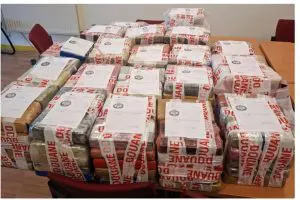
    These fortunes were not saved in banks. They were hoarded—stacked in poly tanks, hidden in shipping containers, buried in warehouses, and locked inside private vaults. Ghana’s shadow economy swelled as billions of cedis quietly exited the formal financial system. Today, these illicit reserves continue to distort national stability. They fund luxury real estate acquisitions, sponsor political agitation, and empower saboteurs who enjoy the comfort of opposition far more than the citizens they impoverished.

    The state cannot build a stable economy while criminals hold parallel treasuries. This is why Ghana must urgently pursue a currency redesign and demonetization of the ₵200 and ₵100 notes—a surgical, time‑bound policy that neutralizes hidden cash, exposes illicit wealth, and restores macroeconomic integrity.

    Neutralizing Hidden Cash Hoards

    A sudden redesign of the high‑denomination notes forces all holders to exchange old currency within a short, strictly enforced window. Those with legitimate savings will comply easily. But corrupt actors—whose fortunes are stored in unregistered vaults—face an impossible dilemma: bring billions to the bank and trigger scrutiny, or lose everything overnight. This is not punitive; it is corrective. A nation cannot allow stolen wealth to remain liquid.

    Enforcing Financial Accountability Through Mandatory Disclosure

    Once the redesign is announced, joint enforcement teams from the Financial Intelligence Centre, EOCO, and national security agencies must be deployed across banking halls. Anyone attempting to deposit suspiciously large sums must provide verifiable documentation of origin. This transforms the banking hall into a national accountability chamber. Unexplained deposits become grounds for immediate seizure, criminal investigation, and prosecution under anti‑money‑laundering statutes. For the first time, Ghana would force corrupt actors to confront the very institutions they weakened.

    Strengthening Macroeconomic Stability and Inflation Control

    Billions of cedis currently float outside the banking system, distorting liquidity and fueling artificial demand. This “ghost money” undermines the Bank of Ghana’s ability to accurately measure money supply and calibrate inflation controls. Once forced back into formal channels, liquidity becomes measurable, inflation drops further below single‑digit levels, monetary policy regains precision, and fiscal discipline becomes enforceable. A currency redesign is not merely a security measure—it is a macroeconomic stabilizer.

    The Political Imperative: Preventing a Return to Economic Sabotage

    Ghana has witnessed the consequences of underestimating political actors who return to power with unregulated financial arsenals. Hidden fortunes enable vote‑buying, disinformation campaigns, parallel governance networks, and destabilization of national recovery efforts. Allowing these illegal reserves to remain untouched is equivalent to handing saboteurs the keys to the Republic’s future. A decisive currency redesign would permanently dismantle their financial base.

    A Nation at the Threshold of Renewal

    Ghana’s current economic stabilization—lower inflation, improved food prices, and restored fiscal discipline—remains fragile. It cannot coexist with billions of stolen cedis circulating in the shadows. The state must choose between protecting the comfort of corrupt elites or securing the prosperity of ordinary citizens. Demonetizing the high‑denomination cedi is not radical. It is responsible. It is patriotic. It is the kind of bold, Machiavellian clarity required when a nation decides it will no longer be held hostage by its past.

    Ghana must drain the poly tanks. Ghana must reclaim its financial sovereignty. Ghana must ensure that stolen wealth never again becomes a weapon against its people.

  • The Destruction of Railway Lines in the Western Region: Ghana’s Steel Arteries Under Siege

    The Destruction of Railway Lines in the Western Region: Ghana’s Steel Arteries Under Siege

    By Daniel Nii Okine

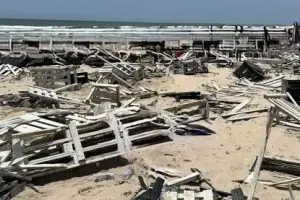
    A viral video circulating across social media has forced the nation to confront a tragedy so jarring, so senseless, that it demands immediate national outrage. Along the Takoradi to Nsuta corridor in the Western Region, railway lines built with public funds now dangle in mid‑air, suspended above deep, dangerous pits carved out by illegal miners. The earth beneath these tracks has been eaten away, leaving behind stagnant pools of polluted water and a landscape scarred by reckless excavation.

    What should be a thriving transport artery for hauling manganese to the Takoradi port or goods has been reduced to a grotesque symbol of state paralysis. The video’s contrast between a modern train and the mutilated rail line beneath it is a painful metaphor for Ghana’s condition: we speak of modernization, yet allow the foundations of our development to be destroyed in broad daylight.

    If this sight does not provoke anger, then silence becomes complicity in national decay.

    A Legacy of Political Evasion: NPP and NDC’s Shared Failure

    How does a functioning nation permit the destruction of active, high‑value infrastructure under the watch of its security apparatus? The answer lies in the bipartisan negligence of Ghana’s political leadership. Both the NPP and the NDC have treated galamsey as a political bargaining chip rather than an existential threat.

    When one party governs, the other exploits illegal mining communities for electoral gain. When power shifts, the roles reverse. The result is a cycle of political theatre, empty press briefings, and selective enforcement that emboldens illegal miners.

    Ghana has a Ministry of Railways Development, a Ministry of Lands and Natural Resources, regional security councils, police commands, military units, and national security operatives. Yet illegal miners, armed with excavators and high‑pressure hoses, operate freely on a public railway right‑of‑way. This is not a failure of capacity; it is a failure of courage.

    The estimated cost of repairing the Takoradi–Nsuta line exceeds $18 million. That bill will be paid by ordinary citizens, not the political actors who allowed this destruction to fester.

    A Global Contrast: Why This Would Be Impossible in China or Dubai

    Imagine illegal miners digging beneath a railway line in China as the presented rhetorically asked. It would be treated as a national security breach, triggering immediate and uncompromising enforcement. In Dubai, no individual could set up an illegal operation beneath a metro track without swift intervention within minutes.

    These nations understand a basic truth: infrastructure is sovereignty. To destroy a transport corridor is to sabotage the nation’s economic future.

    Yet in Ghana, illegal miners dismantle sovereign assets with impunity, while millions of citizens are left to shoulder the cost of their greed.

    The Price of National Silence

    The narrator of the viral video states plainly that silence in the face of this destruction is an endorsement of national ruin. When rail lines collapse, manganese haulage stops. When haulage stops, state revenue collapses. When revenue collapses, government borrowing increases, taxes rise, and citizens pay for repairs that should never have been necessary.

    We are financing the consequences of a criminal enterprise that benefits a reckless minority.

    A Call for Immediate National Action

    If Ghana wishes to prove that it is not a territory governed by illegal mining syndicates, decisive action is required now:

    • Permanent Security Deployment — Station military units along major infrastructure corridors, including railways, river basins, and high‑tension lines, with full authority to dismantle illegal operations immediately.
    • Prosecution of Local Enablers — Investigate and prosecute political actors, local authorities, and security officers who have shielded or profited from illegal mining.
    • Bipartisan Protection of National Assets — Declare critical infrastructure as non‑negotiable national security zones, removing political cover for offenders.

    A nation unable to protect its railway tracks cannot claim readiness for modernization. Ghana must abandon political rhetoric, enforce the law without fear or favor, and reclaim its steel arteries from the grip of destruction.

    If a nation can watch its railway lines collapse into the pits of galamsey and still pretend to have leadership, then we are not merely failing, we are surrendering our future to national saboteurs in broad daylight.

  • 24-Hr ECONOMY IN A NUTSHELL

    24-Hr ECONOMY IN A NUTSHELL

    By Amofa Baffoe, Republic of Ireland

    The 24-Hour Economy does not mean every Ghanaian must work 24 hours, nor does it mean every business must remain open throughout the night.

    It is an economic policy intended to enable and incentivise businesses and public services that can operate beyond the traditional 8am–5pm period to work multiple shifts, where economically viable.

    In practical terms:

    • A factory currently operating one 8-hour shift could be supported to operate two or three shifts, increasing production and creating additional jobs.
    • Ports, logistics, transport, manufacturing, agro-processing, healthcare, hospitality, security, digital services and selected government services can operate for extended hours or continuously, depending on demand.
    • The objective is to make better use of Ghana’s existing infrastructure and productive assets. A factory, port, processing plant or other expensive asset sitting idle for 16 hours every day represents unused productive capacity.
    • It is also intended to encourage new investment and production, particularly in agriculture and agro-processing, manufacturing, pharmaceuticals, textiles, tourism, logistics and other export-oriented industries.
    • Government’s role is to create the enabling environment- including reliable energy, security, transport, financing/investment incentives, technology and appropriate labour arrangements- to make extended operations commercially viable.
    • Most importantly, the programme is intended to create jobs by expanding productive activity, particularly opportunities for young people, while increasing exports and foreign-exchange earnings.

    So the 24-Hour Economy should not be reduced to “shops opening at midnight” or people working 24 hours without rest.

    Think of it this way: Ghana has 24 hours available every day, but much of our productive economy traditionally uses only about eight of them. The policy seeks to organise investment, infrastructure and labour so that appropriate sectors can productively use more of those hours through shifts.

    We can certainly debate whether government is implementing it effectively, how many jobs it has actually created and whether the promised investment will materialise. Those are legitimate questions.
    But first, we should distinguish the concept from its implementation.