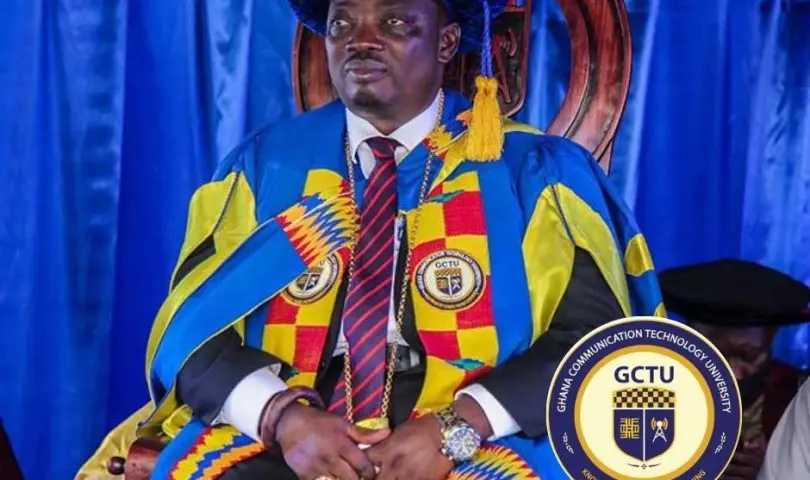

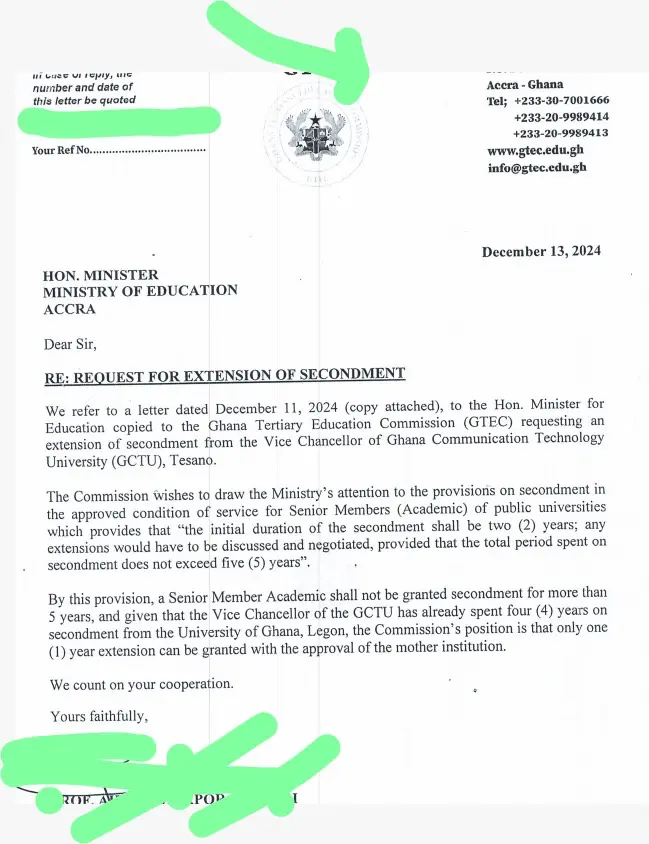
Public outcry is mounting over the planned secondment extension of Ghana Communication Technology University (GCTU) Vice Chancellor, Emmanuel Ohene Afoakwa, following revelations of entrenched corruption, statutory violations, and failed leadership that continue to undermine the university’s integrity and national relevance.
Statutory Violations and Questionable Reappointment
Reports reveal that the Vice Chancellor is currently serving what effectively constitutes a third term in office, a direct violation of the GCTU Act 2020, which limits vice chancellors to two terms. His reappointment process has been widely condemned, with credible information indicating that he chaired his own reappointment committee member election at the Academic Board, an act that flagrantly breaches ethical and governance norms.
Entrenched Corruption and Abuse of Office
The public outcry has been further fuelled by revelations including:
Lavish rent allowances of about GHC 51,000 monthly (about GHC 612,000 annually) as of last year, 2024, while students study without adequate classrooms or laboratories.
Frequent foreign travels costing the university over GHC 205,000 per trip in some cases, with questionable benefits to institutional development.
Personal vehicle rentals and fuel benefits used for private errands are charged to university finances.
Procurement violations, such as overpriced vehicles and washroom renovations with little developmental impact.
Nepotism and favoritism, with unqualified associates appointed to strategic academic and administrative positions, undermining meritocracy.
Dubious scholarship allocations, awarded based on sycophancy rather than merit, thereby depriving deserving students of financial support.
Legal Defeats and Financial Mismanagement
The Vice Chancellor has lost multiple court cases for failure to follow due process in university administration, exposing GCTU to reputational damage and escalating legal liabilities. Under his tenure:
The university was excluded from the 2024 Audit list due to persistent non-responsiveness to Auditor-General observations, raising grave accountability concerns.
Despite reporting income exceeding GHC 102 million in 2022, students endure overcrowded online classes, inadequate facilities, and resource-starved learning environments.
Incompetence Threatening Ghana’s Digitalisation Goals
Despite GCTU’s mandate as Ghana’s leading technology university, critics have described the current leadership as “clueless, incompetent, and unfit to drive Ghana’s digital transformation agenda.” Grandiose declarations of establishing a “Silicon Valley” remain empty slogans amidst substandard ICT labs lacking basic equipment and software.
Call to the Council Chair, Ministry of Education, and Government
This public outcry demands urgent and decisive action from the current Council Chair to restore credibility, enforce statutory compliance, and uphold ethical leadership at GCTU. The Council must:
Reject the Vice Chancellor’s secondment extension outright, in line with statutory limits and governance best practices.
Initiate a full forensic audit into financial management, procurement practices, recruitment, and scholarship allocations under his tenure.
Recover misappropriated funds and ensure prosecution of all culpable officeholders.
Implement structural reforms to re-establish transparency, meritocracy, and institutional integrity.
The Ministry of Education and the government must also sit up, enforce higher education regulatory standards, and protect public tertiary institutions from collapse due to entrenched corruption and failed leadership.
The Stakes for Ghana’s Future
Failure to act decisively will further erode public confidence in GCTU, undermine Ghana’s national digitalisation goals, and deny students the quality education they deserve. Ghana is likely one of Africa’s top academic crime institutions. – GCTU Leads Ghana – A lesson for institutions. *A wakeup call for the Ministry of Education and GTEC.