
There are childhood memories that never fade, memories that return with the weight of old stories, whispered warnings, and the trembling awe of a world shaped by forces we did not yet understand. One such memory has followed me from the late sixties to this very day.
It happened in Avenorpeme, on an evening wrapped in the solemn hush of a funeral. I was far too young to know who had passed, but not too young to feel the fear that settled over the town like a shadow.
Then the drumming began.The performance was very brief but memorable.
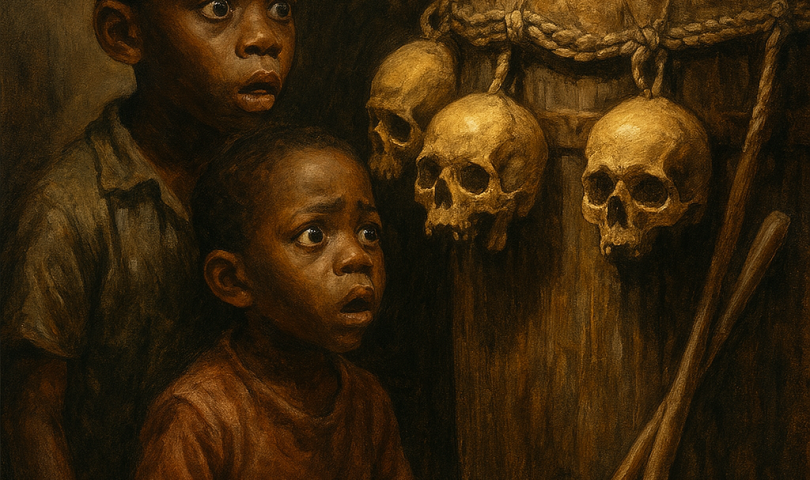
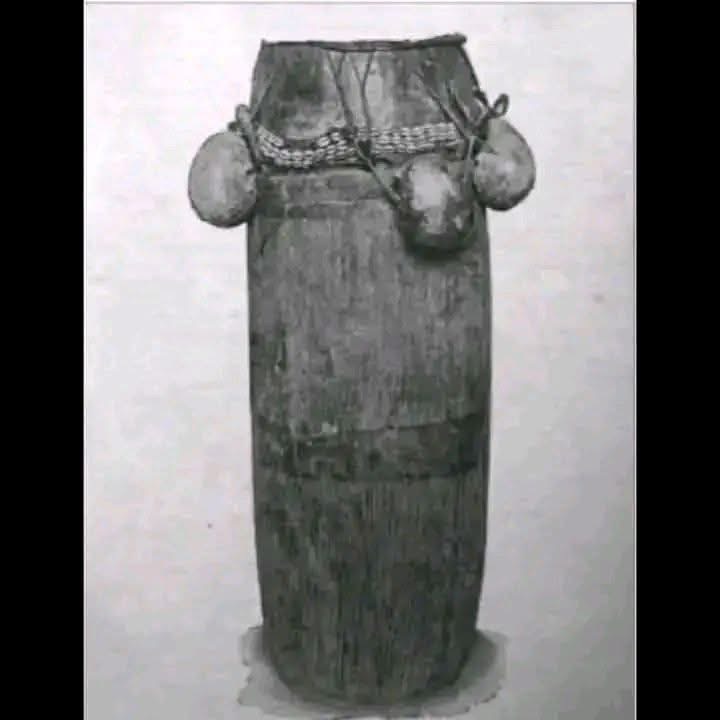
Not the familiar, comforting rhythm of communal gatherings. This was something older, deeper, something that felt as if it had walked out of the past. The drum itself was long, carved in the style of the ancient talking drums, and decorated with relics that carried stories of conquest and ancestral power. We were told that in the old days, such drums were adorned with the skulls of defeated enemies, a chilling reminder of war’s legacy and the spiritual weight of victory. Even the sticks used to strike the drum were said to be fashioned from human elbow bones.
To a child, that knowledge alone was enough to freeze the blood.
The drummers moved with a wild intensity, as if caught between the physical world and something beyond it. My brother and I didn’t wait to understand it. We ran, straight to my mother’s family house, seeking the safety only grandparents could offer. Yet even behind closed doors, the drumbeats found us, each strike echoing with a force that felt ancient and unyielding.
Later, we learned the drummers had come from Atsiavi. The town is the home of the formidable Hogbato shrine. It is located in the Keta Municipal Assembly of the Volta Region of Ghana. Situated within the traditional Anlo State. Just hearing that name was enough to drain the courage from any child. The shrine was spoken of in hushed tones, a place where the spiritual and earthly worlds were believed to meet without warning. For me, that night took the spine right out of my young body.
But with time, fear gave way to understanding. Those drummers were not simply performers, they were custodians of a heritage older than colonial borders, older than the villages themselves. The drum they carried was not an object of terror, but a vessel of memory, history, and identity. Only later did I understand that it was more than a drum struck with human bones, it was an invocation.
Today, that memory no longer frightens me. It humbles me. It reminds me of where I come from, of the depth of Ewe spirituality, and of the ways our ancestors encoded their victories, losses, and beliefs into the instruments that shaped our ceremonies.
Some memories fade.
This one never did.
And perhaps it wasn’t meant to.