By Charles Ntiamoah Mensah (Mr. CNN), 3G Media
The World Cup has always been more than a tournament. It is a global convener, a cultural amplifier, and when the moment is right, a bridge between past and present. On a spirited night in Philadelphia, after Ghana’s clash with Croatia, that bridge appeared in the most unexpected form: a bowl of waakye, a room full of patriotic energy, and the sudden arrival of one of Ghana’s most influential sons.

The “Waakye Mpɛ Dede Party,” hosted at the Marriott Hotel in downtown Philadelphia, was already buzzing long before kickoff.
Sponsored by Dr. Solomon Owusu, the respected mining expert, and catered by the ever‑dependable Akos Kitchen, the gathering was a celebration of Ghanaian identity, food, football, fellowship, and the unmistakable rhythm of home. As part of the 3G Media Family, the event carried the familiar signature of cultural excellence and community uplift.

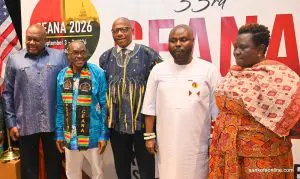
But the night’s defining moment came after the match, when Ibrahim Mahama, business titan and philanthropist, walked through the doors unannounced. His presence electrified the room. Conversations paused, cameras rose, and the atmosphere shifted from festive to historic. It was a reminder that the Ghanaian story. whether told in Accra, London, or Philadelphia, is woven through personalities whose influence transcends geography.
Yet the most profound moment of the night was not public. It was personal.
In the middle of the celebration, Ibrahim turned to me and began recounting a memory from more than thirty years ago, a memory I had not revisited in decades. He spoke of our lunches in Chiswick, London, at a friend’s home near where my family lived before I moved to the United States. He remembered the details with clarity: the conversations, the camaraderie, the youthful optimism that defined that chapter of our lives.
I stood there stunned. Not because the story was unfamiliar, but because he remembered it with such precision and affection. In a world where time erases so much, here was a man whose recollection stitched together the past and present with effortless grace. It was a reminder that our journeys, no matter how far they take us, are never truly solitary. They are shaped by the people who walk with us, even briefly, and leave footprints that resurface when destiny calls them back.
That night, the World Cup did what it always does: it united us. But it also did something rarer. It reopened a door to a shared history, one I had not realized still lived so vividly in the mind of a brother I gained long before I knew I needed one.
Football brought us together. Memory reminded us why we stay together.
In Philadelphia, under the glow of city lights and the aroma of waakye, I rediscovered a truth:
The world is small, but brotherhood is vast.And Ibrahim Mahama, my brother from another mother, proved it once again.