

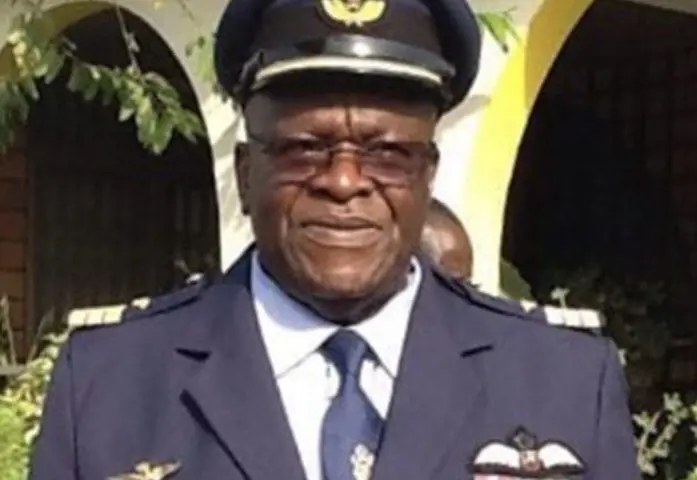

Retired Wing Commander Patrick Nelson Sogbodjor, a respected veteran of the Ghana Air Force, has raised serious questions about the circumstances surrounding the recent fatal military helicopter crash en route from Accra to Obuasi. His remarks come amid ongoing investigations and growing public concern over the tragedy that claimed multiple lives and shook the nation’s confidence in its military aviation protocols.
“I don’t think we have any tree which is 1000 or 2000 feet in Ghana,” Sogbodjor stated, casting doubt on preliminary reports suggesting that the aircraft’s rotor may have struck a tree. “The topography from Accra to Obuasi is also known. I think what we need to find out is what happened for the airplane to have come down for the rotor to touch or hit a tree.”
His comments underscore a broader unease among aviation experts and former military personnel, many of whom are calling for a transparent and technically rigorous inquiry. The route between Accra and Obuasi is well-charted and relatively flat, making the suggestion of a collision with a tall tree appear implausible to seasoned observers.
Sogbodjor’s intervention is not merely a technical critique,it is a call for accountability. As someone who has spent decades in service to Ghana’s air defense, his voice carries weight. His insistence on clarity and truth reflects a deeper concern for the safety of current personnel and the integrity of the Air Force’s operational standards.
The Ghana Armed Forces have yet to release a comprehensive report detailing the sequence of events that led to the crash. In the absence of clear answers, voices like Sogbodjor’s are galvanizing public demand for transparency, and for reforms that ensure such tragedies are not repeated.
As the investigation unfolds, the nation watches closely,not just for facts, but for justice.
Sankofaonline

Let’s clear some misconceptions. There’s no tree in Ghana or anywhere that grows to 1000 or 2000 feet. Even the tallest trees in the world barely reach 380 feet. But the crash site around Adansi Akrofuom in the Ashanti Region is known for its hilly, forested terrain, with elevations rising up to around 600 meters (about 2,000 feet) above sea level in some parts.
When a helicopter is flying low, especially under Visual Flight Rules (VFR) and visibility becomes poor due to fog, rain, or clouds, the pilot may descend to try and regain visual reference to the ground. But in doing so, they may unknowingly approach rising terrain, especially if trees are covering hilltops.
So if the helicopter struck trees, it likely wasn’t because the trees were “too tall”, it was because the helicopter was already low, and the ground elevation had risen beneath it. This can happen easily in areas like Adansi where the landscape is undulating, with forested hills and no flat plains for long stretches.
It’s possible that poor weather or a technical issue caused the pilot to descend or lose orientation and in such a case, even 150-foot-tall trees on a 600-meter hill could pose a fatal hazard.
This tragic incident highlights the importance of terrain awareness, weather forecasting, and perhaps even the need for improved instrument navigation systems for such flights in Ghana’s mixed terrain.
May the souls of those lost rest in peace, and may we all learn the right lessons to prevent this from ever happening again.