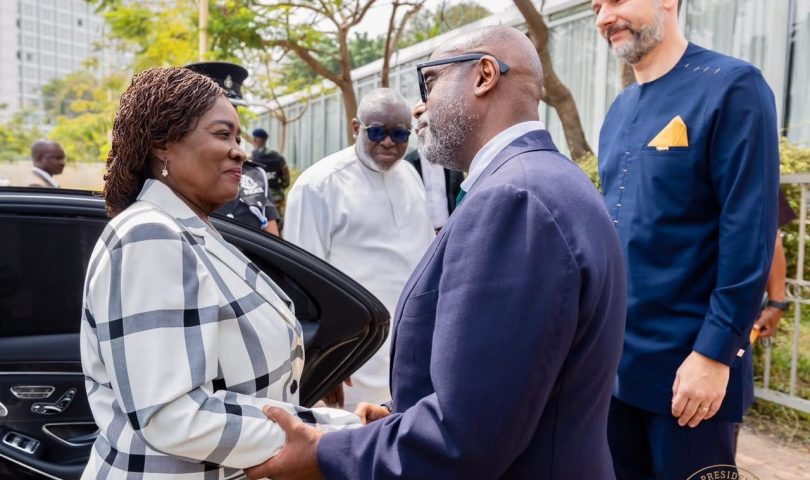

Vice President Professor Jane Naana Opoku-Agyemang has called for a fundamental shift in the relationship between African nations and the International Monetary Fund (IMF), emphasizing that emergency support alone is insufficient to address the continent’s structural challenges. Speaking at a high-level meeting with heads of IMF country and regional offices in Africa, the Vice President reflected on Ghana’s recent economic trajectory, noting that the nation’s macroeconomic reality has shifted toward stability.
She highlighted key indicators of this recovery, including a return to single-digit inflation, a more stable Cedi, and strengthened real GDP growth, asserting that these gains are the result of difficult but necessary domestic reforms.
During the discussions, Professor Opoku-Agyemang stated that Ghana is entering a new phase of development characterized by cautious optimism and a determination to lead its own reform agenda. She noted that while international financial institutions remain relevant, recent global shifts indicate that Africa is increasingly prepared to pursue self-reliance and internal solutions.
The Vice President reaffirmed President John Mahama’s position that future engagements with the IMF must evolve to account for the high borrowing costs faced by African nations and the broader need for development finance that supports long-term growth rather than just crisis management.
Concluding her remarks, the Vice President pointed to the African Continental Free Trade Area (AfCFTA) as a cornerstone of Africa’s potential for economic independence. She urged for a model of international cooperation that is both fair and coordinated, ensuring that partnerships are mutually beneficial rather than prescriptive. By focusing on structural reforms and self-reliance, she argued that Ghana and its continental neighbors can better navigate global economic uncertainties while building more resilient, sovereign economies.
Ruth Abla ADJORLOLO