
Sankofaonline News Desk
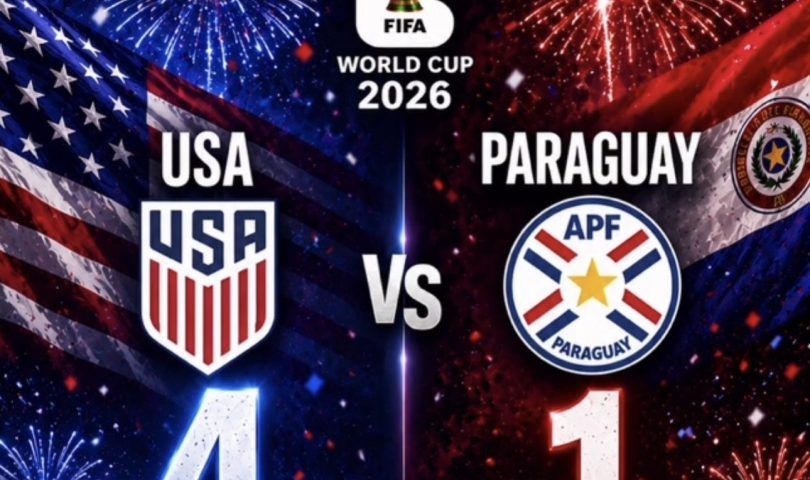
The United States didn’t just beat Honduras 4–1 , they sent a message, a thunderous, chest‑thumping declaration that the era of timid American football is over. This was not a routine group‑stage victory. This was a demolition, a recalibration of expectations, and a reminder that when the U.S. decides to play with conviction, they can overwhelm opponents with frightening ease.
From the opening whistle, the Americans played like a team tired of being underestimated. They pressed with venom, attacked with purpose, and carried themselves with the kind of swagger that has too often been reserved for other footballing nations. Honduras felt the full weight of that shift , pinned back, suffocated, and forced into survival mode long before the scoreboard reflected the inevitable.
At the center of this transformation stood Folarin Jerry Balogun, the striker whose arrival has changed the entire complexion of the U.S. attack. His brace was not just a statistical contribution; it was a cultural moment. His first goal, a masterclass in composure, showed the ice in his veins. His second, a violent, net‑rattling strike, showed the fire in his boots. Balogun didn’t merely score , he set the emotional temperature of the match. He played like a man who understands that greatness is not requested; it is seized.
The midfield followed his lead, slicing Honduras apart with surgical precision. They recycled possession with maturity, dictated tempo with authority, and attacked with a clarity that has been missing from American football for far too long.This was not the hesitant, sideways‑passing U.S. of old. This was a team that moved forward with intent , vertical, aggressive, unapologetic.
Defensively, the U.S. back line exuded calm. They absorbed the few Honduran surges with poise, and although the goalkeeper conceded once, his earlier interventions ensured the match never drifted out of American control. One momentary lapse, yes , but never a hint of vulnerability.
For Gregg Berhalter, this performance was more than a win. It was validation. It was the kind of authoritative opening salvo that shifts narratives and stiffens spines. No cautious “we’ll grow into the tournament” rhetoric , this was a front‑foot declaration that the United States is here to compete, not merely participate. The 4–1 scoreline wasn’t just a result; it was a warning.
And now, the real pressure begins.
Because with Balogun in murderous form, with the midfield humming like a well‑oiled engine, and with a home crowd ready to roar this team into history, the question becomes unavoidable:Will the United States build on this fire or waste the spark?