
By Fuvi Kloku For Sankofaonline : October 3 2025
Yesterday marked the 75th anniversary of the Daily Graphic, Ghana’s trailblazing newspaper that began printing in 1950, seven years before our nation attained independence. From its earliest issues, Graphic reporters chronicled the euphoria of nationhood, documented Kwame Nkrumah’s dream of rapid industrialization, called for African unity, and captured the first spades turning on the cemented lanes of the Tema Motorway.
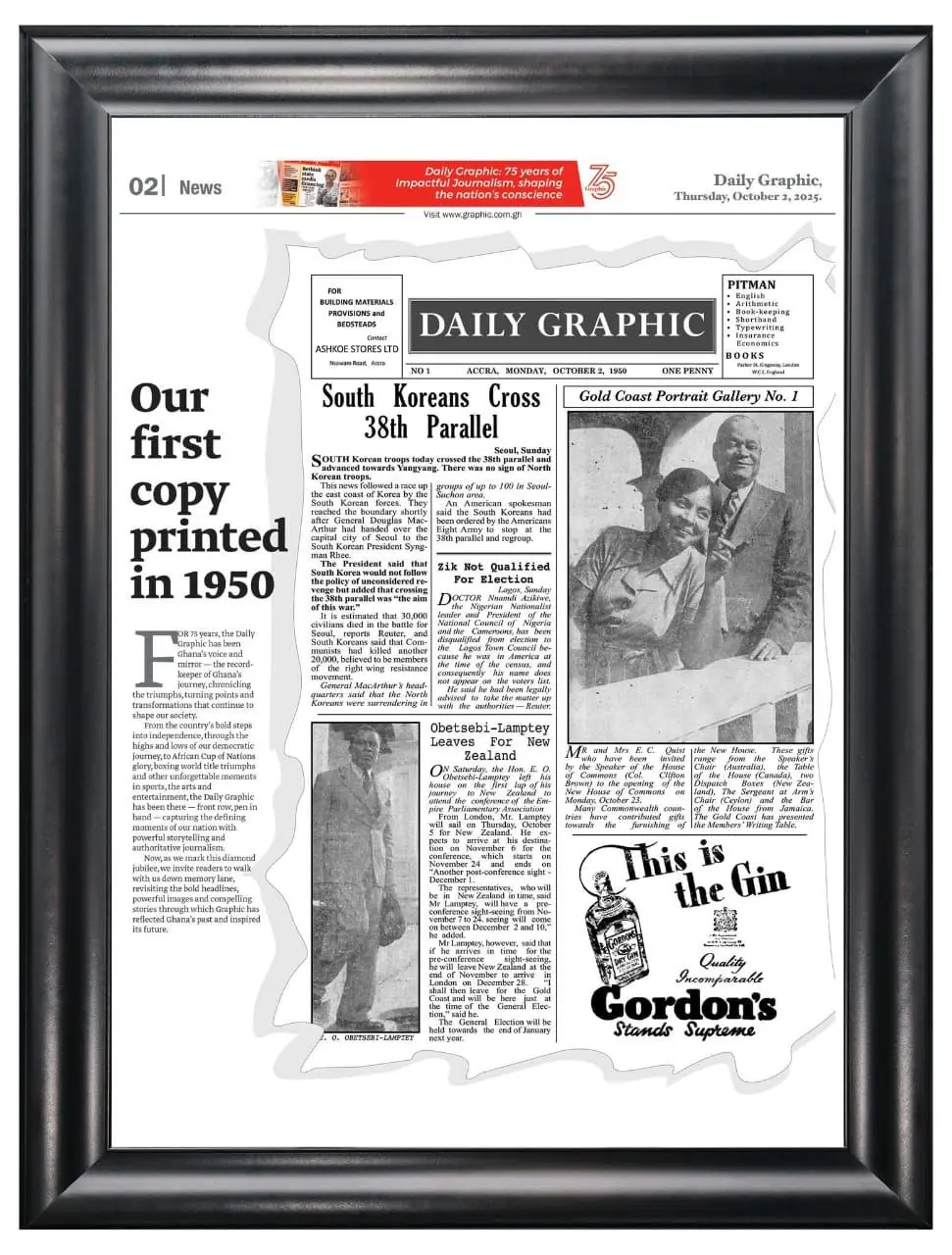
Through the decades, the paper bore witness to triumphs and upheavals alike. It traced the swelling waters of the Akosombo Dam, charted the rhythmic cadence of military coups, and recorded each pendulum swing of civilian rule. Its masthead has held steady even as presses hesitated and governments urged caution , solidifying its place as the archive of Ghana’s public life.
But history reminds us: survival is not the same as relevance. In recent years, many readers have bristled at headlines that skim over tragedies demanding deeper inquiry; the killing of Ya-Na, the horrific Ayawaso election incident, the election-related deaths of Ghanaians in Techiman etc. When the safety and dignity of citizens are at stake, brief reports and official statements and investigations are not enough. The Fourth Estate must probe, verify, and challenge, no matter how uncomfortable the truth or whom it implicates.
Across the globe, heavyweight newspapers such as The Washington Post and The Washington Times have shown that rigorous investigative journalism can reshape public policy, expose corruption, and strengthen democracy. Their reporters unearth documents, cultivate whistleblowers, and marshal data to tell stories that spur accountability. Ghana’s flagship daily must chart a similar course: invest in investigative “desks”, empower journalists with training and editorial freedom, and embrace tools like freedom-of-information requests and data-driven reporting.
Digital transformation also beckons. As readers migrate online, Graphic can lead Ghanaian journalism by building interactive platforms, hosting live forums with policymakers, and soliciting community tips on unfolding stories. In doing so, it will not only honor its historic role but also forge a dynamic public square for the next generation.

On this milestone, we extend warm congratulations to the Daily Graphic. We celebrate its seven and a half decades of service, and we urge the editorial team to seize this anniversary as a moment of introspection and renewal. By rekindling the fearless spirit of inquiry and adapting to the demands of twenty-first-century journalism, the Graphic can once again set the standard for truth-seeking in Ghana.
As the country evolves, so too must its watchtower of news. The next 75 years must be defined not by comfort, but by courage, not by proximity to power, but by proximity to the truth.