


An Opinion Editorial By Sankofaonline | September 2, 2026
There is a fundamental difference between enforcing the law and ambushing citizens with it. If the purpose of a new traffic enforcement regime is genuinely to save lives, then compliance must be made possible before punishment is made profitable.
The ongoing rollout of Traffitech GH has sparked a national conversation about road safety, technology, and accountability. In principle, the use of technology to reduce speeding, improve driver discipline, and decrease road fatalities is commendable. Every responsible citizen wants safer roads. Every parent wants children protected near schools. Every commuter wants order instead of chaos.
Yet the critical question remains: Is Ghana building a compliance system, or is it building an automated penalty machine?
As journalist Menasseh Azure rightly observed, the implementation, at least in its current form, risks appearing more extortive than educational.
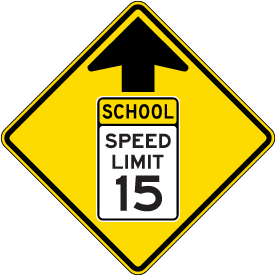
No serious society expects citizens to obey rules that are not clearly communicated. Across the United States and many developed jurisdictions, traffic laws are enforced within a framework of notice, visibility, and fairness. As motorists approach a school zone, prominent warning signs announce that they are entering a restricted area. Flashing beacons often reinforce the warning. Speed limits are clearly posted and repeated. Equally important, when drivers leave the zone, another sign informs them that they have exited the restriction and that normal speed limits have resumed.
The philosophy is simple: inform first, enforce second.
A driver should never be left guessing.
In Ghana, however, motorists are frequently expected to navigate an obstacle course of invisible regulations. Many school zones lack proper signage. Numerous roads have no marked speed limits. Lane markings are faded or nonexistent. One-way streets often rely more on local knowledge than official direction. Sometimes drivers discover they have entered a restricted area only after another motorist shouts an insult through a window.
This is not regulation. It is improvisation.
How can a driver reasonably be expected to comply with a 30 km/h speed limit near a school whose existence is not clearly identified? How can authorities impose sanctions based on assumptions rather than communication? Are motorists expected to possess supernatural instincts? Must they somehow sense where every school, restricted zone, or enforcement camera is located?
Justice does not work that way.
The principle of fairness requires that citizens be given adequate notice before penalties are imposed. This is not merely a moral principle; it is a legal one. In many advanced democracies, courts have repeatedly held that government agencies must provide clear signage and reasonable warning before punitive measures can be justified. The law should not operate like a trap.
This is why Ghanaian lawyers should begin examining these issues more aggressively.
Strategic litigation has long served as an important tool for exposing institutional weaknesses and compelling reform. The objective should not be to undermine road safety. Quite the opposite. Thoughtful legal challenges could force authorities to address glaring deficiencies in road infrastructure, signage, public education, and procedural fairness.
If a speed camera issues a fine in an area where there is no clearly visible speed-limit sign, should that penalty stand?
If a motorist enters a school zone that lacks proper identification, should the state automatically prevail?
If traffic regulations are inadequately communicated, can citizens be held solely responsible for violations?
These are not anti-government questions. They are pro-accountability questions.
Indeed, lawsuits challenging poorly marked zones may ultimately strengthen Traffitech by compelling agencies to establish standards that are transparent, defensible, and fair. Well-designed systems withstand scrutiny. Poorly designed systems fear it.
The responsibility for road safety is shared. Drivers must obey traffic laws, exercise caution, and respect speed limits. But governments also have obligations. The state must provide visible signs, maintain road markings, install appropriate warnings, and ensure regulations are communicated effectively.
The social contract cannot be one-sided.
A government cannot neglect its duties and then punish citizens for failing to compensate for that neglect.
Furthermore, concerns extend beyond signage. What happens when a mechanic takes a customer’s vehicle for a post-repair test drive and triggers a traffic violation? Who bears responsibility? The registered owner? The mechanic? The repair shop? What evidentiary process exists for contesting such cases?
These questions are not theoretical. They are practical realities that thousands of motorists may soon encounter.
Before authorities celebrate enforcement statistics and revenue collections, they must answer these concerns. Otherwise, public trust will erode, and a potentially beneficial initiative will be viewed with suspicion.
Ghana undoubtedly needs safer roads. Technology can help achieve that objective. But technology alone does not create justice. Cameras do not replace fairness. Automated fines do not substitute for proper road infrastructure. Algorithms cannot cure administrative shortcomings.
The success of Traffitech will not be measured by the number of tickets issued. It will be measured by whether it changes driver behavior while maintaining public confidence in the fairness of the system.
The state must therefore slow down, educate the public, install adequate signage, properly mark roadways, identify school zones, warn motorists when they are entering and leaving restricted areas, and ensure that the law is visible before it becomes punitive.
Until then, many Ghanaians will understandably ask a simple question:
If the government has failed to clearly identify the rules of the road, is it fair to punish motorists for not seeing what was never properly shown to them?
And that is precisely the question Ghana’s courts, lawyers, and policymakers should urgently help answer.
