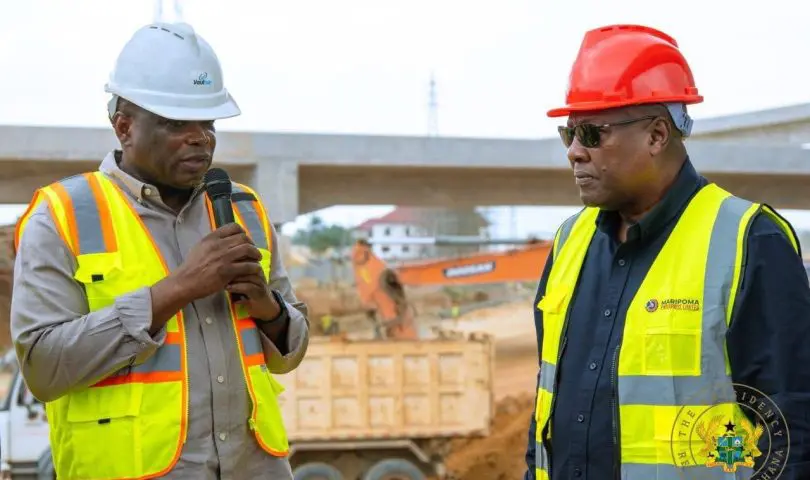

By Nii Okine Daniel /Sankofaonline Contributor
Ghana is a unitary state, a concept enshrined in our national consciousness and reinforced by history. This fundamental principle dictates that while regions possess unique identities and critical economic strengths, the ultimate vision and allocation of resources must serve the entire nation, coordinated from the center.
It is against this backdrop that the recent public correspondence from various regional bodies, including the notable letter from the Asante Youth Association (AYA) regarding the Ashanti Regional Expressway Project, requires sober reflection. While advocacy is vital to democracy, the subtle shift toward a language of “demand notice,” rather than respectful, robust dialogue, risks setting a dangerous precedent for national cohesion.
The Peril of Pervasive Regional Demands
Imagine the scenario: if every ethnic group or region were to approach the central government, up to and including the sitting President, with letters couched in the language of political ultimatums.
- The citizens of the North would demand completion of the Pwalugu Dam with a tight deadline.
- The people of the Volta Region would issue notices over coastal erosion barriers.
- The Greater Accra Regional Alliance would make demands on decongesting the ports and the city’s complex road network.
This pervasive atmosphere of regional demands would not foster accountability; it would foster fragmentation and political gridlock. In a unitary state like Ghana, the government operates under a mandate to ensure equitable and efficient development across all regions. Every region is important, and every citizen deserves the dignity of transparent and respectful engagement from their leaders.
The tone of the communication matters because it reflects the health of our social contract. When key stakeholders adopt an adversarial approach, it undermines the trust required for continuous social cohesion.
Development as a Partnership, Not a Prerogative
The case of the Ashanti Regional Expressway and the Boankra Inland Port (BILT) is a perfect illustration of how regional development is intrinsically linked to the national good.
The AYA is absolutely correct in arguing that the Ashanti Region is an economic anchor. The synergy between a functioning Inland Port at Boankra (to ease congestion at Tema and facilitate transit trade to landlocked neighbours) and a world-class expressway (to serve as the logistics artery) is not a regional project; it is the backbone of Ghana’s National Logistics Strategy and a critical plank of our AfCFTA success.
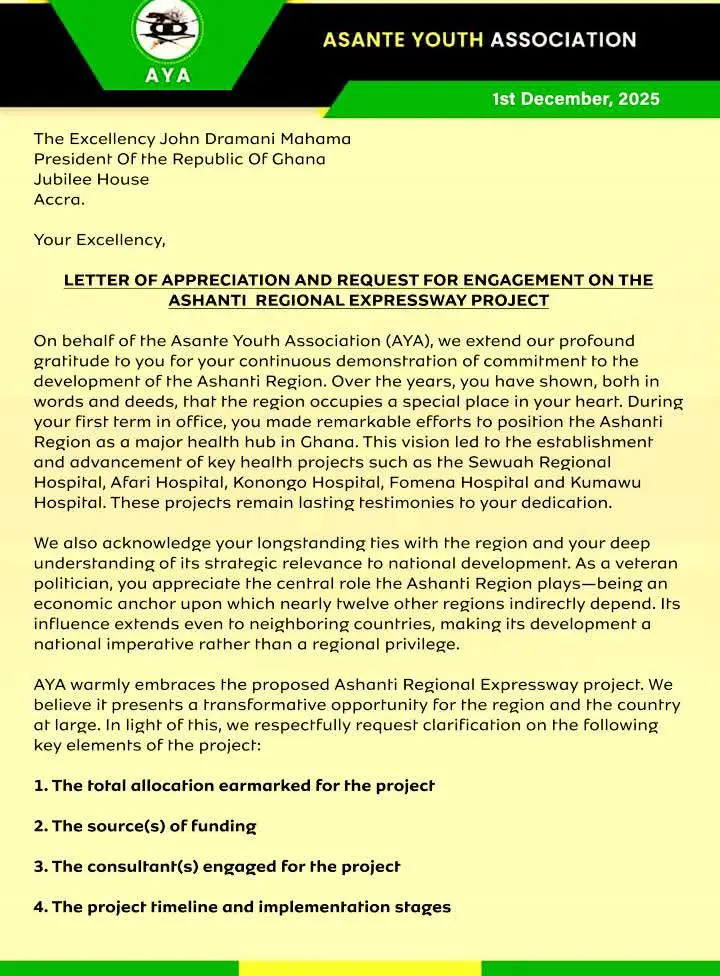
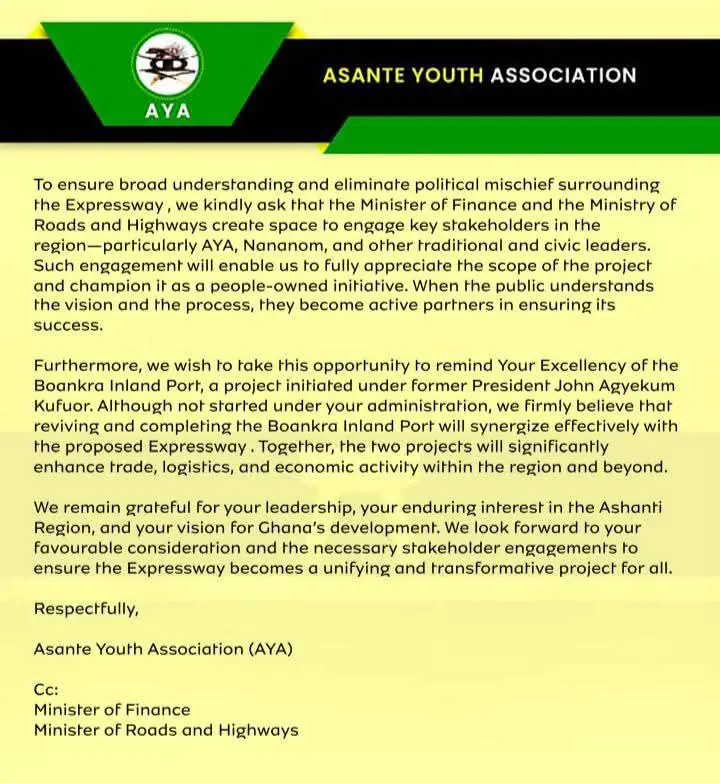
Therefore, the pursuit of transparency,the demand for details on funding, timelines, and consultants,is entirely legitimate. Transparency is the foundation of respect. The government has a duty to share this information and facilitate engagement with Nananom, the AYA, and other civic bodies to build national ownership of the project.
However, the pursuit of transparency must be channeled through constructive processes. A demand is a non-negotiable insistence; a request for dialogue is a gesture of partnership. The former alienates the central authority; the latter engages it.
The Consequences of Choice
Our political choices, especially in election seasons, have consequences. The mandate we give leaders is to govern for all of Ghana, not just a section of it.
When regional leaders or powerful groups resort to an aggressive posture, it can inadvertently politicize necessary developmental projects, slowing them down or creating unnecessary tension.
Let us heed the underlying message of the AYA’s advocacy, which is a passionate call for action and accountability. But let the vehicle for that message be one of mutual respect and constructive dialogue.
Ghana’s strength lies in its unity,a unity that allows an Ashanti-based project to be seen as an essential win for the North, the Volta, and the entire West African sub-region. We must communicate in a respectful manner, ensuring that the pursuit of regional interests always reinforces, and never threatens, the continuous social cohesion of our beloved unitary state.
Let us value others, their regions, and their needs, just as we value our own. The future of Ghana’s infrastructure and its political stability depends on it.