
By Daniel Nii Okine
…….Reporting state enterprises have delivered a combined net profit of GHS 19.8 billion under Mahama’s Reset Agenda, but the fight has only just begun.
The most dangerous mistake any political force can commit is to sever its own arteries, to forget its roots, and to abandon the moral soil from which its legitimacy once sprang. Flight Lieutenant Jerry John Rawlings warned of this peril, not as poetic rhetoric or convenient political ornamentation, but as a blazing national alarm bell. Power, he insisted with uncompromising clarity, must never become a cushion for comfort. It must remain a heavy burden of service, a rigid discipline of probity, and a blood bound covenant of accountability. Today, as Ghana stands breathless at yet another crossroads of governance and history, that warning does not merely echo, it roars.
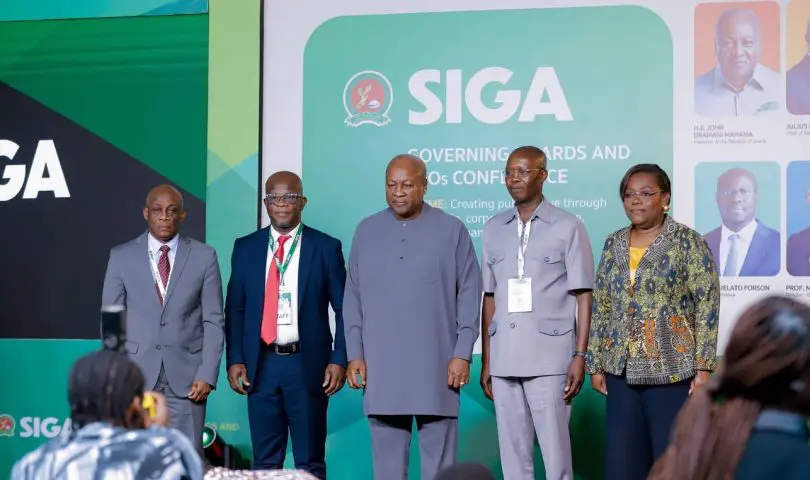
For too long, the Ghanaian people watched as the state was treated as a private estate. State Owned Enterprises were allowed to mutate into cemeteries of mismanagement, places where public funds went to hemorrhage and die. But under President John Dramani Mahama, the Reset Agenda has emerged not as a catchy slogan, but as a radical, unapologetic confrontation with decay.
This agenda demands that we stop romanticizing incompetence. It demands that we stop normalizing institutional paralysis, and stop pretending that corruption is an unavoidable, naturally occurring Ghanaian climate. The Reset Agenda draws a monolithic line in the sand, insisting that Boards of Directors and Chief Executives finally understand their true mandate, they are the fiercely scrutinized custodians of the public purse, not its privileged beneficiaries. Every single cedi entrusted to the state must produce measurable, undeniable value, no more excuses, no more financial wastage, and an absolute end to the familiar, insulting chorus of bureaucratic amnesia.
The results of this unyielding philosophy speak for themselves. The 2025 State Ownership Report is not just a document, it is a verdict. It is the undeniable proof of what happens when a nation refuses to settle for less. After years of catastrophic losses, the reporting entities have delivered a staggering combined net profit of GHS 19.8 billion.
Let that number sink in. Revenue has climbed. Recoverable irregularities have plummeted. For the first time in recent memory, the Ghanaian taxpayer has been given concrete, undeniable evidence that disciplined, patriotic leadership is not a myth. These billions did not fall from the sky like rain, nor were they the result of economic luck. They were carved out of intentional governance. They are the direct result of razor sharp oversight and an absolute, iron clad refusal to tolerate the culture of impunity that once suffocated our public sector.
But let us be brutally, uncomfortably honest, gains are not permanent victories. Gains are fragile.
These hard won billions can evaporate overnight if complacency is allowed to creep back into our corridors of power. They will vanish if political convenience is ever again allowed to replace accountability, or if the newly appointed guardians of our institutions forget that they serve the Republic of Ghana, not their own ambitions. We must protect these gains. We must close the remaining gaps. We must deliver the ultimate value that the Ghanaian people have bled for and deserve. This is no longer a polite suggestion, it is a supreme national obligation.
President Mahama frequently reminds us that the change starts with you, but the truth beneath that statement is far sharper. True change begins with courage. It requires the courage to confront systemic corruption without flinching. It requires the courage to demand accountability from friends as well as foes. It requires the courage to reject mediocrity, and above all, the courage to remember our roots.
Jerry John Rawlings did not build a revolutionary movement for it to be sanitized and turned into a harmless museum piece. He built a moral compass forged in the fire of justice, and the Reset Agenda is its most potent modern expression.
If Ghana is to rise, its institutions must be the indestructible engines of its ascent. If Ghana is to truly reset, its leaders must first reset their own consciences. And if the National Democratic Congress is to honor the blood and sweat of its roots, it must never allow political power to become a sanctuary for elite comfort. Power is not a throne, it is a trench. It is a battlefield for public service.
We do not inherit power to rest. We inherit it to build.
The Republic is awake. The Republic is watching. And to those who would ever dare to barter our future for their own comfort, hear this loud and clear, the moral arc of Ghana is long, but it bends relentlessly toward accountability. We will not retreat. We will not compromise. And we will never forgive those who forget.