
By Daniel Nii Okine
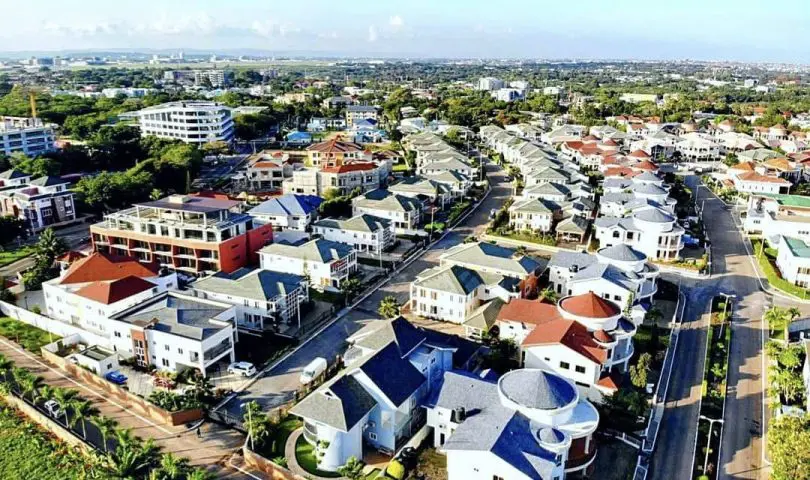
Ghana is facing a land crisis that can no longer be explained away as urban growth or market forces. It is a crisis manufactured by human greed, institutional failure, and a land administration system that has become a playground for opportunists. When four acres of land in Cantonments sells for seventeen million dollars, Ghana is not developing, Ghana is losing its mind.
An acre priced at four point two five million dollars is not a sign of prosperity, it is a sign of a broken system. It is a sign that land ownership has become a luxury reserved for the wealthy, the politically connected, and those who benefit from the shadows of corruption. Ordinary Ghanaians are being priced out of their own country.
The comparison with California exposes the scale of the madness. Remote desert land sells for one thousand to five thousand dollars per acre. Rural land sells for five thousand to twenty five thousand. Agricultural land in the Central Valley ranges from ten thousand to thirty thousand. Even high end coastal land in Silicon Valley, one of the most expensive real estate markets in the world, ranges from one hundred thousand to one point seven five million per acre.
Yet Ghana, a developing country with struggling infrastructure, inconsistent utilities, and a chaotic land registry, is selling land at more than double Silicon Valley’s upper range. This is not development, it is exploitation.
Other African countries offer a sobering contrast. In Kenya, prime land in Nairobi’s Westlands or Karen ranges between one million and two million dollars per acre, and even that is considered excessive. In Rwanda, land prices remain regulated and predictable, with urban plots rarely crossing two hundred thousand dollars per acre. Ghana’s prices are not just high, they are astronomically detached from reality.
The problem is not only cost. It is chaos. Families sell the same land multiple times. Chiefs allocate land without documentation. Middlemen inflate prices without justification. State agencies fail to enforce boundaries or protect buyers. The result is an unregulated industry where thieves thrive, corruption flourishes, and illegal money finds a comfortable home.
Ghana’s land sector has become a hostile environment for genuine investors and an impossible terrain for ordinary citizens. The country cannot build affordable housing when land itself is priced like gold. It cannot attract responsible developers when every transaction is a gamble. It cannot claim progress when land ownership is a battlefield.
This crisis demands condemnation. It demands reform. It demands a government that is willing to confront the cartels, the families, the chiefs, and the officials who have turned land into a weapon against the people. Ghana cannot continue down this path. The land belongs to the nation, not to the few who manipulate it for personal gain.
Until Ghana confronts this madness, development will remain a slogan, housing will remain a dream, and land will remain a commodity controlled by those who profit from disorder.