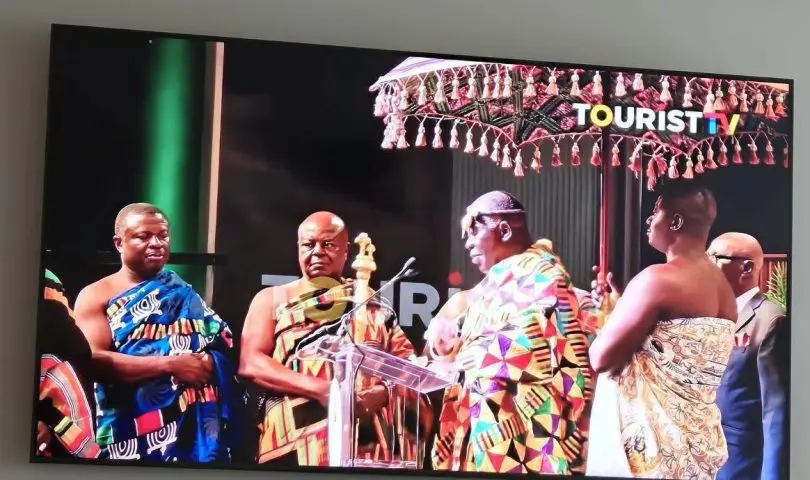

On behalf of my dear wife and children, and on behalf of the chiefs and people of Asanteman, I bring you warm greetings.
I am deeply honored to stand before you at Howard University today, an institution whose history occupies a distinguished place in the intellectual, political, and social advancement of people of African descent.
I express my sincere appreciation to the Board of the Millennium Excellence Foundation, and to the leadership of Howard University for extending this invitation to me, and for creating this opportunity for us to reflect together on matters that concern not only Ghana or Africa, but the wider global family of African peoples across the world.
A university is more than an institution where knowledge is transmitted and academic degrees are awarded. It is an institution of memory, intellectual courage, social responsibility, and service. Since its establishment, it has served as the self-enrichment of many men of African descent to demonstrate that education is not simply a pathway toward individual advancement, but also a responsibility toward society.
Its commitment to truth and service makes this university an especially appropriate place to consider the relationship among governance, cultural preservation, traditional leadership, and the reconstruction of meaningful bonds between Africa and its diaspora.
The theme placed before us is profound because it brings together three subjects that are too often considered separately:
- Governance, concerning the organization of power and responsibility;
- Culture, concerning the meaning attached to human existence; and
- The Diaspora, concerning the survival of identity across geography, displacement, and historical rupture.
Yet beneath all these three lies one fundamental question: How does a people organize itself, understand itself, and transmit to future generations an inheritance worthy of preservation?
My proposition this evening is that traditional leadership—when exercised with integrity, wisdom, accountability, and respect for constitutional governance—remains an important part of the answer to that question.
Traditional leadership should not be understood merely as an institution inherited from the past, nor should culture be reduced to ceremonial display. Properly understood, both are living resources that can contribute to good governance, social cohesion, peacebuilding, educational development, cultural confidence, and the renewal of relationships between Africa and the people of African descent throughout the world.
Governance is frequently confused with government. Yet while government refers to the formal institutions of the state—the executive, the legislature, the judiciary, ministries, public agencies, and the administrative machinery through which public policy is implemented—governance is wider.
It concerns the manner in which authority is acquired, exercised, limited, and transferred; how resources are managed; how disputes are resolved; how leaders are held accountable; how the vulnerable are protected; and how society defines and pursues the common good.
A nation may possess an impressive constitution and yet suffer bad governance. It may hold regular elections and still fail to provide justice, security, education, healthcare, or meaningful participation for substantial sections of its population. Institutions do not operate in a moral vacuum; they operate within cultures, habits, expectations, and systems of social obligation.
Law is indispensable, but law alone cannot create a good society. A constitution may determine what a public official is permitted to do, but culture helps determine what society believes a responsible leader ought to do. A court may punish corruption after the offense occurs, but society must also cultivate the moral conviction that public resources are held in trust and must not be treated as private property.
A judicial decision may determine the legal rights of parties to a dispute, but judgment alone does not always restore damaged relationships within families and communities.
Governance, then, requires more than institutional machinery. It requires legitimacy, trust, moral restraint, memory, and shared expectations, as well as citizens who understand that rights are inseparable from obligations, and that power is inseparable from responsibility.
Traditional African political systems understood this relationship between authority and moral obligation in ways that deserve serious academic attention. Leadership was rarely conceived merely as the possession of unrestricted power. The ruler was expected to protect the community, administer justice, preserve the land, defend the vulnerable, and maintain the people’s inheritance.
Authority was therefore accompanied by responsibility, and that principle remains relevant to our modern world. Power, separated from responsibility, becomes dangerous. Authority, separated from accountability, eventually loses legitimacy. And privilege, that sees privilege without a sense of obligation, weakens the institution from which that privilege derives.
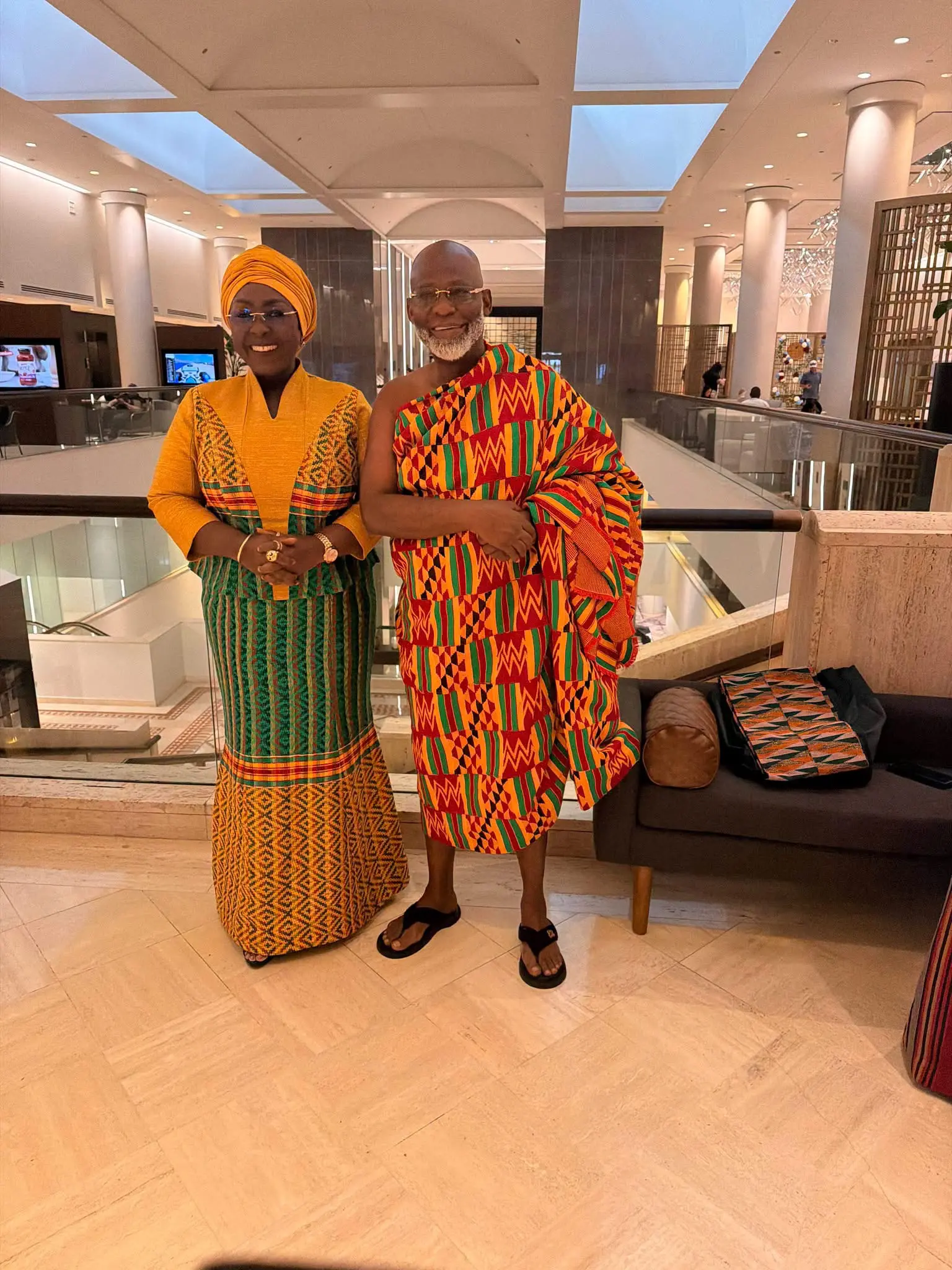
Permit me, in this respect, to draw upon the Asante constitutional tradition. The Asante political system is sometimes misunderstood by those who encounter only its visible manifestations: the Golden Stool, the royal umbrellas, the drums, the gold ornaments, the linguists as they stand here, the swords, the procession, and the great ceremonies of state. These symbols are important because they are the visible medium through which memory and authority are communicated. Yet beneath them lies a sophisticated philosophy of political responsibility.
The Golden Stool is not the private property of the Asantehene. It represents the unity, identity, historical continuity, and collective spirit of Asanteman. The Asantehene is therefore not the owner of the nation, but its custodian, and that distinction is fundamental. The occupant of the Golden Stool receives an inheritance that existed before him and which must endure after him. He holds authority temporarily, but he holds the people’s authority in trust. The land, institutions, memories, and moral obligations associated with the stool cannot legitimately be reduced to the personal interests of the individual who occupies it.
Viewed from this perspective, leadership is a form of trusteeship. The idea of trusteeship contains an important lesson for all systems of governance. We hold office temporarily; we inherit institutions from those who came before us, and although we exercise authority in the present, our decisions affect people who are not yet born. The leader who consumes everything for the advantage of the present generation has misunderstood the nature of stewardship.
This principle has particular urgency in an age of environmental degradation, uncontrolled extraction, exploitation of natural resources, and political decision-making dominated by short-term considerations. We did not create the rivers, forests, land, and the complex ecological systems that sustain us; we inherited them. Whatever our authority may be today, we have no moral right to destroy the inheritance of generations unborn.
Traditional governance also reminds us that legitimate authority requires consultation. Our people say: “Ti koro nko agyina”—meaning that one head does not constitute a council. And we also say: “Nyansa nni ba ko ti mu”—meaning that wisdom does not reside in the head of one person alone. These are not merely attractive proverbs; they communicate a political philosophy.
The Asantehene exercises authority through an established order of chiefs, queen mothers, elders, linguists, and recognized customary officers. Matters are considered, evidence may be heard, historical precedent may be recalled, different perspectives may be presented, and decisions are shaped by consultation and concern for communal harmony.
Consultation does not mean that leadership has no authority, nor does listening diminish the dignity of the leader. The leader who refuses to hear alternative opinion eventually becomes imprisoned by those who tell him only what he wishes to hear. Responsible leadership must therefore make room for difficult truth.
The modern world sometimes equates decisiveness with refusing consultation. But our ancestors understood differently: they knew that the strength of a decision depends upon the quality of deliberation that precedes it.
This does not mean that traditional institutions should be romanticized, because no institution—traditional, political, religious, or academic—is beyond criticism or reform. An antiquity alone does not confer moral perfection. Traditional authority must continually justify its continued relevance through service. A chief who is concerned only with ceremony, privilege, titles, and public honor gradually diminishes the institution he represents.
At the same time, a traditional leader who listens to his people, protects community resources, promotes education, mediates conflict, assists the vulnerable, and responds to contemporary challenges strengthens both tradition and society.
Traditional leadership in the 21st century cannot, therefore, be limited to festivals and ceremonial occasions. It must be capable of responding to educational inequality, unemployment, environmental degradation, land disputes, public health emergencies, community conflict, and the anxieties of young people. The palace must remain a guardian of memory, but it must also become a workshop for the future.
This requires traditional institutions themselves to accept reform, because tradition must never become a shield behind which injustice, corruption, exploitation, or arbitrary authority are protected. The dignity of women and children must be defended; young people must be heard; persons with disabilities must not be marginalized; community resources must be managed responsibly; land administration must be transparent; and customary processes must be conducted with integrity.
The proper defense of tradition is therefore not an insistence that nothing should ever change, but the capacity to distinguish between the enduring principles of an institution and those practices that require reconsideration. A tree survives because its roots hold firmly to the soil, but it also survives because its branches respond to the wind and reach toward the light. And so must our institutions.
This brings me to culture. Culture is frequently treated as entertainment: appearing at festivals, tourism events, diplomatic ceremonies, and national celebrations, while being too often absent from serious conversations about development, governance, and the future of society. This is a mistake. Culture is not merely dance, clothing, food, and ceremony—important though these are.
Culture includes language, morality, historical memory, family organization, spirituality, political philosophy, customary law, artistic expression, methods of conflict resolution, environmental understanding, and ideas about what constitutes a good human life. Culture tells a people who they are and provides the intellectual and moral vocabulary through which people understand birth and death, childhood and adulthood, marriage and family, authority and responsibility, suffering and hope.
A society that loses confidence in its culture eventually loses confidence in itself. But cultural preservation does not require us to freeze society at some imagined moment in the past. Culture is not a dead object to be placed behind glass; it is a living heritage that must be understood, practiced, questioned, renewed, and transmitted. Modernity must not be confused with imitation.
Africans should learn from the achievements of other civilizations and adopt useful technologies, scientific discoveries, sound administrative systems, and institutions that improve human life. But progress in the modern world should not require us to abandon our own languages, intellectual traditions, and historical consciousness. Progress should never require a people to despise themselves.
That is why the preservation of African languages deserves urgent attention. Language is more than vocabulary; it carries history, humor, philosophy, moral reasoning, and the categories through which a people interpret reality. In our proverbs, honorifics, songs, court language, and oral traditions, some ideas cannot be fully translated into another language. When a language disappears, humanity does not merely lose a method of communication; humanity loses a distinctive way of understanding the world.
We must therefore ask ourselves difficult questions about how many African children can speak the languages of their grandparents fluently. I must confess my children have been told that they speak English with a British accent! They thought they were African-British, but now they know that they are Ghanaians!
How many understand the history of their towns, villages, and families? How many know the meanings carried by the symbols of their community? How many can interpret the proverbs that once educated generations in ethics, responsibility, and social harmony? We cannot be pleased with the answers to these questions.
Cultural preservation must become part of serious educational policy. Universities, traditional authorities, religions, families, charities, community institutions, and governments must work together to document, preserve, and innovate. Record oral histories, preserve archives, and train younger generations to interpret their heritage.
Technology must become an ally of cultural preservation.
Our generation has tools that those before us could scarcely imagine—allowing voices that once existed only in human memory to be preserved, manuscripts to be digitized, historical photographs to be restored and archived, oral histories to be recorded, and endangered languages to be documented and taught across continents. Preservation must, however, remain ethical, because not every sacred object, ritual, body of traditional knowledge, or sacred space is intended for public consumption or secular use. Cultural knowledge has custodians, contexts, and responsibilities, and digitization should preserve heritage without stripping it of dignity and meaning.
It is within this context of culture, history, and identity that we must confront the experience of the global African diaspora. The diaspora emerged through several historical processes. Some Africans left the continent voluntarily in search of education, commerce, employment, and opportunity. In contrast, millions of others were forcibly removed through systems of enslavement that inflicted immeasurable suffering upon Africa and its descendants.
The transatlantic slave trade separated families, disrupted societies, and transported generations of African men, women, and children into systems that sought to strip away not only their labour, but their humanity. The consequences of that legacy did not disappear with the abolition of slavery; they remain visible in questions of race, inequality, economic exclusion, cultural displacement, and the continuing struggle for equal citizenship and dignity.
Yet the history of the African diaspora cannot be written only as a story of victimization, because it is also a story of survival, intellectual courage, scientific innovation, and cultural creativity. Those who crossed the Atlantic under conditions of extreme violence carried more than their bodies: they carried memory, spirituality, rhythm, agricultural knowledge, architectural skills, artistic traditions, resilience, and an unyielding desire for freedom.
Through their labour, they helped build the economies of the Americas. Through their struggles, they expanded the boundaries of human freedom, constitutional rights, and social justice. Through their creative genius, they gave the world new forms of music, literature, art, religious expression, and political thought.
The relationship between Africa and its diaspora must therefore be built on mutual respect, shared history, and practical cooperation. It must not be reduced to nostalgia or romanticism, but developed as a strategic partnership for intellectual, economic, cultural, and social renewal. Africa needs the skills, knowledge, capital, and global reach of its diaspora; and the diaspora, in turn, benefits from a deep connection to its historical roots, cultural identity, and spiritual home.
As we look to the future, let us remember that traditional leadership, cultural preservation, and global African solidarity are not relics of the past, but vital resources for the present and the future. By honoring our history, preserving our culture, exercising responsible leadership, and strengthening the bonds between Africa and its diaspora, we can build a future of dignity, justice, and prosperity for generations to come.
Thank you, and may God bless us all.