
By Nii Ashitey Okunka for SankofaOnline
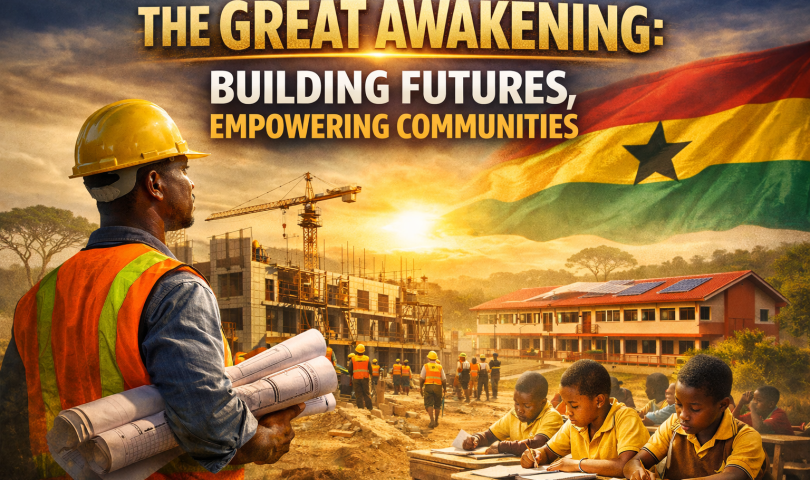
Ghana is standing at the edge of a long‑overdue awakening, and whether we rise or sleepwalk through another decade of mediocrity will depend on what we do with the moment before us. When President John Dramani Mahama announced that government had secured a $300 million facility to overhaul fifty Senior High Schools across the country, many heard it as another infrastructure headline. But those who understand the soul of a nation heard something deeper—an alarm bell, a summons, a reminder that the destiny of our children cannot be postponed, outsourced, or left to chance. This is not just a loan. It is not just a project. It is a national mirror forcing us to confront who we have been, who we are, and who we dare to become.
The “Secondary Education Improvement Project” is not merely about cement blocks and roofing sheets. It is about the architecture of national possibility. It is about whether Ghana will continue to recycle the same tired excuses for underdevelopment or finally build the intellectual fortresses required for a 21st‑century economy. New classroom blocks, modern science laboratories, upgraded dormitories, and dignified staff housing are not luxuries, they are the minimum requirements for a nation that claims to take its future seriously. For decades, our “legacy schools” have carried the weight of national expectation on crumbling infrastructure, overcrowded classrooms, and outdated facilities. This investment is not charity. It is justice.
But here is where the awakening must deepen. As PTAs, headmasters, old student associations, chiefs, and community leaders scramble to lobby for their preferred schools to be included, they must confront a truth we have ignored for far too long: development without empowerment is dependency dressed in kente. If we are going to fight for these projects, and we should, then we must also fight for our local contractors, artisans, suppliers, and engineers to be part of the process. What sense does it make to build schools for Ghanaian children using companies that will never reinvest a pesewa into the communities that raised those children? What wisdom is there in constructing national assets while sidelining the very businesses that will sustain them long after government has moved on?
This is the moment for communities to insist that the construction companies from their districts, municipalities, and regions are not spectators but participants. This is the moment for local suppliers of furniture, science equipment, electricals, plumbing materials, and technology to be integrated into the procurement chain. This is the moment for us to break the cycle where foreign or externally‑rooted firms build our schools, take their profits, and vanish,leaving the maintenance, repairs, and sustainability to the same struggling communities that were excluded from the economic benefits of the project.
If we truly want to build schools that last, then we must build economies that last. And economies do not grow by importing development. They grow by cultivating it. They grow when local contractors gain experience. They grow when local suppliers expand capacity. They grow when communities see themselves not as beneficiaries but as stakeholders. They grow when development becomes a cycle, not an event.
This is the awakening Ghana needs: the realization that education is not just about students learning in classrooms. It is about communities learning to claim their share of national progress. It is about parents understanding that lobbying for a school project without lobbying for local participation is incomplete advocacy. It is about old student associations recognizing that the sustainability of their alma mater depends not only on donations but on the economic empowerment of the very people who live around the school. It is about policymakers understanding that the best way to protect an investment is to ensure that the people closest to it have a stake in its success.
The $300 million facility is a beginning, not a conclusion. It is a test of whether Ghana is ready to evolve from a nation that receives development to a nation that manufactures it. It is a test of whether we will continue to outsource our future or finally build it with our own hands. It is a test of whether we will keep repeating the old mistakes or finally embrace a new philosophy: that development must circulate, not evaporate.
This is the Great Awakening. And if we miss it, we will have no one to blame but ourselves.