


HARRY HAMMONDTel No; 0244658466 \ 0207698171:Email; gozaro007@gmail.com
Watching the Director-General of the Ghana Prisons Service appear before the Public Accounts Committee [PAC] of Parliament from the comfort of my home was one of the most sobering moments I have had in recent times as an officer of the Service. It was not just another routine appearance to answer audit queries. It was a mirror held up to a Service that has for decades been neglected, forgotten and relegated to the background by successive governments.
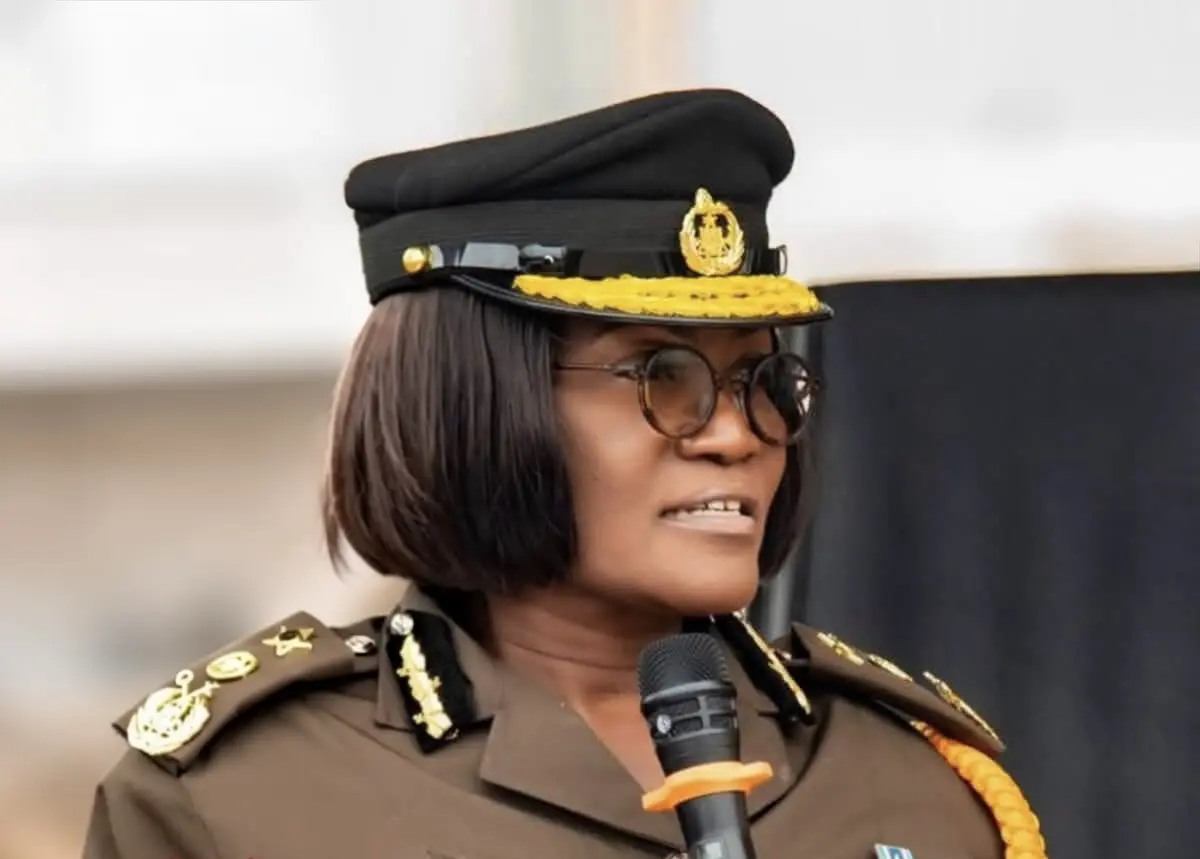
Ghana Prisons Service Director-General
The truth is bitter, but it had to be told. And our Director-General, with so much passion in her eyes and so much conviction in her voice, did absolute justice to it. She spoke not as a bureaucrat reading figures, but as a mother, a leader, and a reformer who feels the daily pain of her officers and inmates.
For years, we have heard politicians on campaign platforms promise heaven for the security services. They mount podiums and promise improved conditions of service, modern prisons, better accommodation, better logistics, better healthcare and a total transformation of our correctional system to meet international standards. The manifestos are beautifully written. The speeches are passionate. Yet, the narrative changes immediately after winning power. The promises evaporate into thin air, and the Ghana Prisons Service is left to grapple with the same age-old problems: chronic overcrowding, dilapidated structures, inadequate feeding grants for inmates, lack of vehicles, lack of medical supplies, poor staff accommodation, and dangerously low morale.
I have heard many people say after the DGP’s appearance, “Don’t wash your dirty linen in public.” I completely disagree with that school of thought. This was not about washing dirty linen. This was about accountability. This was a performance report. The Public Accounts Committee is a constitutional body mandated under Article 103 of the 1992 Constitution to examine the audited accounts of all public institutions. When a head of institution is called to account for how public funds were used and why targets were not met, she must tell the whole story. She must explain the constraints, the challenges and the realities on the ground. And that is exactly what our Director-General did. She did not insult anyone; she did not politicize anything; she did not exaggerate. She simply presented the facts, backed by data, with passion and with the heart of a mother who feels the pain of her children.
What she revealed is the stark reality of an ailing Service. A Service that is constitutionally mandated to reform, rehabilitate and reintegrate over 15,000 prisoners in safe custody, but is given less than what it needs to even feed them. A Service where one officer is supposed to man over 20 inmates in some stations, contrary to the UN standard of 1:3. A Service where some prison structures were built in the colonial era, and have never seen any major renovation. A Service where officers sleep in single rooms with their wives and three or four children. A Service where some barracks are so dilapidated that they are death traps, where the infirmary has no drugs, where there is no vehicle to send a sick inmate to hospital at 2 a.m., where tools for trade and reformation of inmates are non-existent.
If there is any institution in this country that tells the story of total neglect, it is the Ghana Prisons Service. We are the least resourced among all the security services, yet we perform the most delicate job of keeping dangerous offenders away from society and preparing them for useful citizenship.
The Depressed Officer: The Hidden Crisis; What really broke my heart during that appearance was when the issue of the welfare and mental health of prison officers came up. The Director-General was brutally frank: the average prison officer is depressed. And that statement is not an exaggeration. It is not meant to attract sympathy. It is the lived, daily reality of many of us.
People do not understand the nature of our work. The public sees us in our uniforms and thinks we are just guards with keys. They do not know the psychological trauma we go through. A prison officer works under extreme psychological stress. We spend 8 to 12 hours daily locked up with convicted offenders; armed robbers, murderers, rapists, narcotics dealers, hardened criminals who have nothing to lose. We manage their aggression, their frustration, their sickness, their death. We prevent escapes, we prevent suicides, we prevent riots, we prevent homosexuality, we prevent smuggling, we manage overcrowding that is more than 200% of approved capacity.
We do all this without commensurate risk allowance, without proper insurance, without proper psychological support, without counselling. A soldier goes to the battlefield and returns. A police officer goes on patrol and returns. A prison officer goes into the prison yard and is locked inside with the danger. Our workplace is the danger zone.
We go home with that trauma. We transfer that stress to our families. We shout at our children not because we hate them, but because we are mentally exhausted. Yet when national discussions about mental health are held, prison officers are never mentioned. The focus is always on other professions. But who takes care of those who take care of society’s most dangerous people? Who counsels the counsellor? Who guards the guard?
If we as a country say we are concerned about mental health, then the mental health of prison officers must be a matter of urgent national concern. An officer who is depressed, who is hungry, who is poorly housed, who feels neglected and forgotten, cannot effectively reform a prisoner. You cannot give what you do not have. A broken officer cannot fix a broken inmate. That is the simple truth. n
Another painful truth that came out is the feeding rate of inmates. Even though it has been reviewed from the insulting GH¢1.80 to GH¢5.00 per inmate per day, it is still woefully inadequate. In today’s Ghana, how can you feed a human being, a fellow Ghanaian, with GH¢5.00 for three meals a day? How can you expect him to be healthy enough to learn carpentry, tailoring, or farming?
But here is where we must commend the Director-General for her innovative leadership. As a good manager and a mother, she refused to sit down and lament. She introduced what is now known as the Director-General’s Special Soup Kitchen Initiative. Under this initiative, all prison stations have been tasked to create vegetable gardens and small farms purposely to supplement the nutritional needs of our inmates.
Today, if you visit many of our prisons, you will see prison officers and inmates working together to cultivate cabbage, carrots, garden eggs, okro, and rear poultry and pigs. This is not just about food; it is about good leadership using the little resources to make a big impact, and it is also part of reformation through agriculture. The officer, as a good manager, is able to get something edible and nutritious for inmates through this initiative. It deserves commendation, but it cannot replace government’s primary responsibility. The State must do more.
The Time for Real Reform is Now. This is why I say, if the system really works in this country, then this is the right time for the real reforms we have all been envisaging to be rolled out to fix what is broken. We need a total paradigm shift from seeing prisons as places for punishment and retribution to seeing them as centres for reformation, rehabilitation and reintegration.
1. Infrastructure: We need modern prisons that meet the UN Minimum Standards for the Treatment of Prisoners [The Mandela Rules]. We must decongest our prisons by completing all abandoned prison projects and building new ultra-modern facilities. Ankaful Complex, Nsawam, Kumasi, Sekondi all need urgent attention.
2. Logistics: A prison without a vehicle is not a prison. How do you transport inmates to court, to hospital, to labor sites without vehicles? How do you respond to emergencies when an inmate is sick at midnight? The Service needs Black Marias, pick-ups, tractors for our farms, and ambulances for our clinics.
3. The Officer: The professionals you see in the various Ministries, Departments and Agencies today ie the doctors, teachers, lawyers, accountants they are our classmates. We sat in the same classrooms, wrote the same BECE and WASSCE, went to the same universities. Some of us even had better grades than them. We are not less intelligent. We only chose different paths. We chose the path of corrections, a noble and divine call to serve humanity and keep society safe. That choice should not become a curse. We must be treated equitably. We deserve decent salary, decent accommodation, decent medical care, a proper risk allowance, and a decent pension. We deserve to be respected.
4. Inmate Reformation and Reintegration: We need to resource our prison farms, workshops, and schools. An idle inmate is a dangerous inmate. When we equip them with employable skills, we reduce recidivism.
5. Political Will: Finally, we need political will. Not lip service. Not promises for votes. Real, sustained political will that transcends party colors. The Prisons Service is not an NDC or NPP institution. It is a state institution established by the 1992 Constitution and Act 129. Its welfare should be a national priority.
The Director-General has spoken. She has spoken for the voiceless officer in Ankaful who sleeps in a leaking barracks. She has spoken for the officer in Tamale who watches an inmate die because there was no vehicle to take him to hospital. She has spoken for the officer in Yeji who manages 30 inmates alone.
Her appearance at the PAC should not be seen as an embarrassment to government; it should be seen as an opportunity for government to act. It should be the beginning of a new chapter where we finally fix what is broken.
As an officer, I left my television set that day more hopeful than ever. Because for the first time in a long while, the truth was told not with anger, but with passion, with dignity and with facts. And truth, they say, is the first step to healing.
If Ghana wants a safe society, it must invest in those who keep society safe. If Ghana wants reformed ex-convicts, it must resource those who reform them.
The time to act is now.
