
By Daniel Nii Okine
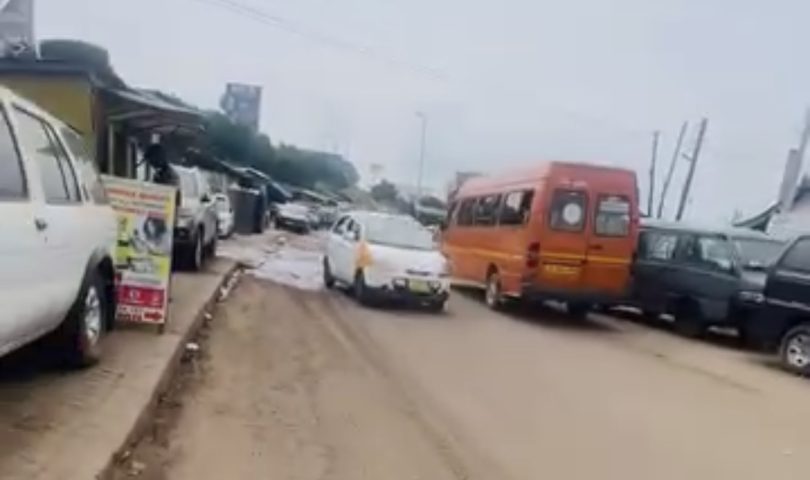
A humiliating civic surrender is unfolding daily on the streets of Alajo, and the latest viral video by Civic Sense Gh captures it with painful clarity. The footage shows what residents already know too well, sidewalks swallowed by makeshift shops, and a full stretch of road converted into a parking lot for private cars, commercial vehicles, and even abandoned hulks. It is one of the most dispiriting strolls a citizen can take.
Engineers constructed proper roads and concrete pavements so human beings would not have to compete with vehicles for survival. Yet today, those very sidewalks, designed to protect pedestrians, children, and the elderly, have been overrun. Traders have built mini shopping centers directly on the walkways, commercial drivers mount the curbs, private partygoers park with impunity, and mechanics have converted public footpaths into open air garages. Dead, rusted vehicles lie abandoned on concrete meant for human feet, while commercial Zoomlion trucks, government affiliated property, join the disorder boldly.
The unavoidable question is this, Where exactly are pedestrians supposed to walk?
Are citizens now expected to gamble with their lives on the main road, dodging speeding vehicles because municipal authorities have abandoned their duties?
The Myth of “No Resources”
Every licensed driver in Ghana went through a testing process. Nowhere in the Ghana Highway Code is a pavement defined as a parking bay, a shopping center, or an extension of a workshop. Drivers know this. Shop owners know this. They simply act with impunity because they know no one will stop them. Number plates are visible, illegal structures are fixed openly, yet not a single police officer or municipal task force appears.
When confronted with civic breakdown, municipal authorities retreat behind a tired excuse, “We lack the money and resources to enforce the law.”
It is not only weak, it is economically illogical.
The Untapped Revenue Stream
Illegal Parking Hazard, Municipal Enforcement, Surcharge or Towing Fine, Free Sidewalks and Increased IGF
If the Ayawaso Central Municipal Assembly, ACMA, truly needs Internally Generated Funds, IGF, the solution is literally sitting on its pavements. Impose mandatory fines, GHS 100 or more, on every vehicle parked on a sidewalk. Tow offending vehicles and charge steep recovery fees before release.
By enforcing basic law, the assembly would achieve two outcomes simultaneously,
- Municipal revenue would increase significantly.
- Public order and safety would be restored immediately.
To claim a lack of resources while stepping over thousands of cedis in uncollected fines daily is administrative negligence at its highest peak.
Beyond Safety, A Breeding Ground for Crime and Chaos
The consequences of this lawlessness go beyond inconvenience, they pose a direct threat to public security.
Businesses like Bimagana have been forced to place traffic cones at their entrances just to maintain access, only for buses, Sprinters, and 4x4s to park behind the cones anyway. Private citizens are attempting to self regulate because local government has abdicated its responsibilities.
As dusk falls along the Alajo stretch, abandoned vehicles, mechanics’ wreckage, makeshift shops, and illegally parked trucks become dark, unlit blind spots, perfect cover for criminals lying in wait for pedestrians forced off the walkway. What begins as “harmless” illegal parking quickly becomes a genuine public safety hazard.
A Direct Challenge to Ayawaso Central
Why do we build infrastructure only to watch municipal authorities fall asleep once the ribbon is cut.
To the leadership of the Ayawaso Central Municipal Assembly, This is your jurisdiction. The public is watching, and we demand accountability.
It should not take a citizen with a phone camera to expose mechanics running repair shops on public footpaths, shops built illegally on pavements, or government vehicles parked illegally in broad daylight. You were elected and appointed to maintain order, protect infrastructure, and serve the public.
Clear the Alajo pavements. Tow the abandoned vehicles. Remove the illegal shops. Fine the violators. Restore the sidewalks to the people they were built for, before an innocent pedestrian pays for this municipal apathy with their life.