
Sankofaonline Special News Report| September 22,2026
The arrest of five suspects in Aboabo, Tamale, by the Northern Regional Command’s RED MARIA unit is not just another police bulletin, it is a national indictment, a mirror held up to Ghana’s worsening moral decay, a reminder that our institutions are bleeding while criminals operate with brazen confidence in broad daylight, in full view of a frustrated citizenry.
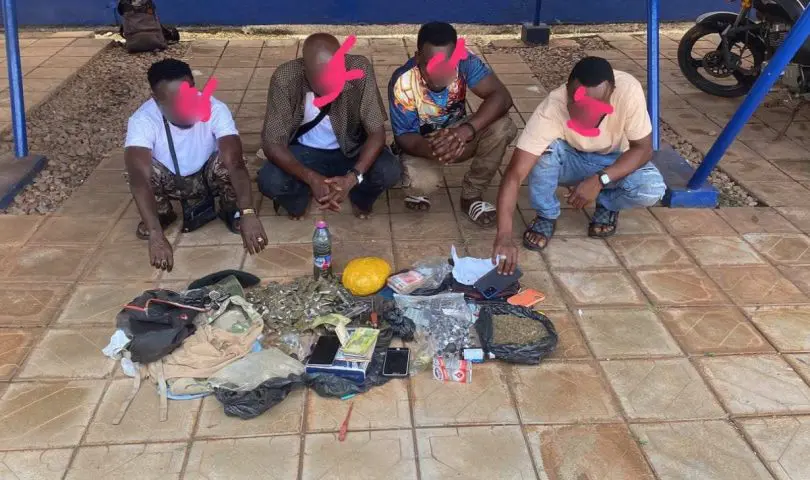
The police operation, conducted at 11:30 a.m., recovered pistols, ammunition, narcotics, cash stuffed inside a motorcycle, and motorbikes believed to be the arteries of a thriving drug distribution network.
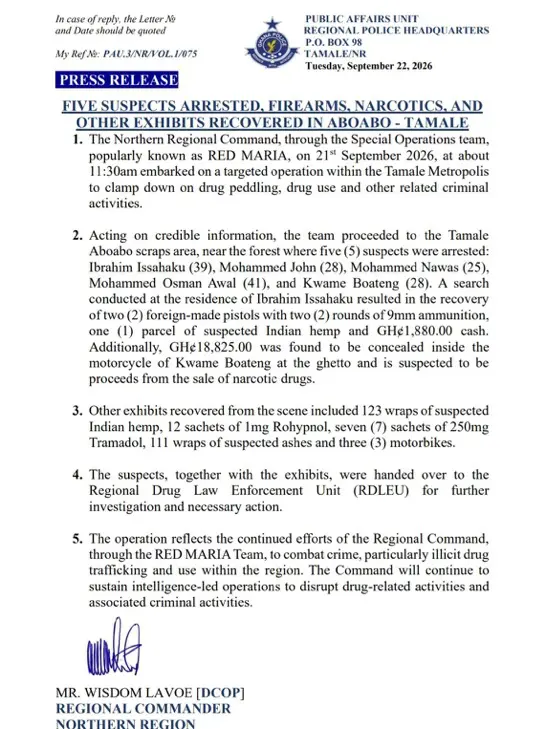
The suspects, Ibrahim Issahaku, Mohammed John, Mohammed Nawas, Mohammed Osman Awal, and Kwame Boateng, now sit in custody; but the real questions remains, who sits above them, who finances them, who protects them, who benefits from the rot that has turned our communities into open drug markets.
Citizens did not wait for politicians, they did not wait for committees, they did not wait for the usual empty promises. They spoke, loudly, angrily, unapologetically.
One citizen thundered:
“We need to amend our constitution and give drug peddlers, rapers, false rape accusers, pedophiles, armed robbers, 1st degree murderers and corrupt government officials the death penalty, in two decades time our nation will be transformed completely.”
This is not a call for violence, it is a cry of desperation, a cry from people who feel abandoned by the very system meant to protect them. When communities begin calling for constitutional overhaul, it means trust has collapsed, patience has expired, and fear has become a daily companion.
Another citizen widened the lens:
“Afienya main station, they’re selling in the open and nobody is doing anything about it.”
This is the tragedy, Tamale is not alone, Afienya is not alone, Ashaiman is not alone, Cape Coast is not alone. Ghana is quietly becoming a republic of open drug stalls, where narcotics are sold like tomatoes, where young boys are recruited faster than schools can graduate them, where police operations feel like temporary rain on a raging wildfire.
But not everyone agrees with the calls for extreme punishment. A third citizen injected a sobering reminder:
“The United States of America have this in their constitution but all things that you mention are more in America than any other place, the United Kingdom doesn’t have capital punishment, it’s all about the right system of justice.”
This is the counterpoint Ghana must confront. Harsh punishment alone does not cure societal rot. America has the death penalty, yet drugs, violence, and corruption flourish. The UK abolished capital punishment, yet maintains one of the most respected justice systems in the world. The debate is not about killing criminals, it is about building a justice system that cannot be bought, intimidated, or manipulated.
THE REAL ISSUE, THE ONE WE FEAR TO NAME
Ghana’s problem is not merely drug peddlers, it is the ecosystem that protects them, the politicians who pretend not to see them, the officers who collect from them, the landlords who rent to them, the communities that tolerate them, the silence that shields them.
RED MARIA’s operation is commendable, but it is a drop in an ocean of criminal enterprise. Until Ghana confronts the uncomfortable truth that crime thrives because power allows it, we will continue arresting foot soldiers while the generals dine in comfort.
THE SANKOFAONLINE VERDICT
This arrest is a warning, a spark, a moment of clarity. Ghana stands at a crossroads, one path leading to institutional collapse, the other to painful but necessary reform. Citizens are demanding action, demanding justice, demanding courage from leaders who have grown too comfortable issuing statements while communities drown in violence due to the drug menace.
Tamale has spoken, Afienya has spoken, the nation has spoken. But in this solemn hour of civic truth‑telling, the question that rises like a war drum is sharper than ever: will the stakeholders, the Ghanaian leaders, finally bend their ears to the sovereign voice of the people, or will they once again retreat into the comfortable silence of indifference?
This is no ordinary moment. This is the people’s verdict delivered from the North, echoed from the South, and sealed by the Republic itself. The wind has carried the message, the ground has felt its tremor, and the nation has declared its will with unmistakable clarity. The burden now rests squarely on leadership , to listen, to act, or to be judged by history.