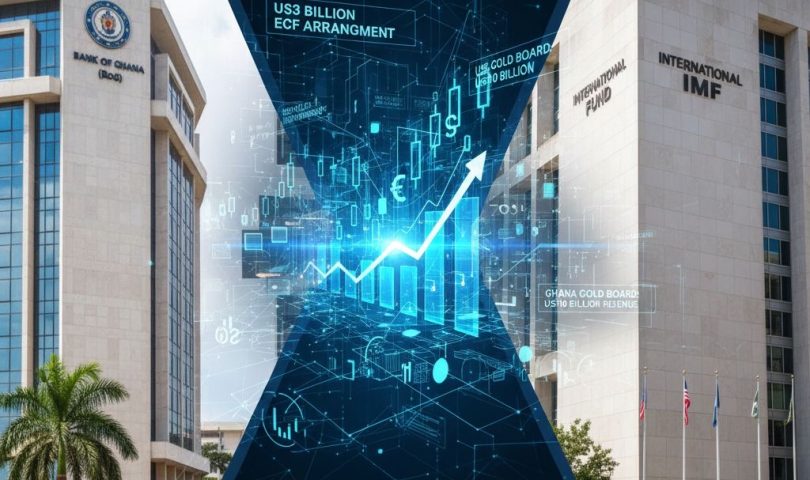

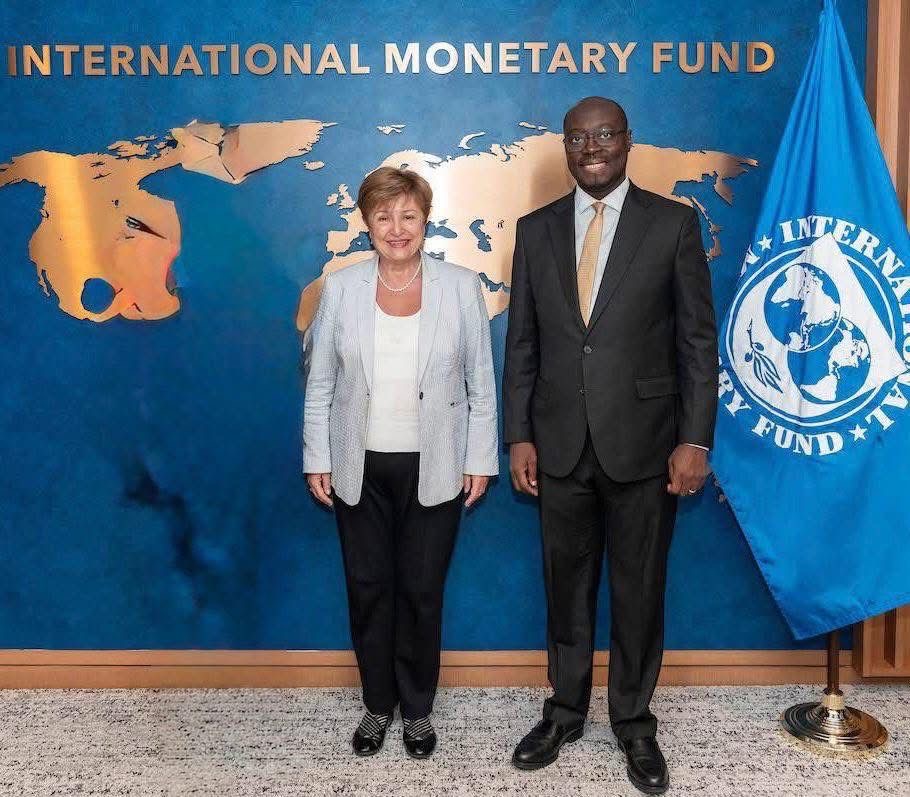
The recent announcement from Washington, D.C., marks a significant technical milestone for Ghana’s fiscal recovery. On December 17, 2025, the IMF Executive Board successfully completed the fifth review of the $3 billion Extended Credit Facility (ECF), triggering an immediate release of $385 million. This brings the total support received under the 39-month arrangement to approximately $2.8 billion. While the IMF reports that reforms are yielding results—citing single-digit inflation and a stabilizing Cedi—the disbursement highlights a persistent paradox in Ghana’s economic narrative: the reliance on external loans despite vast internal wealth.
The Gold Paradox: $10 Billion vs. $385 Million
The contrast between the IMF’s latest installment and the performance of the domestic gold sector is stark. Reports from the Ghana Gold Board (GoldBod) indicate that the small-scale gold sector alone surpassed its 2025 export target, generating over $10 billion in foreign exchange revenue within a single year.
This record-breaking performance raises a critical question regarding past management: if the sector is capable of generating $10 billion in a year through tightened regulation and the formalization of artisanal mining, why did previous years see such lower returns?
- Historical Leaks: Under the previous administration of Nana Akufo-Addo and Dr. Mahamudu Bawumia, critics and even internal reports pointed to massive revenue leaks. In 2018, the President himself noted that nearly $5 billion in gold exports to the UAE went unaccounted for in official records.
- Policy Shifts: The recent surge in revenue is attributed to the aggressive reforms of 2025, including the removal of withholding taxes on local gold purchases and the centralization of exports through GoldBod. These measures have significantly reduced smuggling, which previously drained billions from the national coffers.
The Path to Self-Sufficiency
The data suggests that the “missing value” of the past was not a lack of resources, but a lack of effective capture. The $214 million in losses flagged by the IMF in the “Gold for Reserves” program during the first nine months of 2025—largely due to trading shortfalls and operational fees—serves as a warning that even with high revenue, management efficiency is paramount.
Ultimately, the goal for many Ghanaians remains a transition away from the “borrowing cycle.” With gold exports now exceeding industrial volumes and contributing to a record $12 billion in national foreign reserves, the argument for managing internal resources to avoid the strictures of IMF conditionalities has never been stronger. As the country looks toward 2026, the challenge will be to ensure that the “wealth in the water” and the gold in the earth are converted into sustainable infrastructure and jobs, rather than merely serving as collateral for further debt.
Ruth Abla ADJORLOLO