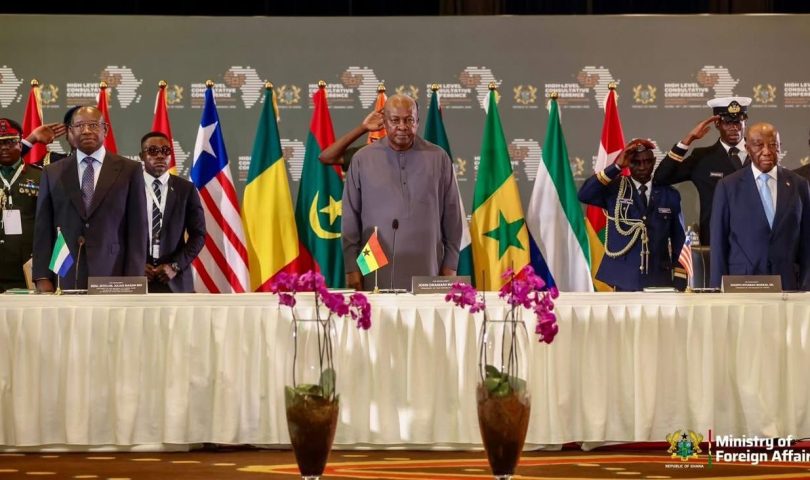

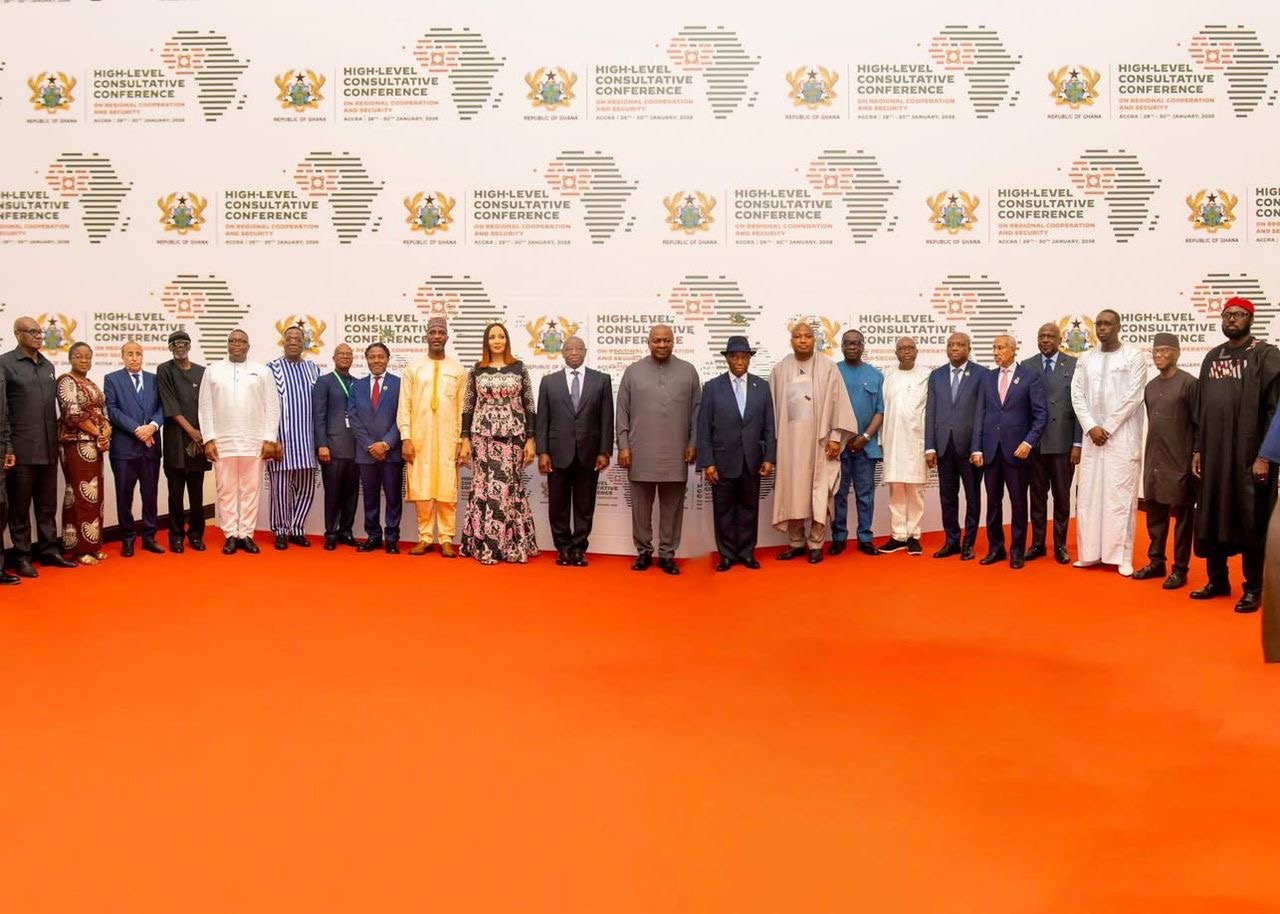
The High-Level Consultative Conference on Regional Cooperation and Security concluded in Accra on Friday, January 30, 2026, with a resounding call for heads of state to move beyond fragmented responses and adopt a structured framework for collective security.
The two-day summit, hosted by President John Dramani Mahama, brought together leaders from across West Africa and the Sahel to address the existential threats posed by terrorism, violent extremism, and transnational organized crime. President Mahama, in his opening remarks, described the current era as a defining moment requiring leadership anchored in dialogue and solidarity, while expressing concern that previous regional mechanisms had been weakened by mutual guardedness among member states.
He specifically highlighted the January 29 insurgent attack on the Diori Hamani International Airport in Niamey as a grim indicator of the heightened insecurity threatening the entire region’s stability.
The urgency of the situation was echoed by Liberian President Joseph Boakai, who emphasized that recent attacks in Niger validate the need for an integrated security architecture that matches emerging technological advances.
He noted that Liberia, as a member of the A3, remains committed to advocating for regional approaches to peacebuilding. Adding to this, the Chair of the ECOWAS Authority of Heads of State and Government, President Julius Maada Bio of Sierra Leone, warned that extremist networks are now operating with unprecedented coordination and brutality.
President Bio argued that military interventions alone are insufficient and must be reinforced by investments in good governance, inclusive development, and social cohesion to prevent radicalization among the youth.
A wide range of regional and continental representatives reinforced the theme of mutual accountability and intelligence-sharing. Nigeria’s Federal Minister of State for Foreign Affairs, Bianca Odumegwu-Ojukwu, described the conference as a timely intervention against the adverse effects of violent extremism, while defense officials from Mauritania and representatives from Togo reiterated the necessity of collective action.
Dr. Mamadou Tangara, representing the African Union (AU) Commission in the Sahel, urged states to adhere strictly to the African Peace and Security Architecture, a sentiment supported by AU Commissioner Ambassador Bankole Adeoye, who recommended the widespread implementation of early warning systems rooted in Pan-African solidarity.
Dr. Ibn Chambas, the AU High Representative for Silencing the Guns, further underscored that the prosperity of regional citizens remains under constant threat until a unified approach is fully realized.
The conference culminated in a joint communiqué delivered by Ghana’s Minister for Foreign Affairs, Samuel Okudzeto Ablakwa, which outlined a comprehensive roadmap for future cooperation.
The agreement includes the establishment of regular regional review meetings to monitor peace commitments and a pivot toward “human security” by prioritizing healthcare, education, and job creation as defensive measures against extremism.
The communiqué also proposed “hot pursuit” arrangements through bilateral agreements to curb the fluid movement of criminal networks across porous borders. The summit ended with a renewed commitment to turn these diplomatic declarations into measurable outcomes, marking what many participants described as a critical turning point for regional stability.
Ruth Abla ADJORLOLO