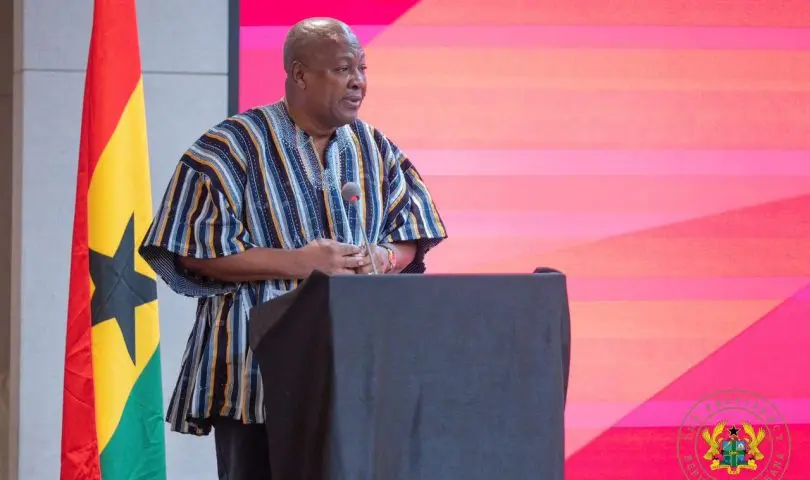

President John Mahama has detailed the operational framework of the Accra Reset Initiative (ARI), a strategic roadmap designed to transition Africa from a “policy taker” to a global “agenda-setter.” Built upon five core pillars—strengthening public health, expanding local manufacturing, developing a skilled health workforce, promoting domestic investment, and fostering equitable partnerships—the ARI seeks to accelerate the African Union’s Agenda 2063.
At its political heart is the “Club of Accra,” featuring a Global Presidential Council and a “Guardians’ Circle” of former heads of state tasked with ensuring that high-level declarations are translated into concrete policy and implementation. To facilitate this, the initiative will establish “geostrategic deal rooms” to manage resources and partnerships in critical sectors such as food security, climate change adaptability, and healthcare.
A primary objective of the ARI is the achievement of financial and industrial independence, specifically through the repatriation of billions of dollars in externally held African investments to manage debt and fund domestic growth.
This economic shift is closely linked to an urgent focus on the continent’s youth, aiming to curb unemployment for an estimated 900 million young people through skills development in digital literacy, green energy, and advanced manufacturing.
By prioritizing local production in high-value sectors like pharmaceuticals and technology, the initiative intends to shield the continent from the volatility of shifting international policies and the decline of traditional cooperative agendas.
Unlike previous development frameworks driven by Western donors, the ARI is an African-led movement supported by international partners, positioning Ghana as a central coordinator due to its democratic track record. While the initiative faces significant regional hurdles, including political instability, corruption, and soaring public debt, its architects remain focused on resetting global institutions and encouraging intra-African cooperation. As the ARI moves into its implementation phase, it stands as a major test of whether African-led solutions can effectively resolve the structural challenges of underdevelopment and unfulfilled potential across the continent.
Ruth Abla ADJORLOLO