
Sankofaonline News Desk | August 27,2026
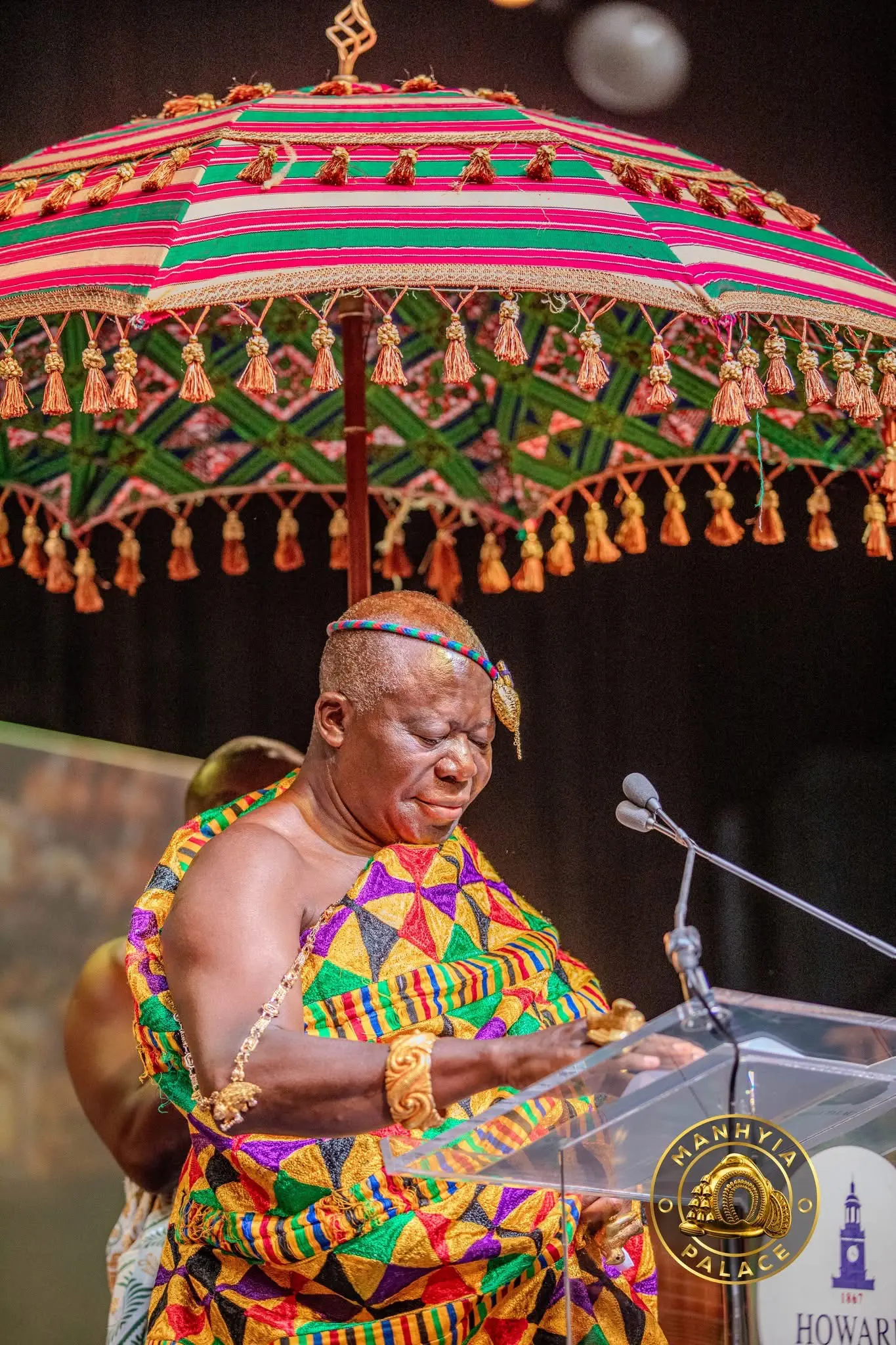
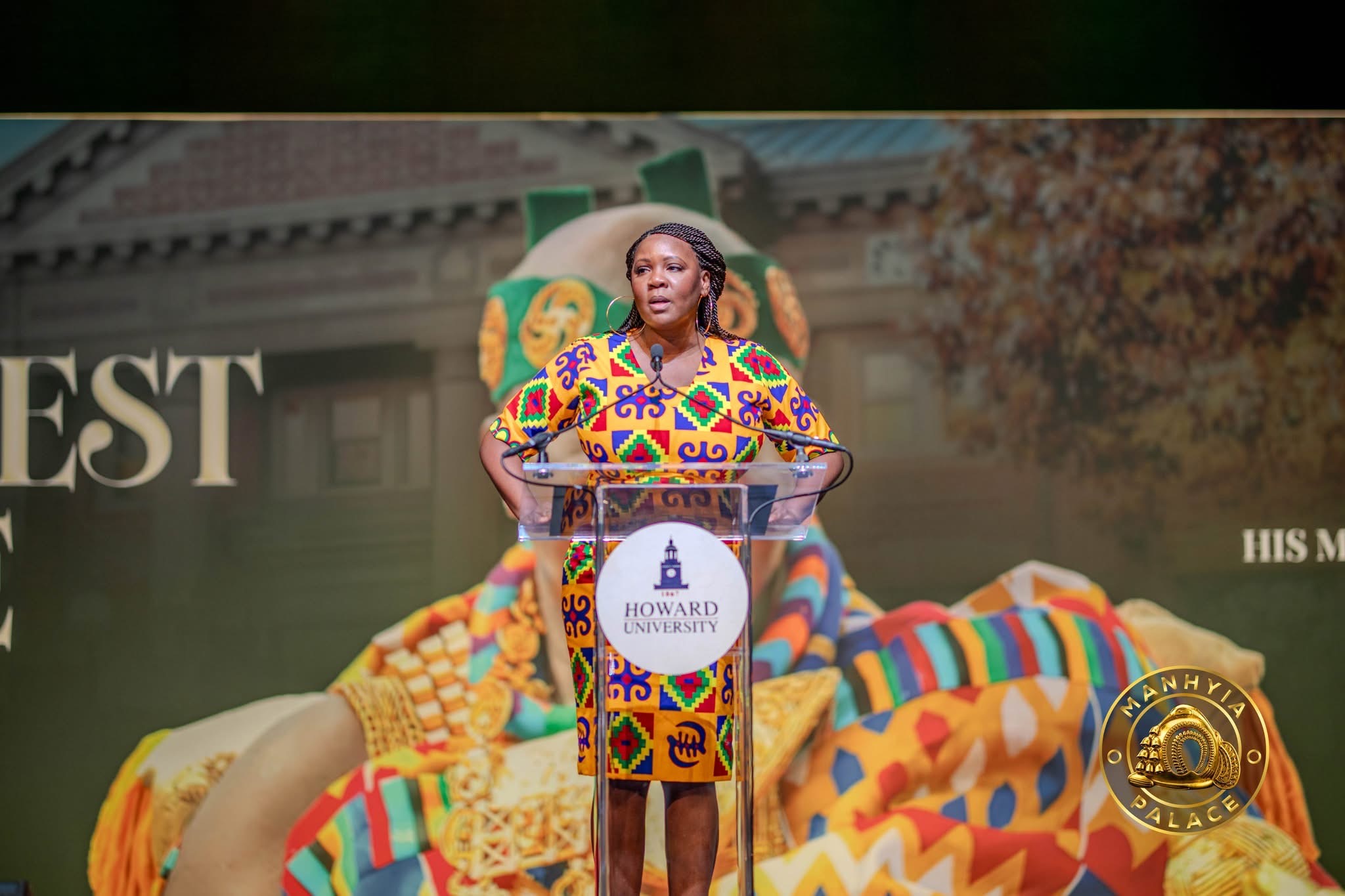
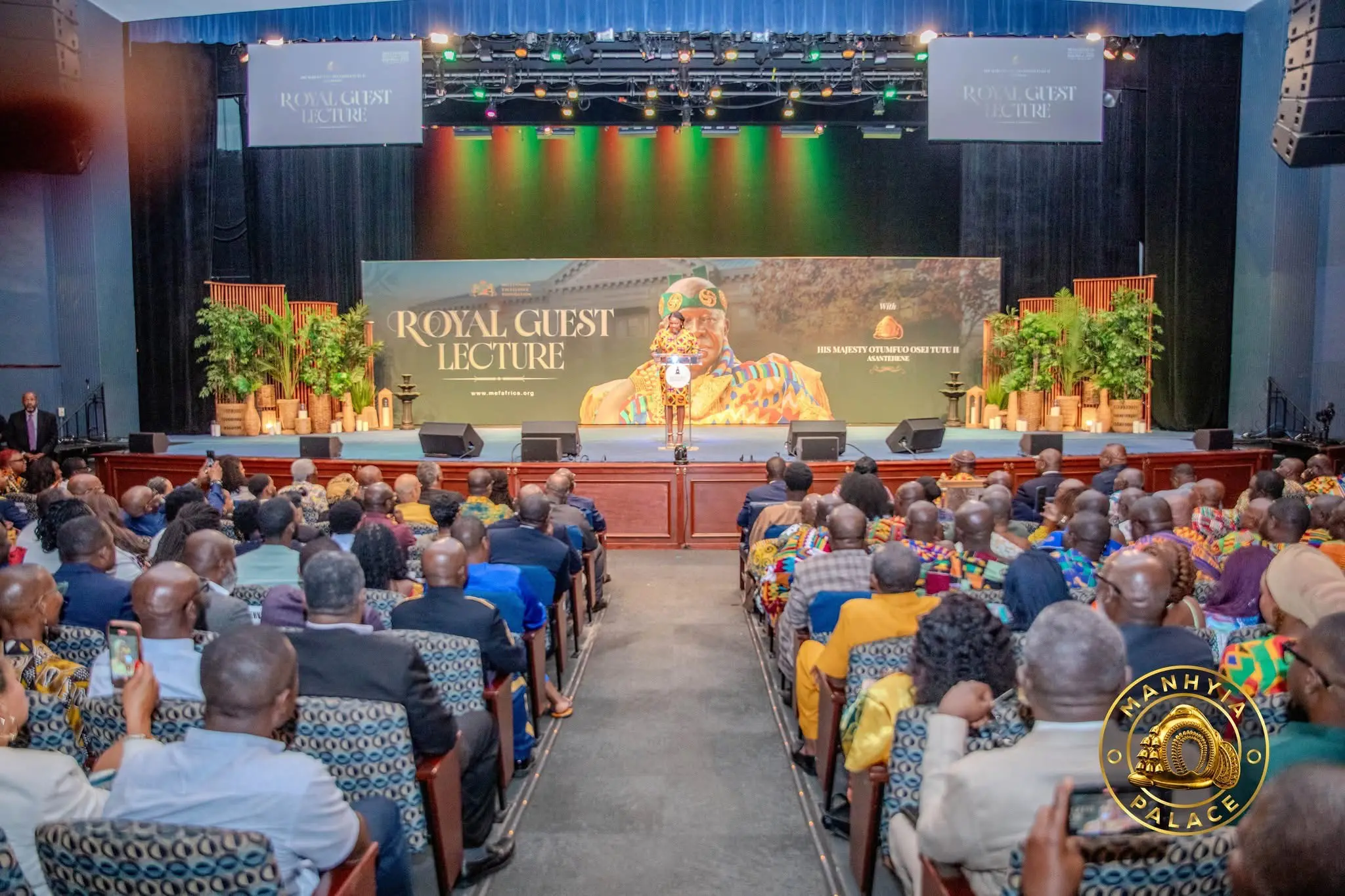
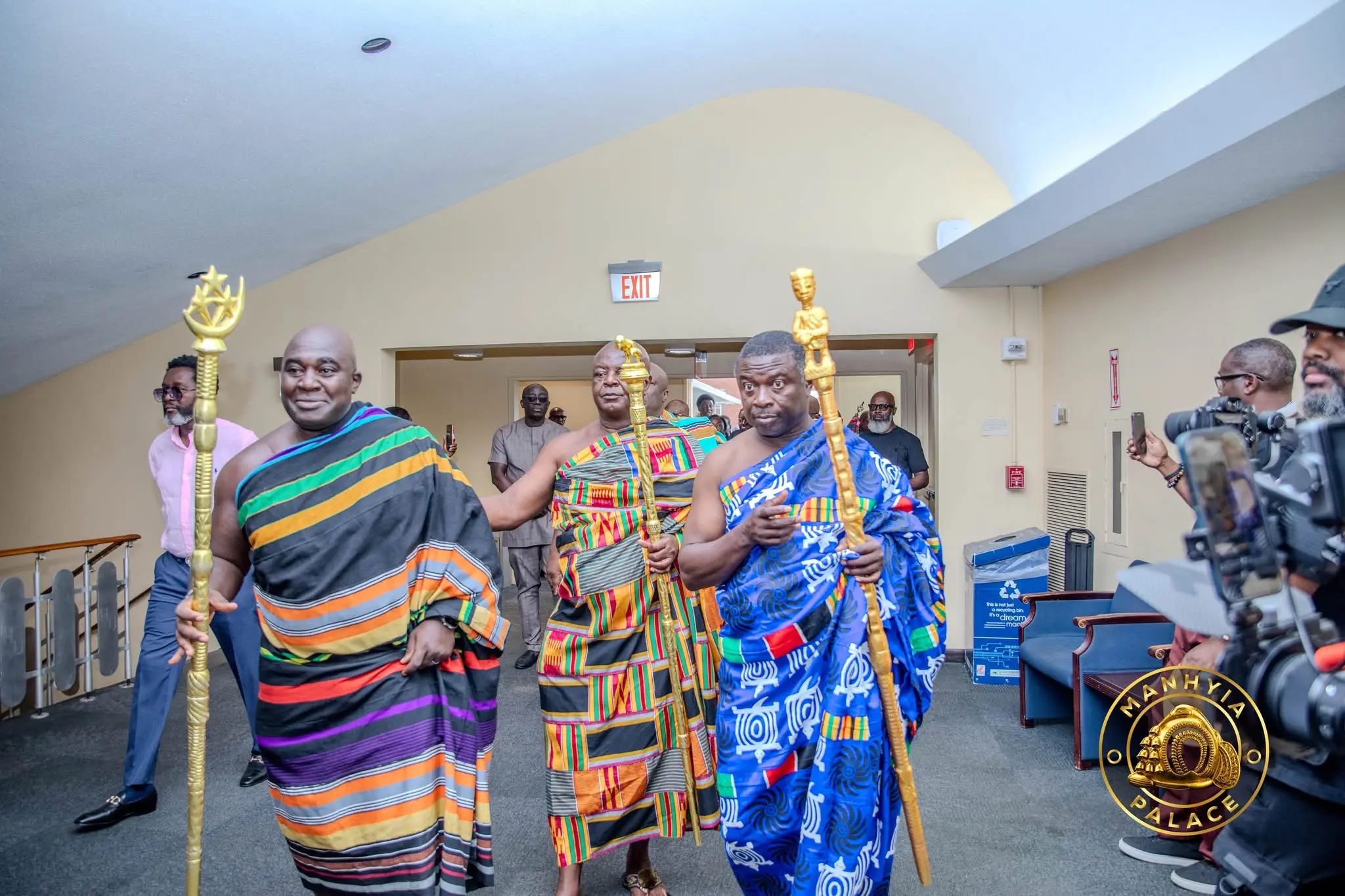
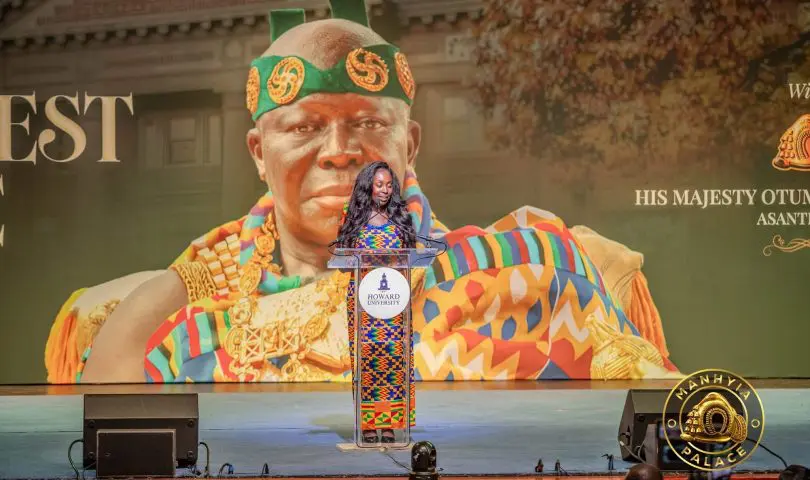
Otumfuo Osei Tutu II, Asantehene, delivered a landmark address at Howard University in Washington, D C, on August 25, 2026, offering a deeply reflective exploration of leadership, identity and the future of African advancement.
The engagement, organised by the Millennium Excellence Foundation, drew traditional authorities, scholars and members of the Howard community into a rare intellectual gathering centred on scholarship, cultural continuity and the collective progress of people of African descent.
The audience included the President of Howard University, Dr Wayne A I Frederick, the Provost, Dr Anthony Wutoh, and Ghana’s Ambassador to the United States, HE Victor Smith, whose presence underscored the significance of the occasion.
Otumfuo used the platform to articulate a vision of leadership grounded in responsibility, historical consciousness and service. He explained that African institutions, particularly those rooted in Asante tradition, carry philosophies that extend far beyond their ceremonial expressions. He noted that symbols such as the Golden Stool, state regalia and ritual practices function as repositories of memory and instruments of governance, not merely cultural artefacts. He stressed that these symbols communicate values of accountability, unity and continuity, forming a political language that has guided Asante society for centuries.
He argued that contemporary leadership must embrace this heritage while responding to modern challenges. He stated that leaders across Africa and the diaspora must confront issues of educational disparity, youth vulnerability, environmental pressures and economic instability with clarity and courage. He emphasised that authority must be exercised as a trust, not a privilege, and insisted that leaders who fail to serve weaken the very institutions they inherit.
Otumfuo also highlighted the Golden Stool’s meaning as a collective covenant rather than a personal possession. He explained that the Stool embodies the soul of the Asante Nation, and that every occupant of the throne holds it on behalf of the people and future generations. He described leadership as a continuum of duty, shaped by history and accountable to posterity.
His lecture positioned traditional African governance as a sophisticated intellectual tradition capable of enriching global conversations on leadership and institutional integrity. It reaffirmed Howard University’s role as a bridge between Africa and its diaspora, strengthening academic and cultural ties that continue to influence the evolution of Black leadership worldwide.
In closing, Otumfuo Osei Tutu II’s lecture did more than illuminate the intellectual traditions of Asante governance, it reshaped the conversation on leadership within African and diaspora institutions. His reflections on responsibility, cultural memory and the moral weight of authority offered Howard University a framework that bridges ancestral wisdom with contemporary demands.
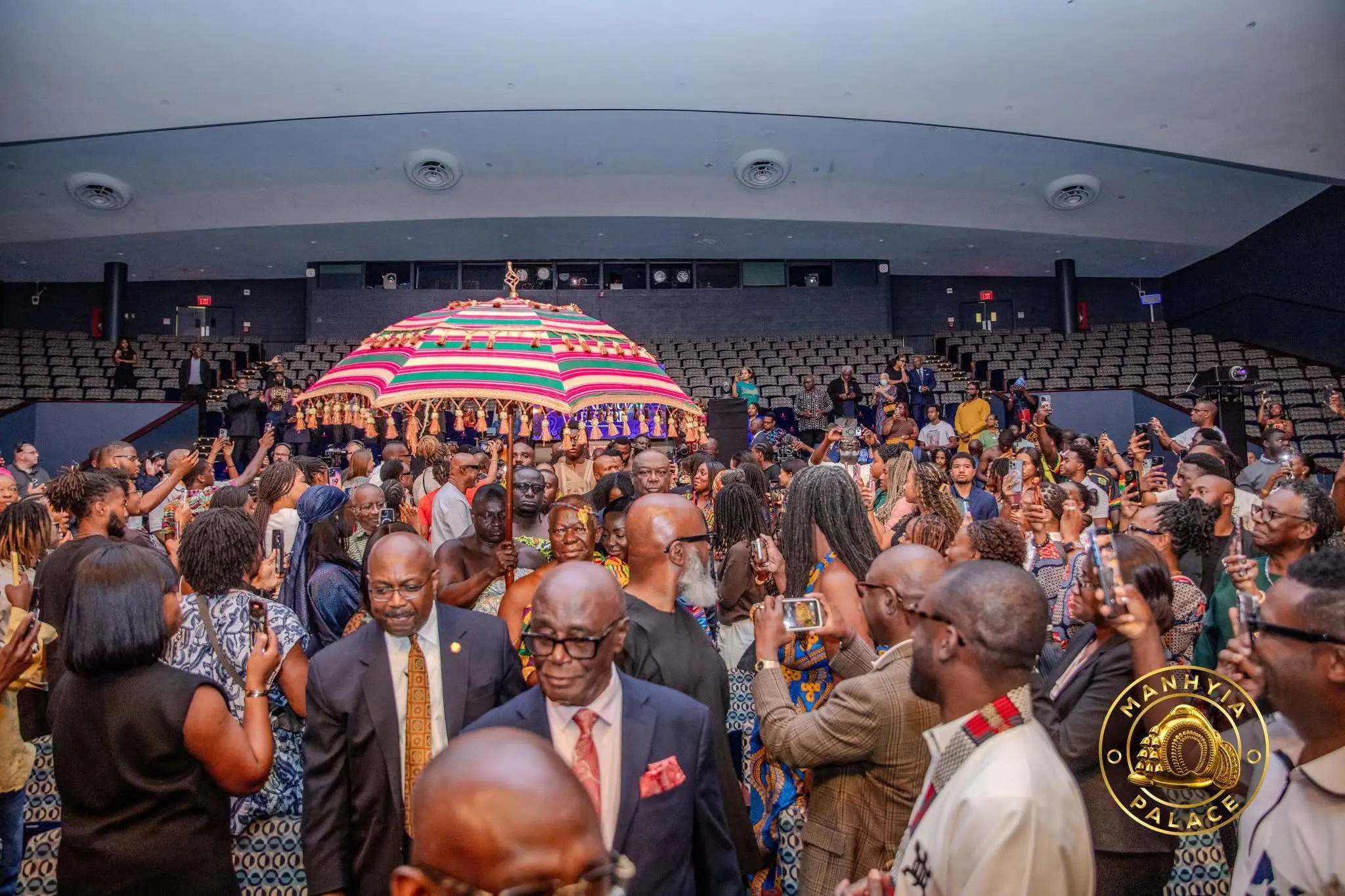
The audience received the lecture with profound admiration, rising in sustained applause as scholars, diplomats and traditional leaders acknowledged that Otumfuo’s message had left an enduring intellectual imprint on Howard University, a lasting testament to the depth, clarity and global relevance of his vision for African leadership and cultural continuity.
The event concluded with a shared recognition that his insights will continue to influence academic discourse, policy thinking and cultural engagement long after the applause faded.