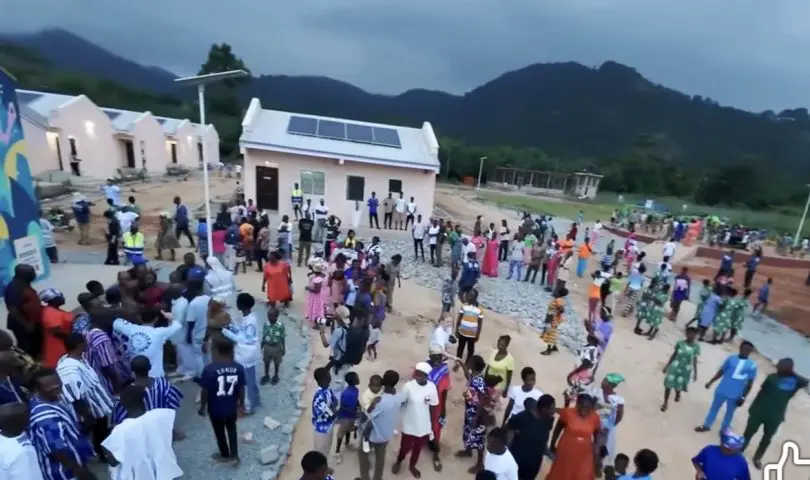

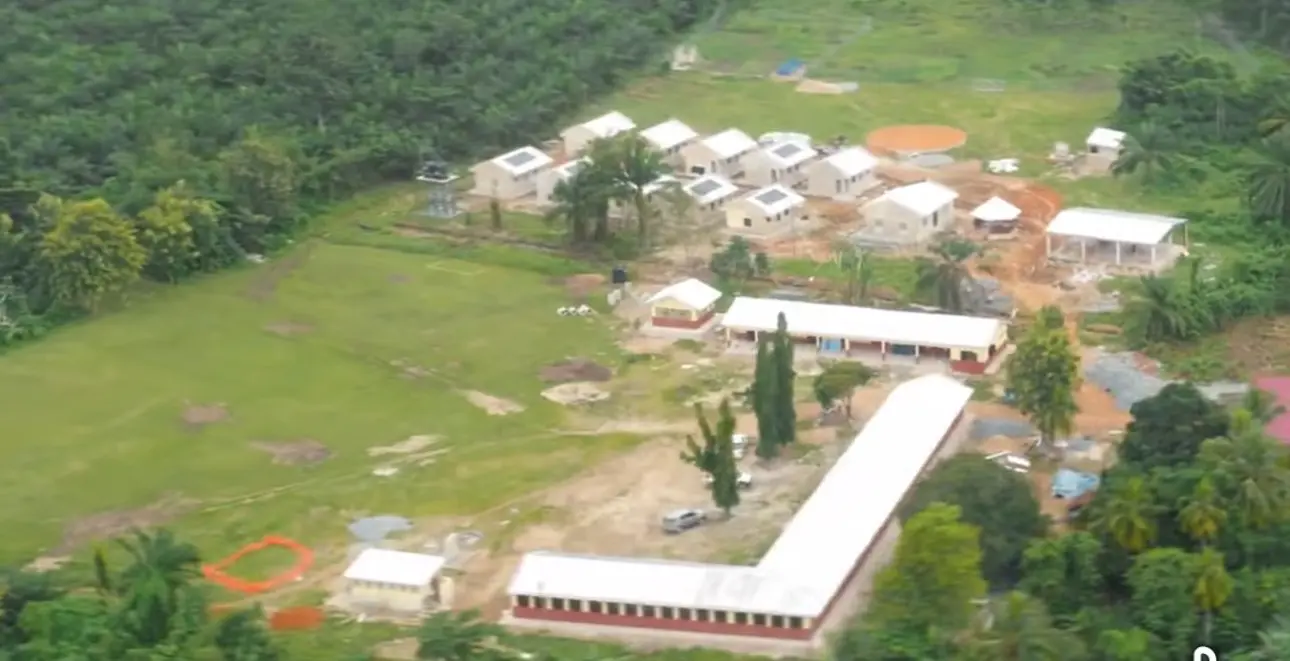
Abna Dakwa Village rises in Ghana’s Eastern Region as a powerful reminder that transformation begins when vision refuses to bow to excuses. YouTube star MrBeast has committed nearly ten million dollars to build a full community, a sanctuary of dignity and opportunity, created to pull children away from the unforgiving demands of cocoa field labour and return them to the promise of education. In a landscape where poverty has long dictated the fate of young hands, this project arrives as a bold interruption, a declaration that the future of rural Ghana must be rewritten with intention, compassion and infrastructure.
The village is not a token gesture, it is a complete ecosystem. A modern school stands ready to welcome children who once woke to the rhythm of farm work. Teachers’ housing ensures stability and continuity, a clinic offers healthcare that many families have never had consistent access to, clean water systems remove the daily burden of unsafe sources, and solar power brings reliable energy to a community that has lived too long in the shadows of neglect. Every structure, every pipe, every panel speaks to a single truth, children cannot stay in school if the community around them is collapsing.
Child labour in cocoa growing communities has persisted because families are trapped in a cycle of survival. When income is unstable, when schools are distant, when clinics are nonexistent, when water is unsafe, the child becomes a labourer by necessity. Abna Dakwa Village confronts this reality directly. It removes the excuses that poverty forces upon parents, it replaces desperation with options, it insists that the child belongs in a classroom, not in a field.
This development forces a national conversation. Ghana’s cocoa industry is the backbone of global chocolate production, yet many of the communities that sustain it remain underdeveloped. For decades, interventions have been scattered, a borehole here, a scholarship there, a temporary programme that fades when funding dries up. Abna Dakwa Village presents a different model, a comprehensive, integrated approach that treats rural development as a full equation, not a partial solution. It demonstrates that when education, healthcare, water, energy and housing are delivered together, the impact is not incremental, it is transformative.
The symbolism is profound. Children who once carried cocoa pods now carry books. Families who once feared illness now walk into a clinic with confidence. Teachers who once struggled with inadequate housing now live within the community they serve. The village becomes a living argument that Ghana’s rural future can be rebuilt with ambition, not charity.
This project does not absolve government responsibility, nor does it replace the work of development partners. Instead, it challenges all stakeholders to rethink what is possible. If one village can be built with this level of commitment, why not many more. Why should any cocoa growing district remain without the infrastructure needed to protect its children. Why should the backbone of a global industry continue to rest on communities that lack basic services.
Abna Dakwa Village is a spark, but Ghana must decide whether it becomes a flame. The future of cocoa communities depends on whether this model inspires replication, policy shifts and long term investment. The children of rural Ghana deserve more than survival, they deserve opportunity, dignity and a future shaped by learning rather than labour.
From cocoa fields to classrooms, this village stands as a testament to what can happen when bold action meets urgent need. It is a reminder that the destiny of Ghana’s children must never be left to chance, it must be built, protected and fiercely defended.