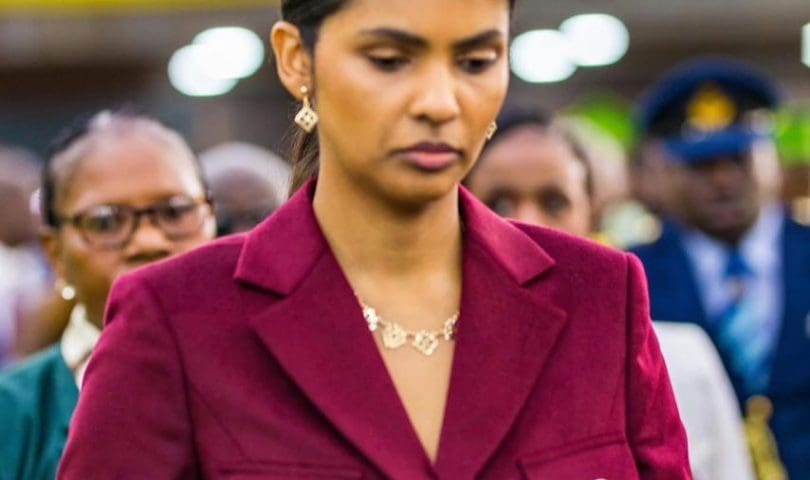

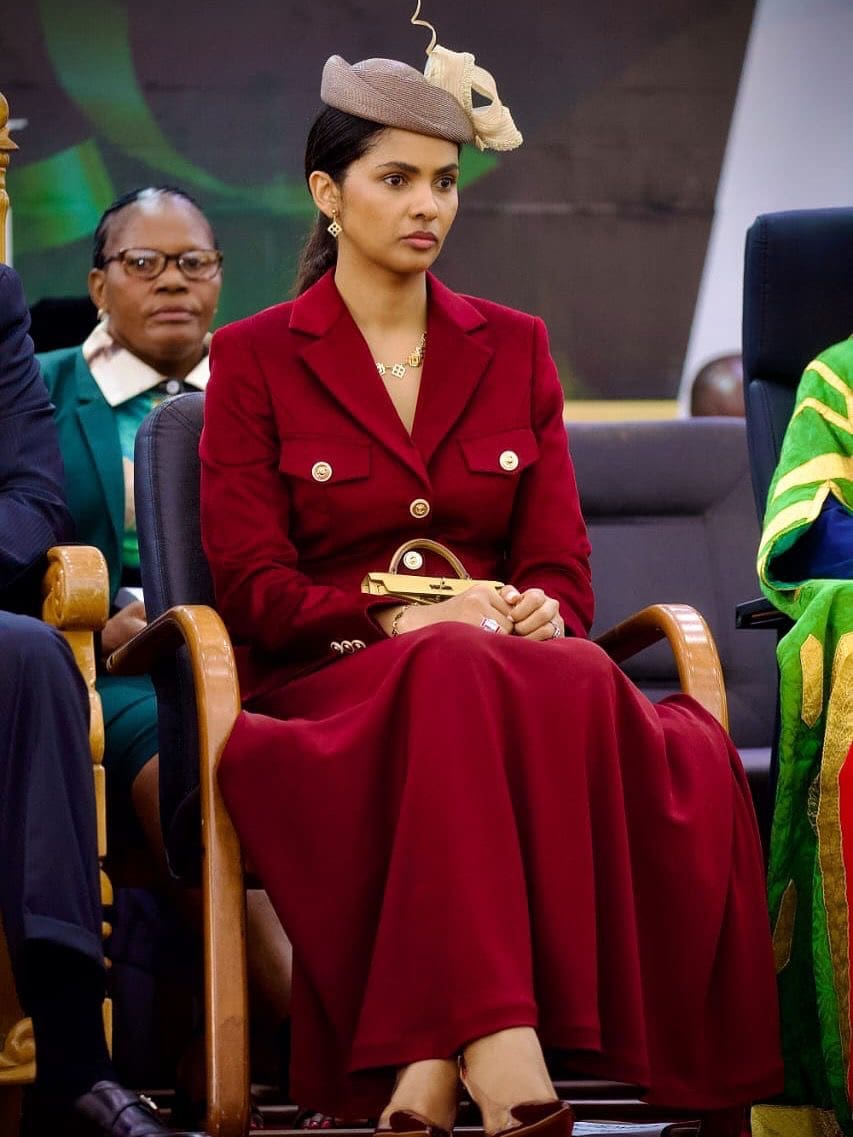
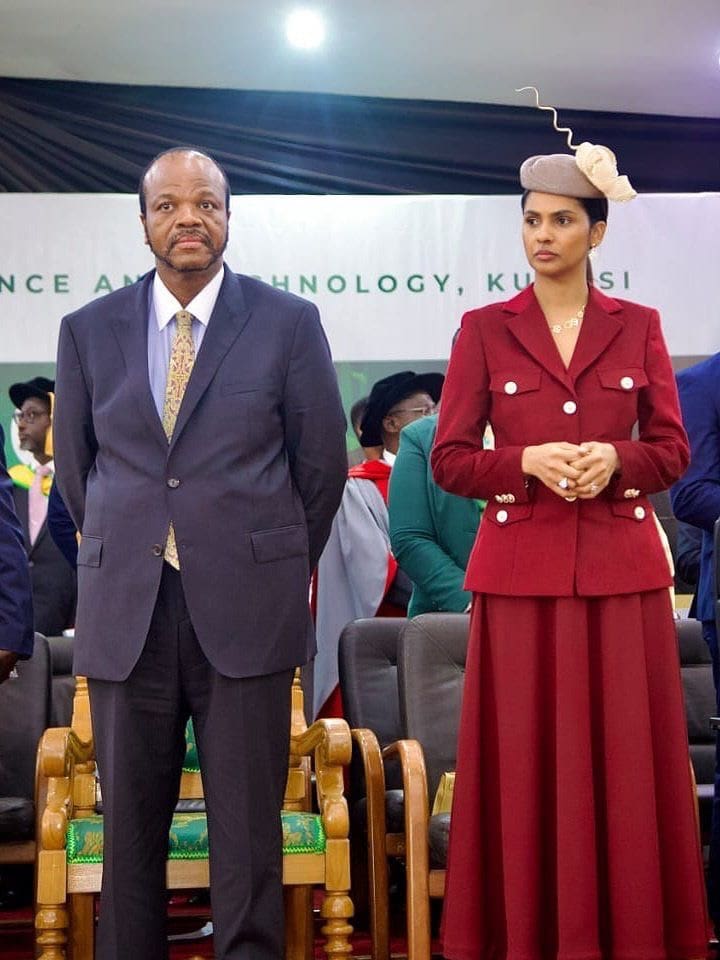
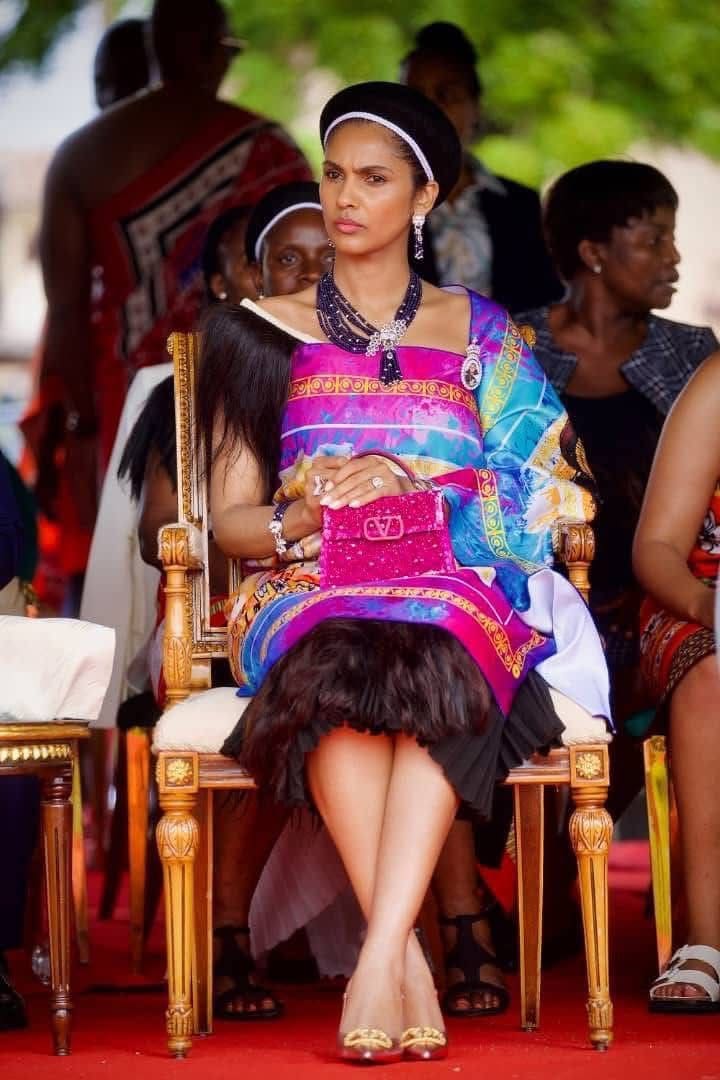
King Mswati III of Eswatini recently visited Ghana, accompanied by his ninth wife, Nontsetselo Magongo, also known as Inkhosikati LaMagongo. Born in 1985, she married the king in 2002 at the age of 18 and has a son, Prince Mcwasho Dlamini, with him. Her title, Inkhosikati LaMagongo, reflects her clan origin, meaning “the queen or royal wife from the Magongo clan.”
Inkhosikati LaMagongo has a mixed Swazi-Portuguese background due to her familial ties to Mozambique. In Eswatini’s royal culture, wives are chosen from various regions to ensure cultural balance and representation. Traditional customs dictate that the king’s wives are addressed indirectly, with messages sent through a female emissary, and it is considered improper to directly look at or address them in public.
King Mswati III has a total of 15 wives, and the cultural practices surrounding his household have sparked interest and curiosity. The monarch’s role includes preserving Swazi traditions and customs, and the practice of polygamy aims to unite different clans and regions. As a spiritual leader, the king plays a vital role in the nation’s identity and cultural heritage.
The royal family’s traditions and customs are an integral part of Eswatini’s history and identity. The king’s wives play important roles in supporting the monarch and contributing to the cultural fabric of the kingdom. The unique blend of tradition and modernity in Eswatini’s royal household continues to fascinate observers and scholars alike.
Sankofaonline