


…………Coming next: How Ghanaian-American youth can transform identity into influence—building organizations that serve both their future and Ghana’s.

Sankofaonline News Desk : November 21, 2025.
Across the United States, Ghanaian communities have long sustained and organized themselves through traditional associations, tribal unions, hometown groups, and councils that emerged from the first waves of immigrants. These organizations have played a vital role in preserving heritage, offering mutual support, and anchoring identity in a foreign land. Yet, as the decades pass, a pressing question arises: do these structures adequately serve the children of Ghanaian descent born and raised in America? Increasingly, the answer appears to be no.
The Generational Divide
Most Ghanaian associations in the diaspora were founded and are still dominated by older immigrants, men and women who arrived as adults or who were raised in Ghana before migrating. Their missions, while noble, often fail to encourage youth participation. Meetings are conducted in Ghanaian languages, leadership is tied to tribal affiliations, and cultural expectations are framed by experiences rooted in Ghana rather than the realities of growing up in the United States.
Compounding these challenges are the ceremonial titles, chieftaincy, queen mother, and other symbolic positions, that have become fixtures in diaspora associations. Though intended as cultural markers, they often morph into contested thrones. Occupants cling to these roles as if they were lifelong birthrights, refusing to step aside even when their tenure breeds stagnation. Instead of serving as unifying symbols, these positions frequently ignite unnecessary disputes, draining energy that could be directed toward community growth. The youth must recognize these pitfalls and chart a better course.
The Emerging Identity of Ghanaian-American Youth
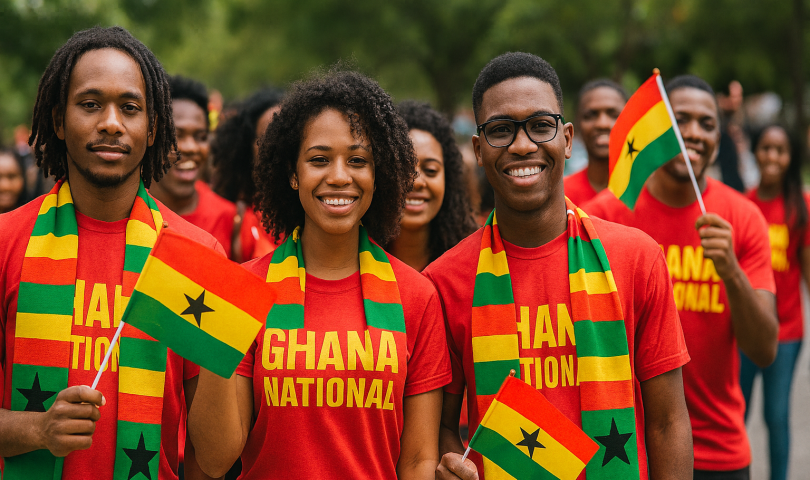
From Atlanta to Los Angeles, Chicago to New York, one sees a growing number of Ghanaian youth who do not associate with tribal groups. Their sense of identity is not bound to the Asanteman Association or the GaDangme Association, but rather to a broader Ghanaian-American experience. They are navigating dual identities, American by birth and upbringing Ghanaian by heritage and bloodline.
This generation is fluent in the idioms of American culture, yet deeply curious about their ancestral roots. They may not gather under the banner of a single ethnic group, but they are eager to celebrate Ghanaian music, food, history, and values in ways that resonate with their lived reality. Their challenge is not a lack of pride, but the absence of structures that welcome and empower them. They rally behind the beloved Black Stars, showing unwavering support even in moments when the team faces the United States. This loyalty extends beyond football, surfacing in boxing and other sports where Ghanaian pride consistently shines through.
Why The Youth Must Organize
The future of Ghanaian identity in the diaspora depends on the youth. Within the next 20 to 30 years, many of the traditional associations will fade, not because their missions were unworthy, but because they failed to adapt. Without programs designed to attract younger members, these organizations risk irrelevance.
The Ghanaian National Councils’, which rely on affiliated tribal and hometown groups, will inevitably be reshaped. Their replacements will not be unions of ethnic subgroups, but association of Ghanaian-Americans united by shared heritage rather than tribal lineage. This shift is not only inevitable—it is necessary.
By mobilizing now, Ghanaian youth can create powerful organizations that reflect their unique identity. Such associations would:
- Affirm belonging: Providing a space where Ghanaian-Americans are not judged by language fluency but celebrated for their heritage.
- Preserve culture in modern forms: Through festivals, mentorship programs, digital storytelling, and cultural education adapted to American contexts.
- Build leadership pipelines: Training youth to take on roles in community advocacy, cultural diplomacy, and professional networking.
- Strengthen transnational ties: Connecting with Ghana not only through tribal affiliations but through national pride, humanitarian projects, and cultural exchange.
- Ensure continuity: Safeguarding Ghanaian identity in the diaspora for generations to come, beyond the lifespan of current associations.
- Avoid ceremonial stagnation: Rejecting the endless battles over titles and positions, and instead prioritizing service, innovation, and inclusivity.
A Call to Action
The question is no longer whether Ghanaian-American youth should organize, but when? The answer must be now. Identity is not static; it evolves with each generation. If the youth do not claim their place, they risk inheriting a shattered legacy of endless disputes over ceremonial crowns. But if they mobilize, they can build associations that honor their heritage while embracing their American reality.
In doing so, they will not only preserve Ghanaian culture but also redefine it, making it inclusive, dynamic, and enduring. The Ghanaian story in America is still being written, and it is time for the children of Ghanaian descent to take up the pen—and write a chapter free from the burdens of outdated hierarchies.
WOW, WHAT A GREAT PEACE OF INFORMATION, LET’S PASS IT ON.