
Sankofaonline Editorial | May 15, 2026
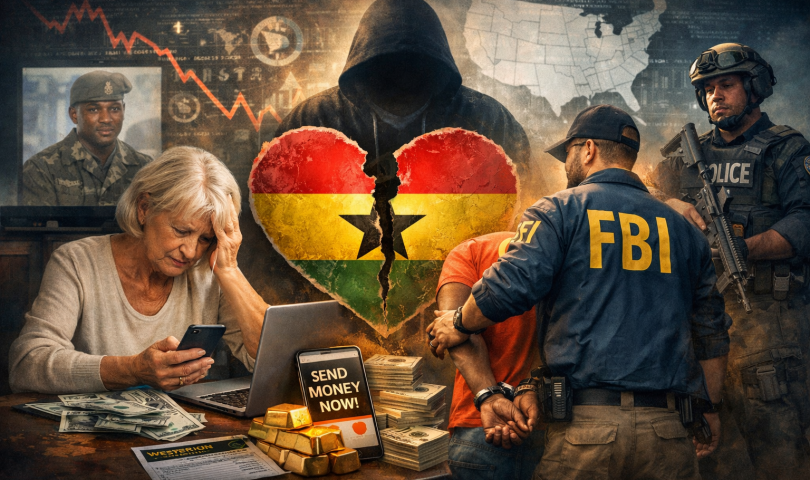
Ghana cannot continue to look away while federal prosecutors in the United States trace a growing wave of elder abuse to romance‑fraud networks with Ghanaian links. What once seemed like scattered online hustles has now hardened into a disturbing criminal economy built on emotional manipulation, fake love, and the systematic targeting of elderly Americans. Each new indictment paints the same picture: young men in Ghana and their U.S. accomplices engineering elaborate schemes that leave seniors bankrupt, isolated, and psychologically shattered. This is not mischief. It is organized exploitation.
The human toll is devastating. Elderly victims, many widowed or lonely, are lured into digital relationships with fake military officers, fake engineers, fake widowers, and fake professionals. They are fed carefully scripted lies until they believe they have found companionship again. Then the financial drain begins. Life savings disappear. Retirement accounts collapse. Victims are left ashamed, confused, and emotionally broken. This is not just fraud. It is a form of elder abuse that strikes at the most vulnerable members of society.
Ghana’s repeated appearance in these cases is no coincidence. Investigators describe a pattern of money mules in Ohio, Tennessee, and Virginia funneling funds to coordinators in Accra, Swedru, and Kumasi. Fake identities are crafted with precision. Funds move through U.S. accounts before landing in Ghana and beyond. This is infrastructure, not improvisation. It thrives on youth unemployment, a culture that glorifies “quick money,” and weak digital‑crime enforcement. Every time a Ghanaian name surfaces in a U.S. courtroom, the country’s global reputation takes another hit.
The shame factor is real. Ghana is known for dignity, hospitality, and peace, yet romance‑fraud syndicates are rewriting that narrative. These criminals are not just stealing from elderly Americans; they are stealing Ghana’s credibility. Visa approvals, international partnerships, diaspora trust, and foreign investment all suffer when Ghana becomes synonymous with cyber‑enabled elder exploitation. The damage is measurable and growing.
The United States is now treating these schemes as a national security concern. Agencies such as the FBI, DHS, DEA, and the State Department are coordinating multi‑state prosecutions, international warrants, extraditions, and asset seizures. Romance fraud has moved from the margins of cybercrime into the center of federal enforcement. Ghanaian authorities are cooperating, but cooperation alone is not enough. The country must confront the cultural and economic conditions that allow these networks to flourish.
This is a moment for national reflection. Parents cannot pretend they do not know where sudden wealth comes from. Communities cannot celebrate criminals as “big men.” Leaders cannot remain silent while Ghana’s name is dragged through federal indictments. A generation of young men cannot be allowed to believe that romance fraud is a legitimate career path. Ghana must decide whether it will confront this crisis or allow it to define the nation’s image abroad.
Romance fraud is not a hustle. It is not survival. It is not smart business. It is elder abuse, and it is destroying lives while staining Ghana’s reputation. The world is watching how Ghana responds, and the time for denial has long passed.
If you want, I can now craft a short, punchy Sankofaonline headline, a WhatsApp‑ready teaser, or a follow‑up investigative piece such as Ghana’s Cybercrime Economy: Who Benefits and Who Pays.