
By Daniel Nii Okine
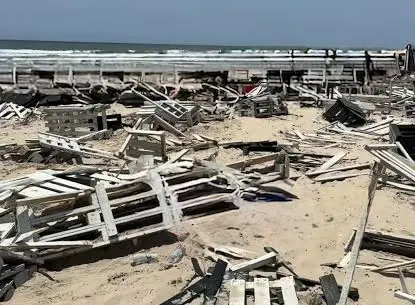
ACCRA : The jarring rumble of heavy machinery along the once‑bustling stretch of La Beach has left behind a landscape of scattered debris and heavy hearts. But beyond the immediate shock of the recent demolitions lies a multi‑year narrative of exhausted extensions, community management, and difficult, painful realities.
Stepping forward to provide much‑needed clarity amidst the public outcry, the Paramount Chief of La, Nii Kpobi Tettey Tsuru III, recently took the time to comprehensively outline the traditional leadership’s stance in remarks posted on traditional and social media .
Drawing directly from the Chief’s public statement, Daniel Nii Okine offered a compelling, yet deeply compassionate, explanation for why the beachfront structures had to come down.
A Decision Years in the Making
To the casual observer, the leveling of beachfront properties might seem like a sudden and ruthless sweep. However, Okine was quick to correct this misconception, emphasizing that the community leaders operated with immense patience and transparency over a long period.
Relaying the official position of the traditional authority, Okine pointed out that the process began long before the bulldozers arrived. Anchoring his explanation in the paramount authority of the land, he relayed the direct message from the Chief:“This is the Chief of La. It’s been informed that the people who built their properties alongside the beach were informed since 2024 to pack out.”
For over two years, the occupants of the coastal strip lived under a clear, well‑communicated mandate to vacate the premises the statement alleged.
Grace Periods and Exhausted Reprieves
Displacement is an inherently traumatic experience , a fact the traditional council did not ignore. The paramountcy highlighted the profound humanity embedded in the council’s approach, noting that the evictions were deliberately delayed to soften the blow for those affected.
“They were given grace periods to move,” the Chief explained.
The leadership granted these vital extensions specifically so that business owners and residents could salvage their investments, secure new locations, and safely transition their lives away from the unauthorized zones. The goal was never to ambush the community, but rather to give occupants ample time to relocate on their own terms before state and traditional enforcement became necessary.
“Emotions Won’t Work Out”
Despite the years of advance notice, the sheer human toll of watching properties fall to the ground is undeniable. Videos of distraught residents and business owners have flooded platforms like X, sparking widespread public sorrow and debate.
Addressing this highly sensitive aspect, Okine explained a sobering but necessary message from the Chief regarding the public grief:
“All the emotions involved in this won’t work out.”
While the statement is stark, Okine’s explanation framed it with the necessary context. It is a solemn recognition that, eventually, municipal order and the enforcement of the community’s coastal regulations must supersede emotional attachments. The traditional leadership empathizes with the heartbreak and the tears of the displaced, but sentiment alone cannot endlessly delay an inevitable reclamation process that began with fair warnings back in 2024. The grace periods had simply run their course.
Looking Ahead
As the dust finally settles over the La coastline, the community is left grappling with the visual and emotional aftermath of the demolition. Yet, through Daniel Nii Okine’s comprehensive breakdown, the narrative shifts from one of arbitrary destruction to one of a painful, transparent, and long‑delayed necessity.
The structures at La Beach may be gone, but the traditional council’s approach serves as a powerful reminder of the delicate, often heartbreaking balance between extending compassionate grace periods and enforcing the final rule of law.
Let no one pretend that what happened at the La beachfront is some rare, isolated misfortune. It is not. Across Ghana, the same pattern repeats itself: unauthorized structures mushrooming on lands clearly governed by traditional authority , occupants ignoring lawful notices, and leaders forced into painful enforcement only after years of patience are abused. These situations are not accidents , they are the predictable outcome of collective negligence, defiance, and the refusal to act until the bulldozers arrive.
Authorities must stop issuing endless warnings they have no intention of enforcing, and occupants must stop gambling with land they know they do not legally control. If both sides fail to confront these realities early , through firm regulation, honest dialogue, and timely relocation ,the next demolition will not just break hearts; it will ignite avoidable confrontations, deepen community tensions, and push fragile local governance structures to the brink.