
By Fuvi Kloku
“Power turns predator when it begins hunting the very people who built it”.
Between 6:00 PM and 7:00 PM in Adam Nana Ward, the sanctity of a man’s home was reduced to a footnote. Kwabena Osei Wusu,popularly known as King Eric,was not approached by officers acting under the discipline of the Ghana Police Service. He was seized in a manner that looked and felt like a political abduction.

According to Wusu, Detective Silvanus Abade and his team refused to state the charges, confiscated his phone when he attempted to notify his family, and denied him the basic right to secure his home before being forced into a waiting vehicle. What unfolded was not policing; it was a demonstration of raw power, staged to intimidate and silence.
The aftermath has raised a disturbing question: after such a humiliating arrest, how does a police commander simply “let the man go” because it is an internal party issue? President Mahama has publicly stated that there is no longer any “power from above,” yet some local leaders appear determined to cling to that old culture of political policing.

The officers who participated in this arrest must answer for their conduct. Allowing themselves to be used to settle internal party disputes undermines the very foundation of the Ghana Police Service. Where was the CID? Where was the warrant? Where was the professionalism expected of a constitutional democracy?
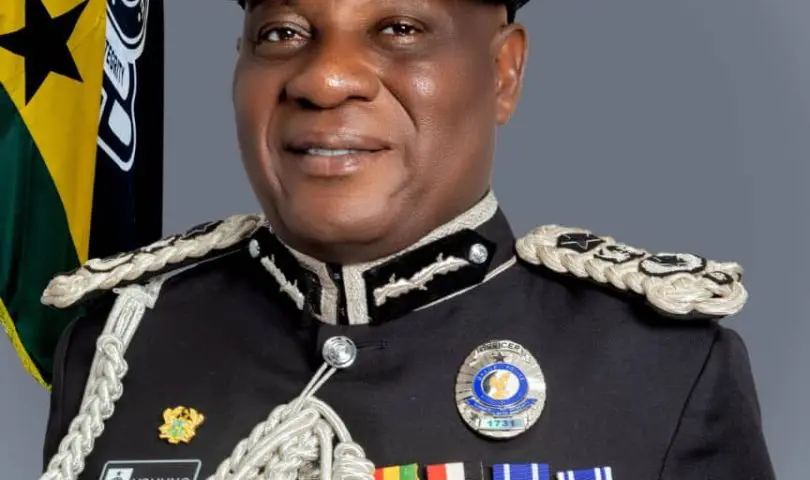
The expectation was that by now, the Inspector-General of Police, COP George Alex Mensah Wohenu, would have addressed this matter decisively. Instead, silence hangs over an incident that strikes at the heart of public trust. Ghana has moved beyond the era when political actors could deploy police officers as personal enforcers. Yet in Kasoa, that old script appears to be making a comeback.
The deeper concern is the pattern. This is reportedly the fifth time NDC members in Awutu Senya East have been targeted through the same machinery. The constellation of actors raises unavoidable questions:
The MP, Hon. Naa Koryoo, is alleged to be the complainant.
The MCE, who chairs DISEC, presides over a district where security resources are used to settle party grievances.
Her husband, Yusif Yunusah, is alleged to be the source of the “order from above.”
When a political family can trigger a police raid over WhatsApp banter, it reveals a fragility incompatible with public leadership. DISEC exists to protect the district, not to referee personal disputes. Reducing the police to instruments of domestic score‑settling is a distortion of their mandate and a betrayal of the public trust.
The absurdity reached its peak when the Crime Officer reportedly presented WhatsApp messages as the basis for the arrest, messages involving a simple exchange with “Yusif’s boys.” For this, officers allegedly surveilled a man’s home for a week. For this, a high‑intensity arrest was executed. For this, a citizen was denied his rights.
The message to the party’s own grassroots is unmistakable: dissent will be punished. The very people who fought to secure political power now find that same power turned against them.
Justice is supposed to be blind. But in Awutu Senya East, the Kasoa Police appear to be looking in only one direction, toward the living room of the MP.
Ghana deserves better.