

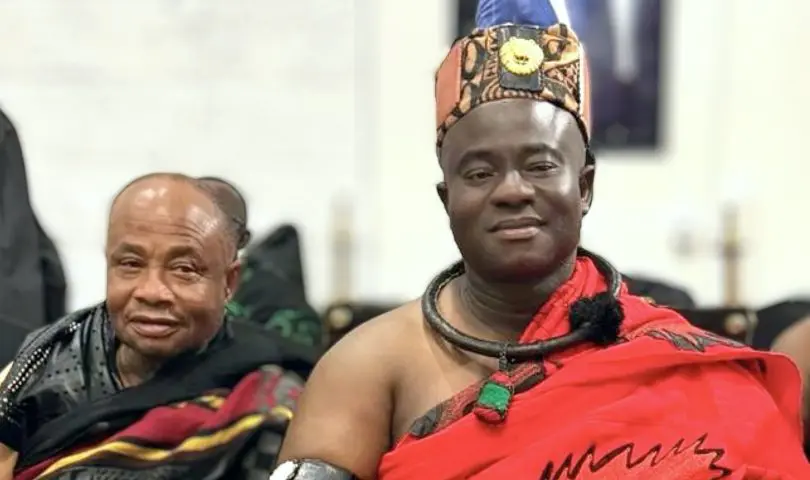

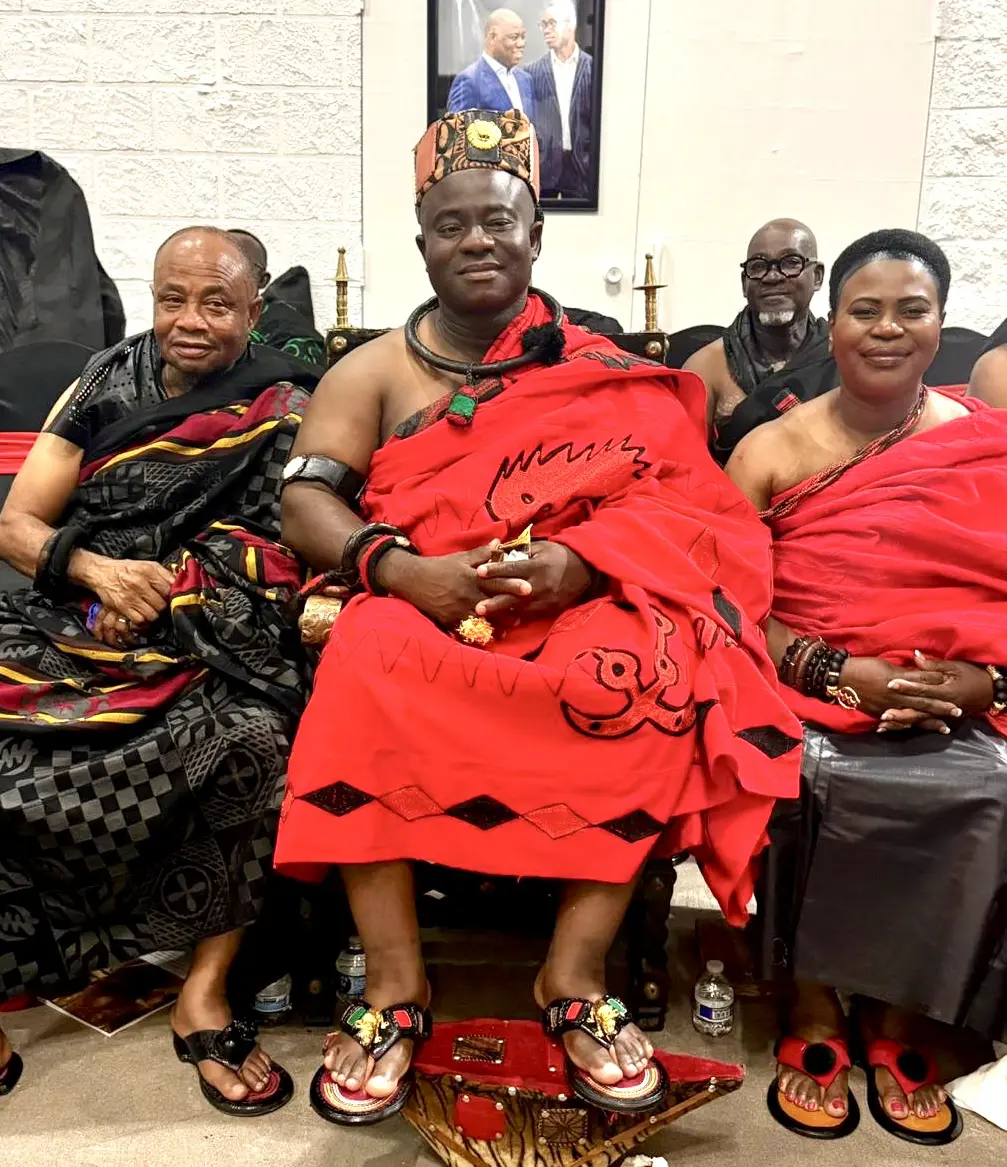
In a world where ceremonial titles sometimes become thrones of ego rather than platforms of service, two distinguished leaders—Nana Abayie (Mr. Eugene Kwame Frimpong), the current Asantefuohene of Chicago, and his predecessor, Nana Addai Baffour—are offering a masterclass in humility, unity, and legacy-building.
At a recent celebration of life, attended by members of the Ghanaian community and beyond, these two noble figures walked side by side. They didn’t just attend—they embodied unity. From moving in procession together, to sharing seats and joyously co-gracing the occasion, their presence was a living symbol of continuity and cooperation.
In many organizations, leadership transitions are fraught with drama—where some cling to ceremonial posts with the tenacity of monarchs, orchestrating their stay as though the positions were birthrights. Yet, the Asanteman Association under the leadership of Nana Abayie charts a different path—one paved in renewal, inclusivity, and the courage to let go. It’s a story that resonates beyond titles and regalia—it’s a story of grace.
Consider the shining example from the Ga-Dangme community Organization. Nii Akonfra I, the former Mantse, willingly stepped aside with poise, handing over the reins to Nii Yebouh Nortey Odiasempa I—a quiet, dignified moment of succession that was as somber as it was hopeful. This occurred a few days to his inauguration! These acts are not signs of retreat, but of true leadership, which recognizes that the health of an organization is nourished by fresh perspectives and renewed energy.
Serving as a ceremonial leader is far from symbolic alone. It comes with real demands—from investing thousands in traditional attire to representing a community with dignity and pride. But make no mistake: such positions are not meant to last a lifetime. When leaders cling too tightly, they risk forgetting that these roles are not centers of power, but platforms for service. What begins as a service to community too often mutates into self-glorification, with individuals anointing themselves permanent gatekeepers in a space where no such mandate exists.
Let us be clear: the United States recognizes only Indigenous tribal nations as sovereign entities with traditional leadership roles. For all other ethnic or cultural associations, titles like “chief” and “queen mother” are cherished cultural symbols—not legal authorities. Therefore, to use such titles as tools for division, dominance, or a lifelong seat of honor is to reduce their spirit and meaning.
In contrast, the partnership between Nana Abayie and Nana Addai Baffour is a guiding light. It shows that leadership need not end in exile. One can step aside and still remain deeply relevant—offering wisdom, mentorship, and presence without needing to wear the crown.
So let this be a rallying cry for our communities:
True honor is not in how long you hold a title, but in how deeply you serve while you hold it—and how gracefully you pass it on.
Let’s uplift one another not through power struggles, but through shared purpose. Let us make our cultural gatherings oases of connection, not battlefields of status.
To all current and aspiring leaders: lead boldly, step aside proudly, and remain ever present in the spirit of unity. Your relevance is not tied to a title—but to the legacy of service you leave behind.

I love this article. You just nailed it. In New York we have chiefs and queenmothers like that. The idiots prop them on, unfortunately. Some think they have some sort of power over their members because we call them Nana or Nanahemaa.