
By Stephen Apolima | 10 July, 2025.
Accra, Ghana – The recent decision by Ghana to abstain from voting on the renewal of the mandate of the Independent Expert on Protection Against Violence and Discrimination Based on Sexual Orientation and Gender Identity (SOGI) at the 59th Session of the Human Rights Council has sparked intense debate. While the government defends its stance as constitutionally consistent, critics, including key proponents of Ghana’s Anti-LGBTQ+ Bill like Hon. Sam George, argue that the abstention betrays the country’s stated principles. This article examines the nuances of Ghana’s position, the implications of its abstention, and the broader tensions between national sovereignty, human rights, and cultural values.
Ghana’s Official Position: A Balancing Act
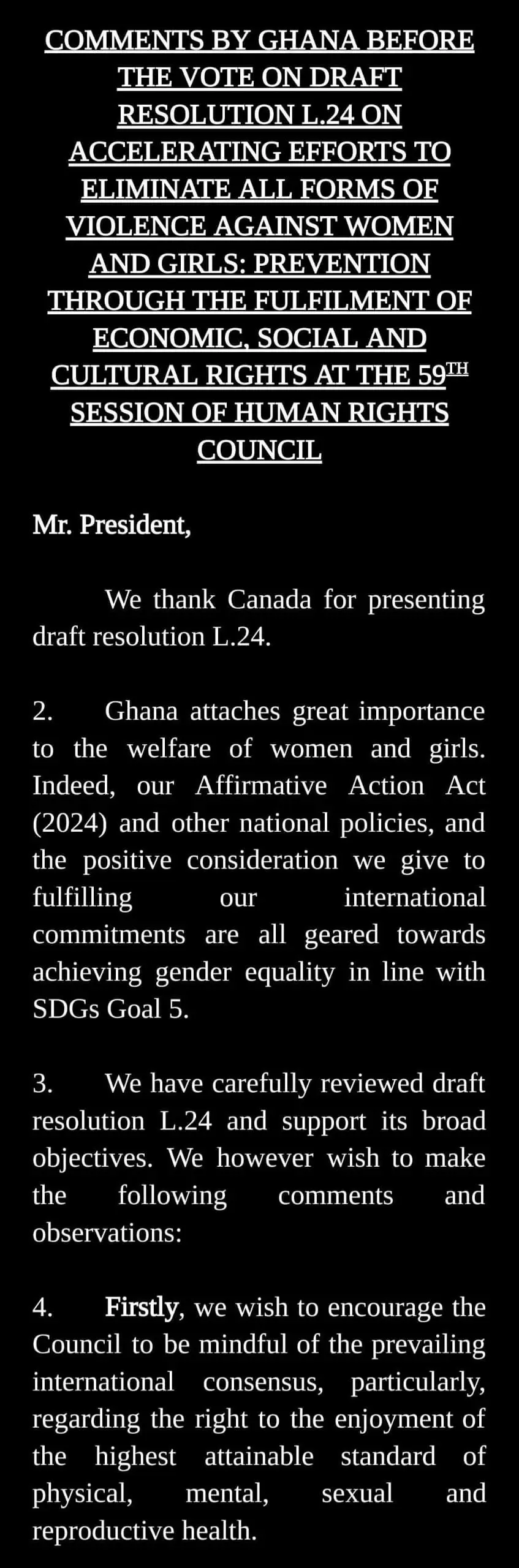
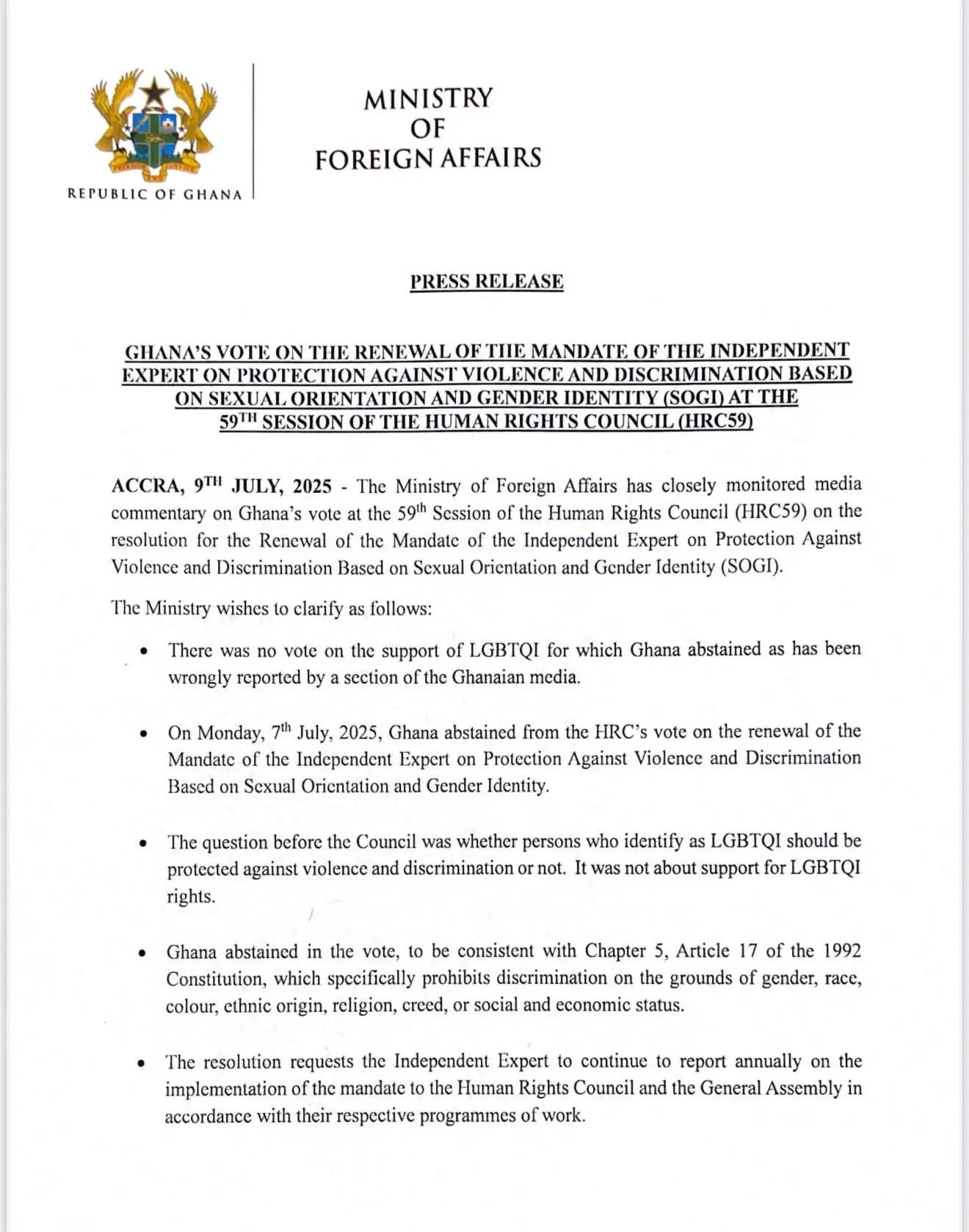
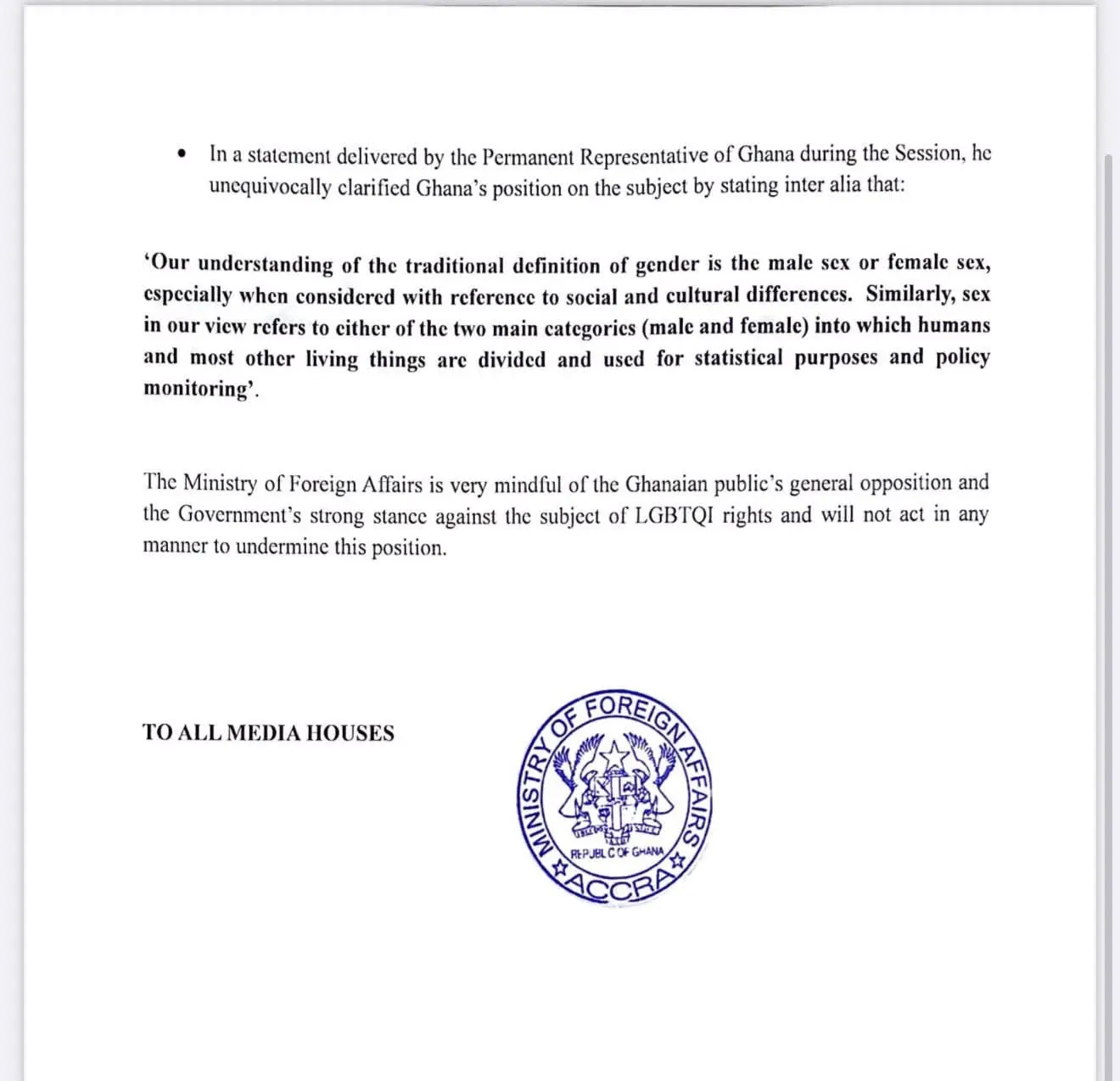
The Ministry of Foreign Affairs, in its press release, clarified that Ghana’s abstention was not an endorsement of LGBTQ+ rights but a procedural alignment with constitutional provisions—particularly Article 17 of the 1992 Constitution, which prohibits discrimination on various grounds, including gender. The government emphasized that the vote was about protecting individuals from violence and discrimination, not about legitimizing LGBTQ+ identities.
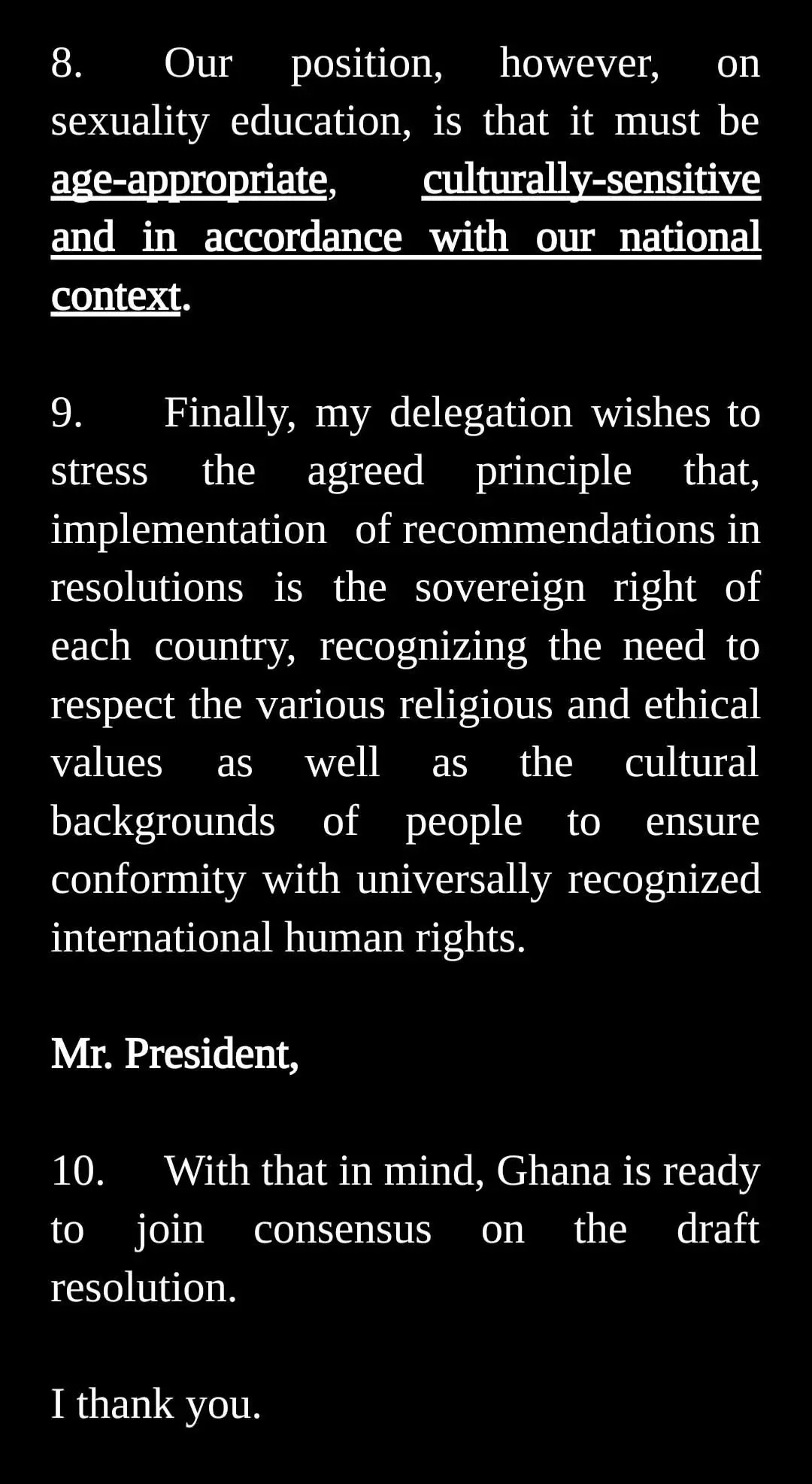
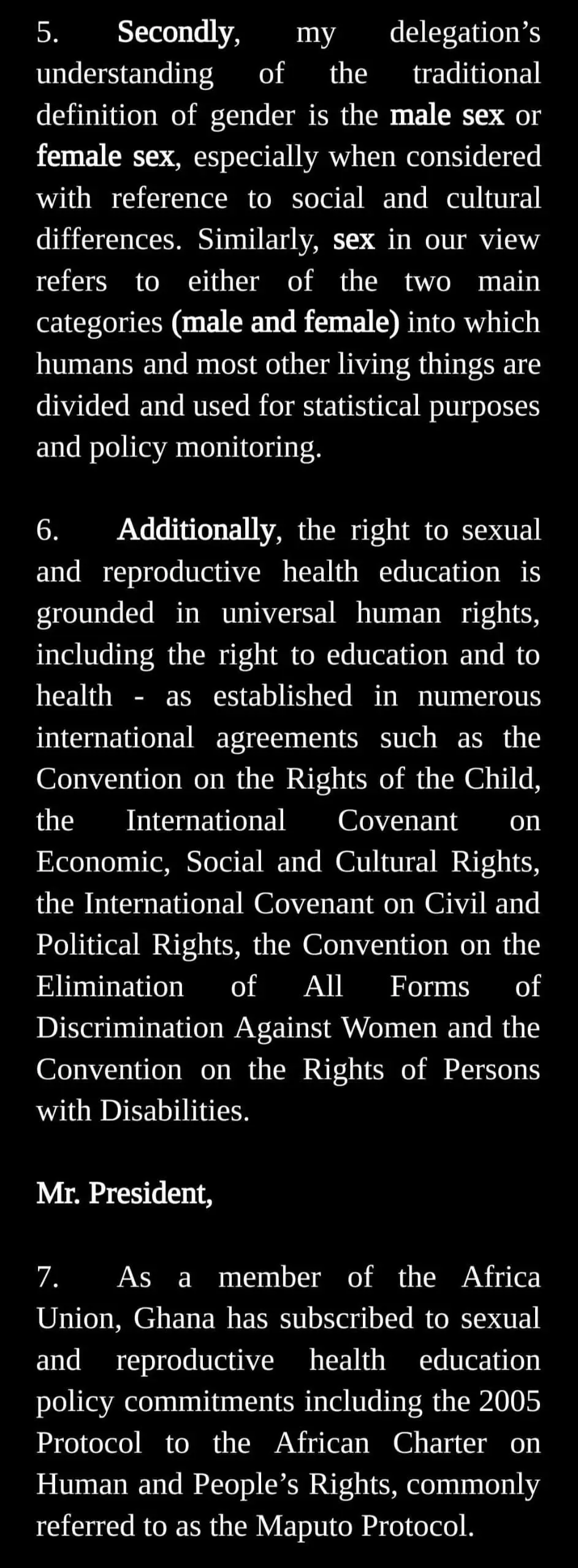
Ghana’s earlier statement at the Human Rights Council further reinforced its traditional view of gender as strictly binary (male and female) and rooted in cultural norms. However, the abstention suggests a cautious diplomatic approach—avoiding outright opposition to an international human rights mechanism while maintaining domestic resistance to LGBTQ+ rights.
Hon. Sam George’s Critique: A Call for Unambiguous Opposition
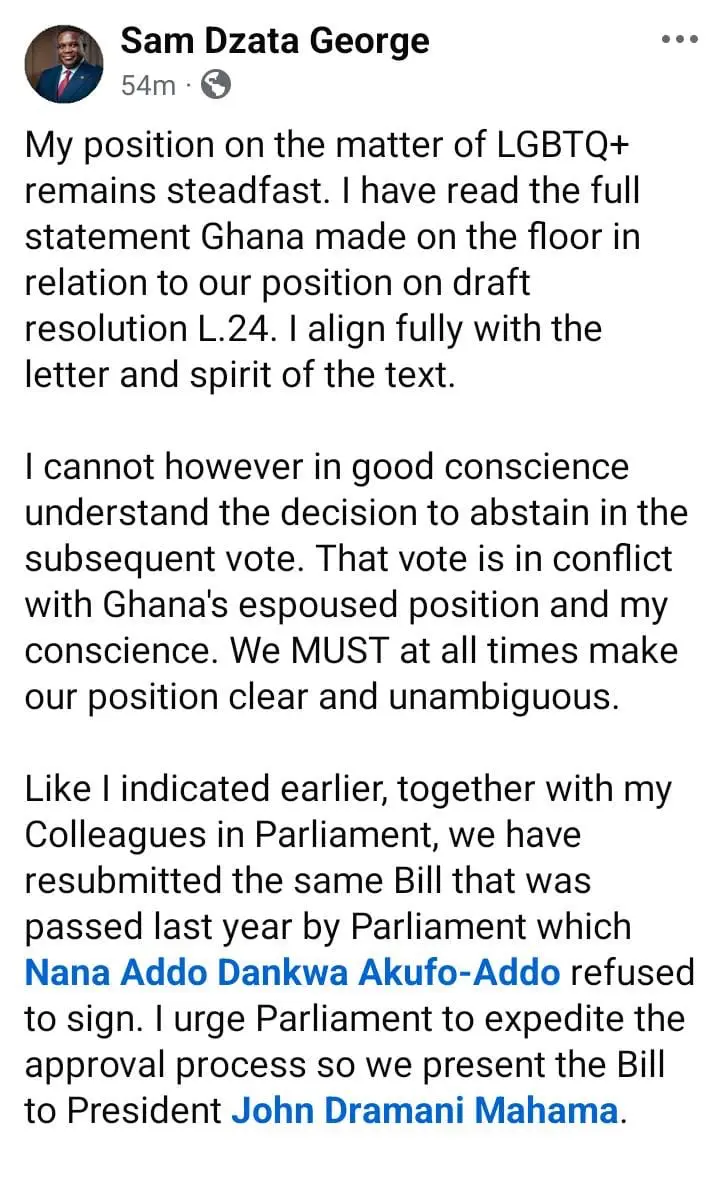
Hon. Sam George, a leading advocate of Ghana’s Anti-LGBTQ+ Bill, has sharply criticized the abstention, arguing that it creates ambiguity where Ghana should stand firm. His Facebook post underscores his belief that Ghana’s vote should have been a clear “No,” reflecting the country’s legislative and societal stance against LGBTQ+ rights.
George’s position highlights a growing frustration among conservative lawmakers who see the abstention as a missed opportunity to assert Ghana’s sovereignty against perceived Western impositions. His call for Parliament to expedite the resubmitted Anti-LGBTQ+ Bill to President Mahama signals an intent to harden Ghana’s legal stance, regardless of international pressure.
The Dilemma: Human Rights vs. Cultural Sovereignty
Ghana’s abstention reflects a broader tension in its foreign policy: how to engage with global human rights frameworks while upholding domestic cultural and religious values. The government’s argument—that protecting individuals from violence does not equate to endorsing LGBTQ+ rights—is a delicate balancing act. However, critics argue that abstaining rather than opposing the SOGI mandate weakens Ghana’s moral clarity on the issue.
Internationally, Ghana risks being seen as inconsistent—supporting human rights in principle but hesitant to take a definitive stand when it concerns LGBTQ+ persons. Domestically, the government faces pressure from both conservative factions (demanding outright rejection) and human rights advocates (who view the abstention as insufficient).
The Way Forward: Clarity or Compromise?
As Ghana navigates this debate, two paths emerge:
- Firm Legislative Action: If Parliament passes the Anti-LGBTQ+ Bill under the new administration, Ghana’s position will become unequivocal, but it may face diplomatic and economic repercussions.
- Strategic Diplomacy: Maintaining a nuanced stance—condemning violence without endorsing LGBTQ+ rights—could allow Ghana to engage globally while placating conservative voters.
Hon. Sam George’s insistence on “truth, conscience, and principles” resonates with many Ghanaians who see LGBTQ+ rights as incompatible with national values. However, the government’s cautious approach suggests an awareness of the complexities of international human rights discourse.
Conclusion: A Test of Ghana’s Convictions
Ghana’s abstention is not just a procedural decision but a reflection of deeper ideological and political struggles. While the government seeks to balance constitutional obligations with cultural conservatism, critics demand unwavering opposition to LGBTQ+ rights in all forms. As the Anti-LGBTQ+ Bill resurfaces in Parliament, the nation must decide: Will it take a definitive stand, or will it continue walking a diplomatic tightrope?
One thing is clear—the debate is far from over, and Ghana’s next moves will shape its identity on both the African and global stage.