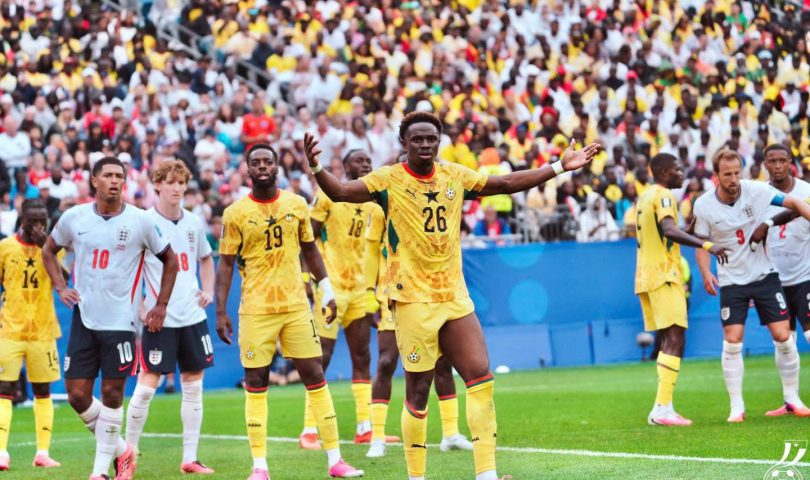

The group stage of the 2026 FIFA World Cup closed under a cloud of controversy, with Video Assistant Referee decisions and non-decisions shaping qualification outcomes, eliminating hopeful nations, and igniting worldwide criticism.
The tournament adopted an unusually high threshold for video review, yet the absence of consistency and clarity in several decisive moments provoked strong reactions from supporters, coaches, and national associations. Ghana found itself at the heart of this global conversation, as one of the most disputed calls of the tournament involved the Black Stars.
The Most Disputed VAR Flashpoints
- Iran vs Egypt
A dramatic finish collapsed in seconds when Shoja Khalilzadeh’s stoppage time goal, which would have sent Iran to the knockout stage for the first time, was cancelled. VAR measured an offside infraction by a single millimeter, ending Iran’s historic pursuit and triggering outrage across Tehran. - Ghana vs England
Ghana’s campaign absorbed a major blow when Ezri Konsa collided with Prince Kwabena Adu inside the penalty area late in the match. Despite visible contact, VAR declined to recommend an on‑field review. Ghana’s coach Carlos Queiroz condemned the process, arguing that the refusal to send the referee to the monitor undermined fairness and denied Ghana a legitimate chance to secure victory. - Switzerland vs Qatar
A Swiss penalty became the subject of intense scrutiny when replays suggested an offside in the buildup. FIFA later attributed the confusion to a technical outage that prevented the semi‑automatic offside graphic from appearing. Analysts criticized the governing body for failing to maintain transparency in a moment that influenced group standings. - Brazil vs Scotland
Vinicius Jr saw an early goal overturned after VAR advised a review for a soft foul on Jack Hendry. The Brazilian Football Federation formally petitioned FIFA, demanding clearer and more standardized review protocols to prevent subjective interpretations from determining match outcomes. - Germany vs Ecuador
Germany’s opening goal stood despite Aleksandar Pavlovic striking Pedro Vite in the head with a high boot during the buildup. Ecuadorian players protested fiercely, and commentators questioned why VAR failed to intervene when dangerous play was evident.
Systemic Shifts and Emerging Rule Disputes
The group stage also served as a proving ground for new International Football Association Board regulations. One of the most notable changes introduced a straight red card for players who cover their mouths during confrontations, a measure designed to prevent concealed racial abuse. VAR applied this rule in Paraguay’s match against Türkiye, sending off Bilal Almirón after reviewing footage.
Other expansions of VAR authority, including the ability to correct corner kick assignments and intervene on second yellow cards, drew criticism for fragmenting the rhythm of matches and increasing stoppages.
Coaches and analysts argued that the widening scope risked turning VAR into an intrusive mechanism rather than a corrective tool.
Ghana’s Place in the Global Debate
Ghana’s disputed non‑penalty against England became one of the defining controversies of the tournament. It fueled discussions about whether VAR protocols adequately protect smaller football nations from inconsistent officiating standards. The Black Stars’ experience now forms part of a broader conversation about fairness, transparency, and the future of officiating at the highest level of world football.