An Op‑Ed by Daniel Nii Okine | for Sankofaonline
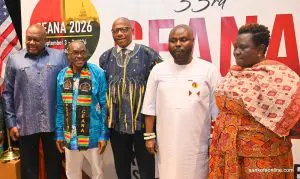
At the town hall meeting in London, the hall was polite, but the message was not. When Dr. Cassiel Ato Forson took the microphone at the London Town Hall meeting, he did not massage egos or offer diplomatic half‑truths. He detonated a truth‑bomb, a cold, clinical reminder of how Ghana was dragged to the edge of economic ruin and how disciplined leadership is now dragging it back on track. It was the kind of presentation that forces a nation to look in the mirror, whether it likes the reflection or not.
Forson began by revisiting 2022, a year many politicians would prefer to erase from memory. He refused to. He described a Ghana where the cedi was in free fall, where inflation was not just rising but punishing, where reserves were evaporating, and where investor confidence collapsed so completely that the global financial system slammed its doors in Ghana’s face. Moody’s cut Ghana to CAA1, S&P dropped the country to CCC+, and Fitch pushed it to CCC. Eurobond spreads exploded beyond 3,400 basis points, a financial obituary written in numbers. Even the Ghana Cocoa Board, once a global giant, could not secure syndicated loans. Banks struggled to obtain letters of credit. Ghana was not just struggling, it was isolated.
According to Forson, this was not a crisis created by fate, it was created by decisions. Bad ones. Reckless ones. The kind that leave citizens paying the bill long after the politicians responsible have moved on to their next slogan. Ghana hit the wall, and the impact was national.
Then came the pivot. Forson credited the Mahama administration with doing what many governments fear, choosing discipline over populism. The fiscal and monetary measures were bitter, unpopular, and politically dangerous, but they were necessary. And the results, as he laid out, were not theoretical. They were measurable, verifiable, and impossible to ignore.
GDP grew by 6 percent in 2025, with non‑annual growth reaching 7.6 percent, the highest in fourteen years. The economy crossed the 100 billion dollar threshold, placing Ghana among the top eight economies in Africa, with GDP per capita rising to 3,385 dollars. Borrowing costs collapsed, the 91‑day Treasury bill rate fell from 28.4 percent to 4.8 percent, medium‑term bonds that once traded at 25 percent now trade between 11 and 12 percent, and the policy rate dropped from 27 percent to 14 percent. Inflation, once suffocating at 23.8 percent in December 2024, fell to 3.4 percent by April 2026.
Debt sustainability improved as well. Ghana’s debt‑to‑GDP ratio declined to 44.7 percent, shifting the country from high risk to moderate risk. The external sector strengthened, with the current account recording a surplus of 8.3 percent of GDP in 2025, moving toward a target of 10 percent.
Forson’s message was unmistakable. Ghana’s recovery is not a miracle, it is a consequence. It is the product of discipline, not slogans, of hard decisions, not political theatrics. And it is fragile. It can be protected or destroyed depending on whether the nation chooses responsibility or returns to the recklessness that nearly broke it.
For the diaspora audience in London, many of whom send money home every month to keep families afloat, the message hit differently. They lived the consequences of the crisis. They felt the panic when the cedi collapsed. They watched their remittances lose value in real time. Forson’s presentation was not academic to them, it was personal.
Ghana today stands at a crossroads. The recovery is real, but so is the danger of complacency. The London Town Hall meeting was not just an update, it was a warning. A nation that has clawed its way back from the brink cannot afford to forget how it got there. Forson’s presentation forced that memory back into the national conversation.
Ghana is not a miracle story, it is a cautionary tale with a second chance. The question now is whether the country will protect the gains earned through discipline or repeat the mistakes that nearly shattered its economy. The choice, as Forson made clear, is national, urgent, and unforgiving.