

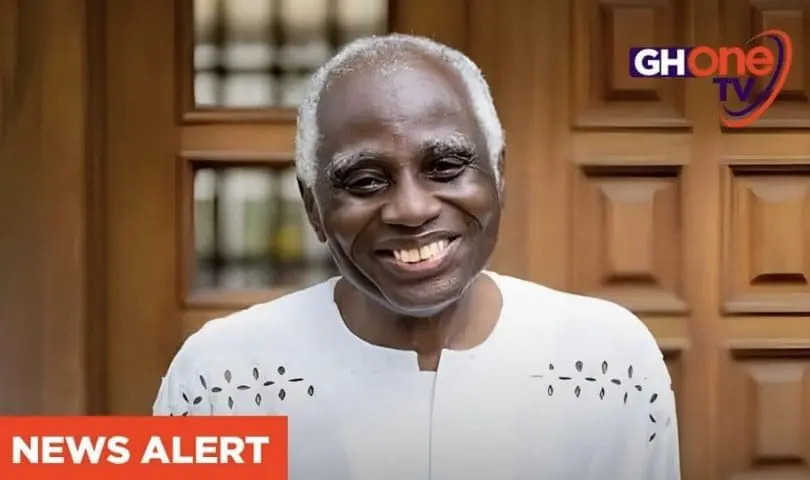

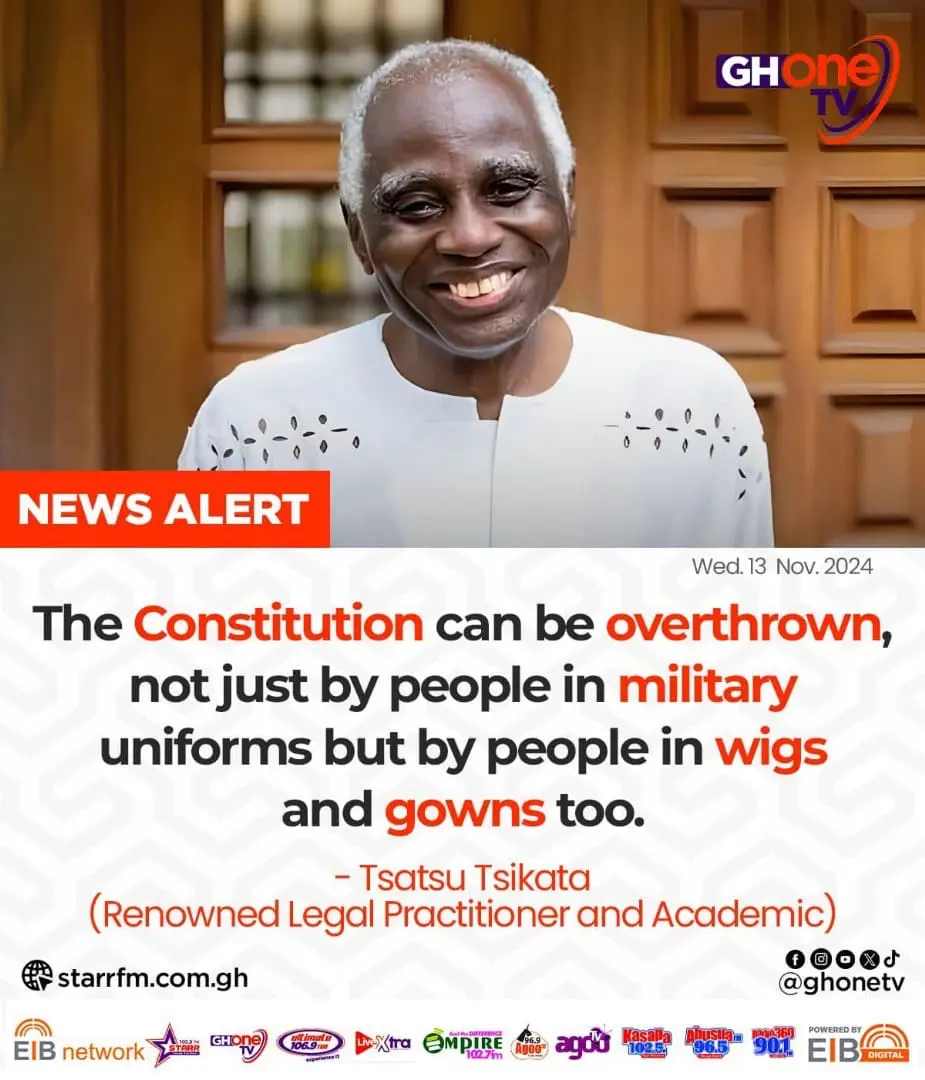
In a news alert from GHOne TV dated Wednesday, November 13, 2024, a quote by Tsatsu Tsikata, a renowned legal practitioner and academic, has stirred the waters of Ghana’s political landscape: “The Constitution can be overthrown, not just by people in military uniforms but by people in wigs and gowns too.” This statement underscores a profound observation about the fragility and sanctity of constitutional governance.
An Enduring Democracy
Ghana, often lauded as a beacon of democracy in West Africa, has a storied history of political resilience and legal steadfastness. The country has weathered several storms, from coups and political unrest to economic upheavals, all while maintaining a commitment to democratic ideals. The Constitution, a cornerstone of Ghana’s democracy, symbolizes the country’s resolve to uphold justice, equality, and the rule of law.
The Dual Threat
Tsikata’s assertion brings to light a dual threat to this democratic fabric. Historically, the menace of military coups has been a visible and aggressive force against constitutional rule. However, Tsikata’s words shine a spotlight on a more insidious danger: the potential subversion from within the legal profession. The “wigs and gowns” he refers to symbolize the legal professionals who, through their interpretations and decisions, wield significant power over the country’s laws and governance.
A Call for Vigilance
This statement is particularly poignant in the current political climate, where debates over judicial independence and the integrity of the legal system are fervent. It serves as a reminder that the guardians of the Constitution—the judges, lawyers, and legal scholars—must uphold the highest standards of integrity and accountability. The Constitution, while robust, is not immune to manipulation by those entrusted with its interpretation and enforcement.
A Beacon of Hope
Despite these challenges, Ghana’s commitment to democratic principles remains strong. The widespread attention Tsikata’s statement has garnered underscores the nation’s dedication to safeguarding its Constitution. As the country continues its democratic journey, the vigilance of its citizens and the integrity of its legal professionals will be crucial in maintaining the balance between power and justice.
Conclusion
Tsikata’s words resonate as a powerful reminder of the delicate balance required to sustain a democracy. The Constitution, a beacon of hope and justice, must be protected from all forms of subversion, both visible and covert. As Ghana navigates its future, the commitment to upholding the rule of law and ensuring the accountability of those in power will determine the strength and resilience of its democracy.

The last statement cannot be emphasized enough! Say that loud !