

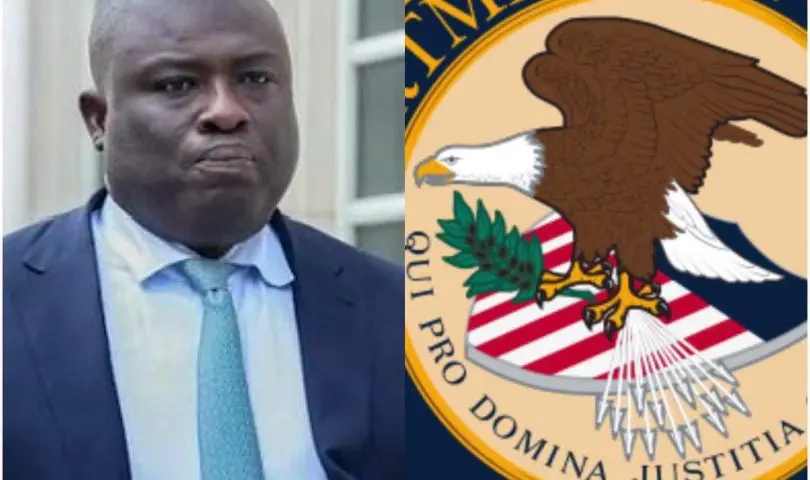

By Daniel Nii Okine for Sankofaonline
Ghana’s encounter with the AKSA Bribery Scandal is not merely a story of one executive’s criminal choices, it is a mirror reflecting systemic weaknesses in governance, procurement, oversight and political accountability. What began as an emergency response to crippling national power shortages evolved into a transnational bribery scheme stretching from Accra to Istanbul, London and New York. Its conclusion in a United States federal courtroom now forces Ghana to confront the unresolved domestic chapter of this saga.
Genesis of the Scandal, The Power Crisis That Opened the Floodgates
During the height of dumsor under President John Mahama, Ghana’s energy sector was in crisis. To respond swiftly, the government created a dedicated Ministry of Power and appointed Dr. Kwabena Donkor, MP for Pru East, as Minister. In the rush to restore electricity, emergency power agreements multiplied, and foreign companies seeking lucrative contracts found fertile ground.
AKSA proposed a 370MW plant, a major project requiring international financing. To structure the deal, AKSA hired Goldman Sachs, the American investment bank. Within Goldman Sachs, Ghanaian-born executive , Asante Berko , was assigned to manage the Ghana project because of his background and corporate expertise.
His official role was legitimate, to advise AKSA, structure financing and help pitch the project to Ghana’s government. His unofficial role, as later proven in court, was criminal.
The Bribery Architecture, Shell Companies, Fake Invoices and “Holy Rain”
Evidence presented in court showed that Berko and his collaborators built a bribery pipeline using shell companies, falsified consulting invoices and personal email accounts to evade Goldman Sachs’ compliance systems. He used coded language, including the now infamous phrase “holy rain,” to describe major bribe payouts.
Goldman Sachs eventually detected irregularities and forced Berko to resign in 2016, leading to his withdrawal entirely from the AKSA project. But the bribes had already influenced key decisions on the power project.
On May 12, 2015, the Power Minister signed the Aksa contract. Parliament ratified it in July under a take-or-pay structure that would later cost Ghanaian tax payers millions of dollars.
Evidence revealed that a $46,000 bribe was split among MPs, five Ghanaian officials received $5,000 cash each during a sponsored trip to Turkey, and Berko himself received a $2 million cash success fee from Aksa.
One recorded conversation referenced “KD got one million.” Prosecutors argued that “KD” referred to Dr. Kwabena Donkor, then the sitting Power Minister.
The International Pursuit, From Heathrow to Brooklyn Federal Court
After years of evading criminal prosecution, Berko was arrested at Heathrow Airport on November 3, 2022. He was extradited to the United States in July 2024 and placed in federal custody in New York.
During closing arguments, prosecutors played a secret video recorded by an informant. In it, Berko stated plainly that cash was required to get business done in Ghana and that “KD got one million.”
On August 6, 2026, a U.S. federal jury in Brooklyn found Berko guilty on all counts, including foreign bribery and money laundering. He now faces up to 30 years in prison at sentencing on November 10, 2026.
Importantly, U.S. prosecutors confirmed collaboration with Ghana’s Attorney-General’s Office and the Office of the Special Prosecutor, a partnership that contributed significantly to the conviction.
The Ghana Question, What Happens to the Local Actors Implicated?
Berko has faced justice abroad, but the Ghanaian officials implicated in the scheme remain untouched. Dr. Kwabena Donkor, the alleged “KD,” now serves as Board Chairman of the Ghana Amalgamated Trust, a state-backed institution supporting indigenous banks. Other officials named in evidence continue to hold influence in public life.
This unresolved domestic chapter raises a critical question; will Ghana prosecute the local collaborators? The credibility of Ghana’s anti-corruption institutions hinges on the answer.
What Ghanaians Expect Now, The Demands for Accountability
Ghanaians expect a credible, uncompromising follow-up, including
- Full domestic prosecution of every Ghanaian named in the U.S. trial,
- Immediate suspension of implicated officials from public office pending investigation,
- A parliamentary inquiry with public hearings,
- A forensic audit of all emergency power contracts signed between 2014 and 2016,
- A permanent blacklist of companies involved in bribery,
- Strengthening of the Office of the Special Prosecutor,
- Mandatory public disclosure of all future energy contracts.
Ghana cannot continue outsourcing justice to foreign courts. The nation cannot wait for the United States to jail its criminals before acting. The evidence shows that corruption in this case was not only foreign, it was deeply local.
The Credible Path Forward, Weeding Out the Bad Nuts
To restore public trust, Ghana must enforce the laws already on its books with uncompromising resolve, not merely recite them as aspirations. The nation must
- Empower the Office of the Special Prosecutor with full prosecutorial independence, ensuring its mandate is protected from political pressure,
- Enforce existing Conflict of Interest and Anti‑Bribery laws which already carry mandatory jail terms but are too often ignored,
- Digitize procurement processes to eliminate human interference and close the loopholes that enable manipulation,
- Ensure National Anti‑Corruption Intelligence Units operate without obstruction, allowing investigators to pursue leads wherever they point,
- Enforce public asset declarations as binding legal obligations rather than symbolic gestures,
- Apply laws criminalizing political interference in investigations, demonstrating that no officeholder is above accountability.
The AKSA scandal is not just a story of bribery, it is a national reckoning. It exposes how easily public institutions can be compromised when oversight collapses.
Berko has faced justice in a foreign land, now Ghana must face itself, for the unanswered questions at home are louder than the verdict abroad and the credibility of our institutions hangs in the balance.
By Karl-Heinze Heerde
NDC, NPP: The snails of Africa
During my first time in Ghana (2012-2017), the sun was shining hot (solar energy?), the wind (wind turbines?) was blowing from Togo, and the waves (water turbines?) of the Gulf of Guniea carried ships around the world.
Instead, in 2015, a ship arrived in Ghana on the waves of the Gulf of Guniea from Turkey to ease the pressure of Dumsor Dumsor light off, light on for days and sometimes weeks. The power shortage was foreseeable years before it occurred.
Under the NPP government of President Kufour and the subsequent NDC government of President Mahama should have bought solar panels from China or built an assembly line in the country to give them out on a loan scheme to each and every household in the nation. The loan repayment would cover the same amount of cost each household has to pay for ECG monthly. The scheme could be made mandatory, saving energy, repair and disruption loss by the transmission of energy to private households using the national GRID only for factories, offices and as a transition means. A massive roll-out over a period of a maximum 8-10 years would have made Dumsor Dumsor a matter of the past. Using AI tools could have made the scheme very effective and limited corruption cases. At the same time, this scheme could have worked as a raw model for other African countries, transforming their economies and societies.
Instead of using sense and logic, Ghanaian political parties relied on personal contacts. The ASKA Files are out, and names emerge of politicians and government officials having taken bribes. What occurred under the NDC administration was not brought to justice under the NPP administration, facing criticism from various sides. Some argue that, as both parties have a hand in the scandal, therefore the high level of corruption in Ghana will be seriously tackled. Others with a clearer vision realise both political parties are the SNAILS of Africa. Snails are female and male creatures changing sex accordingly to the given situation when they meet each other.
I have seen in Ghana people like to eat snails, large snails!NDC, NPP: The snails of Africa
During my first time in Ghana (2012-2017), the sun was shining hot (solar energy?), the wind (wind turbines?) was blowing from Togo, and the waves (water turbines?) of the Gulf of Guniea carried ships around the world.
Instead, in 2015, a ship arrived in Ghana on the waves of the Gulf of Guniea from Turkey to ease the pressure of Dumsor Dumsor light off, light on for days and sometimes weeks. The power shortage was foreseeable years before it occurred.
Under the NPP government of President Kufour and the subsequent NDC government of President Mahama should have bought solar panels from China or built an assembly line in the country to give them out on a loan scheme to each and every household in the nation. The loan repayment would cover the same amount of cost each household has to pay for ECG monthly. The scheme could be made mandatory, saving energy, repair and disruption loss by the transmission of energy to private households using the national GRID only for factories, offices and as a transition means. A massive roll-out over a period of a maximum 8-10 years would have made Dumsor Dumsor a matter of the past. Using AI tools could have made the scheme very effective and limited corruption cases. At the same time, this scheme could have worked as a raw model for other African countries, transforming their economies and societies.
Instead of using sense and logic, Ghanaian political parties relied on personal contacts. The ASKA Files are out, and names emerge of politicians and government officials having taken bribes. What occurred under the NDC administration was not brought to justice under the NPP administration, facing criticism from various sides. Some argue that, as both parties have a hand in the scandal, therefore the high level of corruption in Ghana will be seriously tackled. Others with a clearer vision realise both political parties are the SNAILS of Africa. Snails are female and male creatures changing sex accordingly to the given situation when they meet each other.
I have seen in Ghana people like to eat snails, large snails!