

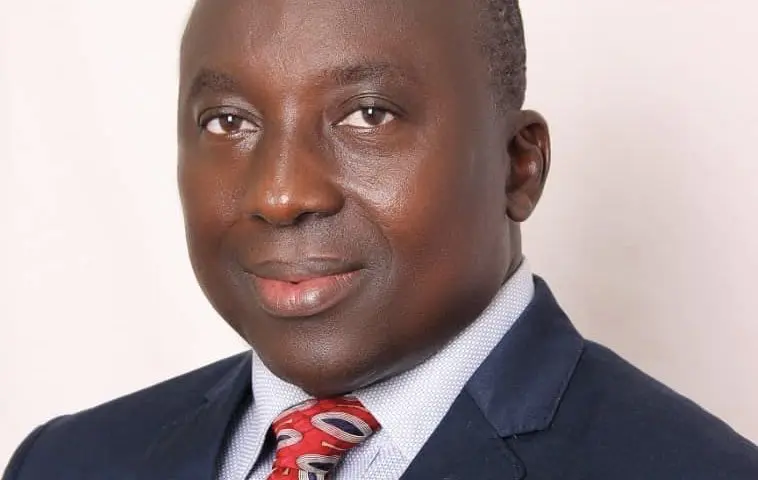

Accra, Ghana — Ghana has a habit of producing two kinds of political appointees. The first kind arrives in office, changes their phone number, acquires a convoy, and becomes suddenly too important to remember the names of people who once called them brother. The second kind arrives quietly, sits down, and gets to work. Emmanuel Adansi Bonah is unmistakably the second kind.
His appointment as Acting Deputy Executive Secretary in charge of Corporate Services at the Lands Commission may not have made front-page headlines. But for anyone paying attention to how President Mahama’s reset agenda is being staffed and executed at the institutional level, it is the kind of appointment worth examining closely.
Not a Stranger to Hard Work
Before the Lands Commission, before the title, there was the work. Adansi Bonah spent the better part of two decades in Ghana’s cocoa and commodities industry — not as a spectator, but as someone who built things with his hands and his mind. At Tower Assets Limited, where he served as Chief Executive Officer, he took a struggling operation and turned it around, growing annual trading volumes from 2,000 to 12,000 tons and building a cashew trading business from nothing. That is not the biography of a man who coasted into public service on the back of party connections. That is the biography of someone who knows what it takes to fix a broken institution and make it productive.
He also served in leadership roles at Splendid Business Service Limited and the Progressive Licensed Cocoa Buyers Association, where he introduced HR frameworks, performance systems, and farmer training programmes that delivered real, measurable change on the ground. His academic credentials — an MBA from Schiller International University in the United States, a degree in Economics and Sociology from the University of Cape Coast, and professional studies with ACCA in the UK — are not decoration. They reflect a man who has consistently invested in his own capacity to serve better.
This is the foundation upon which his public service appointment rests. And it matters, because Ghana’s problem has never been a shortage of appointees. It has been a shortage of appointees who actually know what they are doing.
The Party Work That Never Makes the News
There is a version of NDC membership that involves attending rallies, making noise on social media, and positioning for appointments. Adansi Bonah’s version looked different. For over a decade and a half, he participated in the party’s parliamentary primaries — four consecutive times since 2008 — without winning. He kept showing up anyway. He served as a Regional House-to-House Campaign Manager during President Mahama’s presidential campaigns, doing the unglamorous, exhausting work of grassroots mobilisation that actually wins elections but rarely earns recognition.
This is the kind of political commitment that is easy to overlook precisely because it is not performative. It is the commitment of someone who believes in something beyond themselves — someone who understands that political parties are not just vehicles for personal advancement but instruments for national change, and that the work of building them belongs to everyone, not just those angling for positions.
That history matters now because it explains something important about the man he is in office. The NDC grassroots who knocked on doors with him, who drove him through dusty roads to campaign stops, who called him during and after the campaign — they report that he still picks up his phone. That when he misses a call, he calls back. In a country where many appointees develop sudden amnesia about the people who built them, this is not a small thing. It is a window into character. It tells you that the man who arrived at the Lands Commission is the same man who was in the field two years ago — unchanged by the title, unintimidated by the responsibility, and unforgetful of where he came from.
Walking Into the Fire
The Lands Commission is not an easy posting. It is an institution that carries years of public mistrust, allegations of corruption in land transactions, and a reputation for bureaucratic opacity that has cost ordinary Ghanaians — particularly those without connections — dearly. President Mahama, upon returning to office in January 2025, made it clear that the status quo was unacceptable. The directive to halt all activities relating to the lease and processing of public lands was not a routine administrative instruction. It was a signal that the reset at the Lands Commission was going to be real, not cosmetic.
Into this environment, Adansi Bonah was deployed to oversee Corporate Services — the internal architecture of the institution. Human resources. Operational systems. Institutional governance. It is not the most visible portfolio in the Commission, but it may be the most consequential. You cannot reform an institution’s public-facing operations if the internal machinery is broken. You cannot demand transparency from staff if performance management systems do not exist. You cannot build a credible land administration body on a foundation of poor HR frameworks and dysfunctional internal processes.
This is precisely where his private sector experience becomes his most valuable asset. He has done this before — not in theory, not in policy papers, but in practice. He has walked into organisations that were underperforming and rebuilt them from the inside. The Lands Commission now gets that experience applied to a public institution at a moment when the stakes could not be higher.
What He Represents
Ghana needs to have an honest conversation about the kind of people it sends into public service. Technical competence matters. Party loyalty has its place. But what the country most desperately needs are people who combine both with a genuine sense of mission — people who treat public office not as a destination but as an obligation.
Emmanuel Adansi Bonah represents that combination. He earned his professional stripes outside the comfort of government. He earned his political stripes in the field rather than on the podium. And he arrived at the Lands Commission not to be celebrated but to contribute to something larger than himself.
In a season when Ghana is trying to reset — not just rhetorically but structurally, institutionally, and culturally — that is exactly the kind of person the moment calls for.

Well done sir