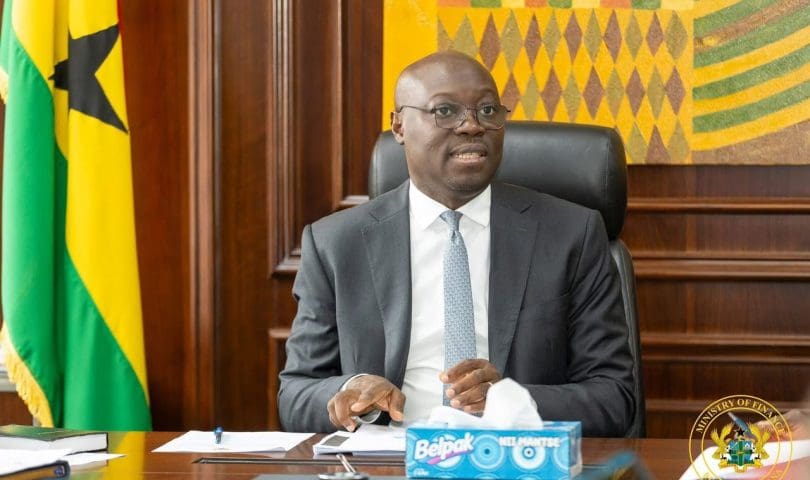

The Minister for Finance, Dr. Cassiel Ato Forson, has announced a landmark recovery of the Ghanaian economy, characterized by a sharp reduction in public debt and a broad-based restoration of macroeconomic stability over the 2024–2025 fiscal year.
Addressing the nation from Accra, Dr. Forson revealed that the government successfully slashed the public debt stock by GH¢82.1 billion, bringing it down from 61.8% of GDP in December 2024 to 45.3% by the end of 2025. This fiscal consolidation was bolstered by an overall fiscal balance deficit of just 1.0% of GDP, significantly outperforming the government’s initial targets.
The Minister attributed this “significant turnaround” to a rigorous combination of fiscal discipline, enhanced revenue mobilization, and prudent monetary policies that have effectively placed public finances back on a sustainable path.
The report highlights a dramatic cooling of the inflationary environment, with the inflation rate falling for thirteen consecutive months to reach 3.8% in January 2026, down from a high of 23.8% at the end of 2024. This stability has been mirrored in the financial sector, where the 91-day Treasury bill rate plummeted from 27.7% to a current low of 6.5%, significantly reducing the government’s borrowing costs and easing credit conditions for the private sector.
Furthermore, the Ghana cedi saw a remarkable resurgence, appreciating by 40.7% against the US dollar by the close of 2025, a sharp reversal from the nearly 20% depreciation recorded the previous year.
Dr. Forson noted that these gains have been supported by a strengthened external position, with gross international reserves now reaching US$13.8 billion, providing 5.7 months of import cover.
Real GDP growth for the first three quarters of 2025 reached a provisional 6.1%, driven largely by robust performance in the services and agriculture sectors. Non-oil growth was even more resilient at 7.5%, indicating a diversified recovery that extends beyond the extractive industries.
The Finance Minister emphasized that the Mahama administration remains committed to sustaining this momentum to foster job creation and long-term economic transformation. With commercial bank lending rates dropping and private sector credit expanding by over GH¢17 billion, the government maintains that the current trajectory has moved Ghana from a period of inherited economic challenge to one of the most significant periods of growth and stability in the nation’s history.
Ruth Abla ADJORLOLO