


A Living Archive Of Faith, History And Identity
From “Ablorde” (Liberty) to “Agbenyega” (Life is the greatest), Ewe names carry full sentences of philosophy, faith and memory.
Culture & Heritage
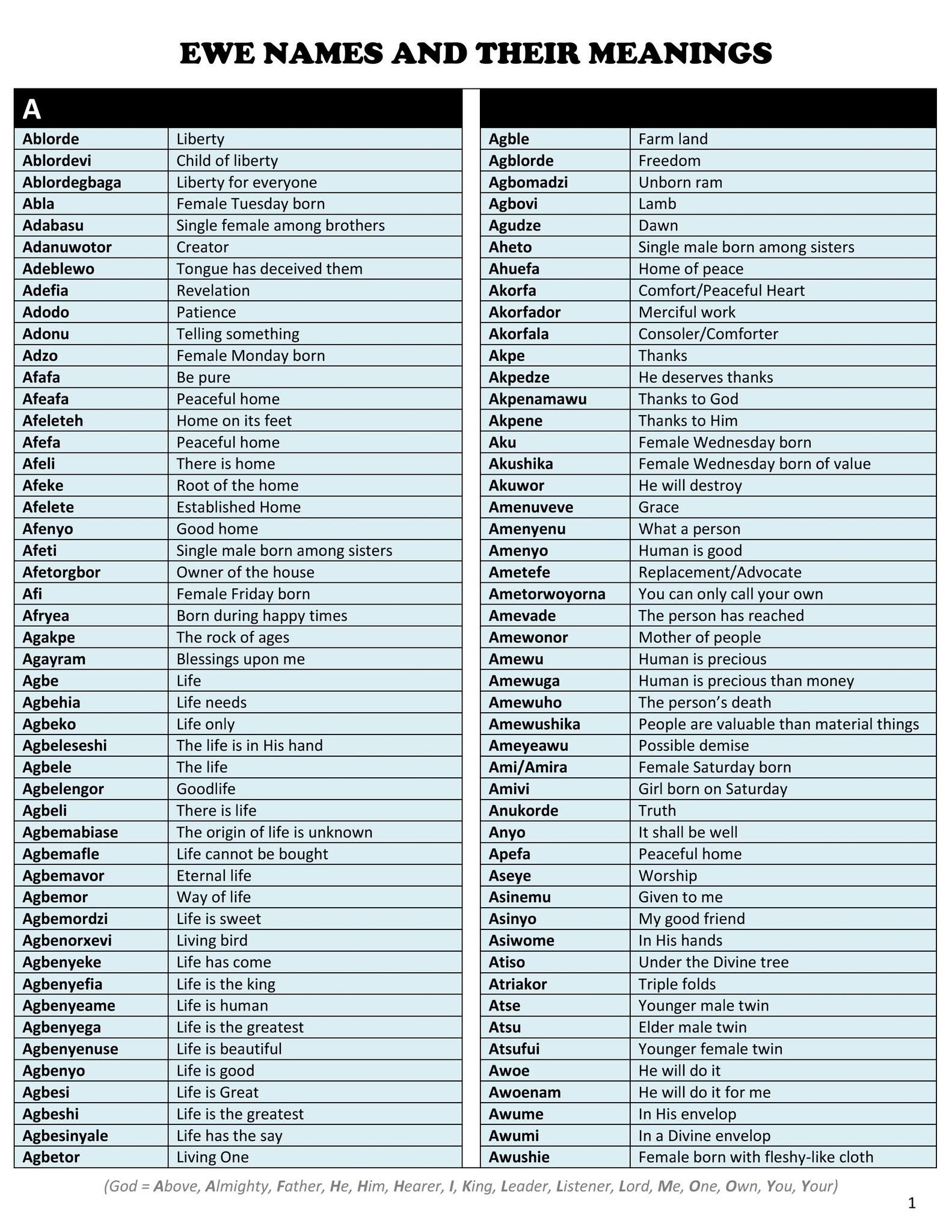
A newly compiled chart of Ewe names and their meanings is sparking pride and reflection among Ewes at home and in the diaspora. Far more than labels, these names are complete messages – telling stories of liberty, faith, sacrifice, hope, and the sacred value of human life.
The chart, titled “EWE NAMES AND THEIR MEANINGS”, organizes names beginning with the letter “A” and pairs each one with a clear English meaning. It reveals how every name is a short proverb, a prayer, or a testimony, carefully chosen to speak over the life of the person who bears it.
Ewe names as stories, prayers and philosophy
Many of the names in the collection express the Ewe people’s deep respect for freedom and human dignity. Names like Ablorde (“Liberty”), Ablordevi (“Child of liberty”), and Ablordegbaga (“Liberty for everyone”) show how strongly the community treasures justice and collective freedom.
Others focus on the home as the first community and the foundation of wellbeing. Names such as Afeafa (“Peaceful home”), Afela (“Peaceful home”), Afelete (“Established home”), Afenyo (“Good home”), and Ahuefa (“Home of peace”) reveal the Ewe conviction that true prosperity begins with a harmonious household.
The chart also highlights the Ewe celebration of life in all its forms. A series of “Agbe” names – from Agbe (“Life”) and Agbeko (“Life only”) to Agbemavor (“Eternal life”), Agbenyo (“Life is good”), and Agbenyega (“Life is the greatest”) – show how life itself is regarded as a sacred gift that cannot be bought or replaced.
Faith in every syllable
The spiritual depth of Ewe naming tradition is especially clear in names that reference the Divine. Names like Agakpe (“The rock of ages”), Akpenamawu (“Thanks to God”), Atiso (“Under the Divine tree”), Awumi (“In a Divine envelope”), and Asiwome (“In His hands”) reflect trust in a higher power who guides, protects and sustains life.
At the bottom of the chart, a unique note explains that the word “God” in these names can be expressed in many reverent ways: Above, Almighty, Father, He, Him, Hearer, I, King, Leader, Listener, Lord, Me, One, Own, You, Your. This reminder shows how close and personal the Ewe understanding of the Divine can be – God is not distant, but present in daily speech and identity.
Names that mark birth, order and destiny
The collection also preserves well-known Ewe naming patterns that mark the day of birth, birth order, and special circumstances. Names such as Abla (female born on Tuesday), Adzo (female born on Monday), Afri (female born on Friday), Aku (female born on Wednesday), Ami/Amira (female born on Saturday), and Amivi (girl born on Saturday) show how time itself becomes a permanent part of a person’s story.
Other names identify unique birth positions within the family. Afeti and Aheto both refer to a single male born among sisters, while Adabasu describes a single female among brothers. Twins also have special recognition: Atsu (elder male twin), Atse (younger male twin), and Atsufui (younger female twin) all carry meanings rooted in order, relationship and destiny.
Even difficult realities are named honestly and thoughtfully. Names like Ameyewuu (“Possible demise”), Amewuho (“The person’s death”), and Agbembiase (“The origin of life is unknown”) reveal a culture that does not shy away from pain, yet still frames life within a larger spiritual story.
Human beings as priceless treasures
A powerful theme running through the chart is the immeasurable value of human life. Names such as Amewu (“Human is precious”), Amewuga (“Human is precious than money”), and Amewushika (“People are valuable than material things”) boldly state that no wealth can compare to the worth of a person.
Others celebrate character and relationship: Amenuveve (“Grace”), Anukorde (“Truth”), Anyo (“It shall be well”), Akorfa (“Comfort/Peaceful heart”), and Asinyo (“My good friend”) all point to virtues and bonds that hold communities together. In this way, names become a daily reminder of what a family hopes a child will be and what a community must protect.
A resource for families, scholars and the diaspora
For Ewe families around the world, this chart is more than a reference list – it is a cultural archive. Parents can use it to choose names that express their faith and values. Young Ewes can rediscover the depth behind the names they carry. Researchers, pastors, cultural leaders and teachers can draw on it to explain the Ewe worldview to younger generations and to friends from other cultures.
In an era when many traditional names risk being shortened, mispronounced or replaced, documenting and sharing resources like this chart helps keep language and memory alive. Each name is a sentence spoken from one generation to the next – a permanent blessing, a warning, a thanksgiving, or a declaration of hope.
SankofaOnline is proud to highlight this work as part of our ongoing commitment to preserving Ghanaian and African heritage across the globe. As we say “Thank you” – or in Ewe, Akpe – we are reminded that in our names, our stories continue.

A detailed chart of Ewe names beginning with the letter “A” and their English meanings, celebrating culture, faith and identity.

where is the full chart published? Is it a book publication? many children born in the diaspora with Ewe names may find this extremely useful and even for those born in Ghana but not raised in the Volta Region they will find this useful. Does this publication also have the phonetics of name pronunciation? For many who do not read Ewe, it might be useful to lean the pronunciation of these names