

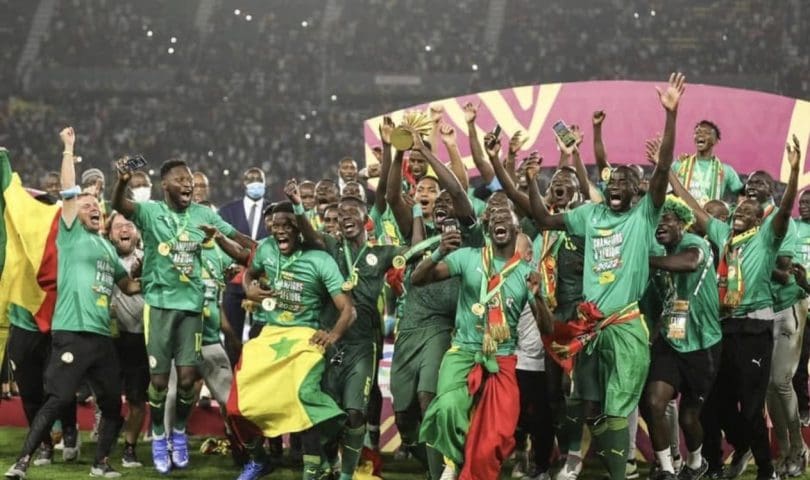

Two months after Senegal lifted the Africa Cup of Nations title in extraordinary and chaotic circumstances, the Confederation of African Football stripped them of it on appeal. The decision is technically defensible — but in the court of football justice, it falls apart.
Analysis by: Stephen Apolima
Source: BBC Sport (“Senegal stripped of AFCON title after appeal”, bbc.com/sport/football/articles/ce949glzzglo)
Published: March 2026
The Night Football Descended Into Chaos
The January 18 AFCON final in Rabat should have been a celebration of African football. Instead, it became one of the most controversial matches in the tournament’s history. Senegal’s players walked off the pitch — led by coach Pape Thiaw — in protest at a late penalty awarded to Morocco. The referee waited. The players, reportedly urged back by captain Sadio Mané, returned after a 15-minute standoff. Morocco’s Brahim Diaz stepped up for the penalty — and saw it saved. In extra time, Pape Gueye scored to hand Senegal the title.
The chaos extended to both benches, where a brawl broke out among officials and coaching staff. Ball boys — at Morocco’s instigation, according to subsequent findings — attempted to unsettle Senegalese goalkeeper Édouard Mendy by taking his towel. In the midst of the madness, Senegal’s goal in regulation time had already been controversially ruled out for a foul by Abdoulaye Seck on Achraf Hakimi, with television replays showing little to no contact. The Lions of Teranga had every reason to feel aggrieved.
At an initial disciplinary hearing in January, CAF handed out heavy punishments — fines exceeding one million dollars, alongside bans for players and officials from both nations. Crucially, the result was left intact. Then Morocco appealed. And everything changed.
The Rule CAF Wielded — And What It Actually Says
CAF’s Appeal Board overturned Senegal’s title, declaring a 3-0 forfeit in Morocco’s favour under Article 84 of the tournament regulations, having also leaned on Article 82. That article is unsparing in its language: if any team “withdraws from the competition or does not report for a match, or refuses to play or leaves the ground before the regular end of the match without the authorization of the referee,” it shall be considered the loser and eliminated from the competition.
On a cold, textual reading, Senegal’s players did leave the pitch without the referee’s authorisation. The rule does not contain a time threshold. It does not say “with the intent not to return.” Strictly applied, the moment the Senegalese players entered the tunnel, they technically triggered the regulation. This is the narrow argument that CAF’s appeal panel accepted.
But football law — and sporting justice — is not written to be applied in a vacuum.
Four Reasons the Decision Fails the Fairness Test
1. The Referee Had the Final Say — and He Said Play On
Under FIFA’s Laws of the Game — specifically Law 5 — the referee is the supreme authority on the field. He may suspend or abandon a match due to misconduct, outside interference, or safety concerns. He did none of those things. Instead, the referee waited, allowed the players to return, and let the match run to its conclusion. A result was produced. A trophy was lifted. Under the principle that a referee’s in-game decisions are final and cannot be retrospectively overturned by governing bodies (except for cases of mistaken identity or factual error), the match’s outcome should have been locked in the moment the final whistle blew.
2. Both Teams Misbehaved — Only One Was Punished Sportingly
Morocco was fined $315,000 — $200,000 of which related directly to the conduct of their ball boys in attempting to psychologically destabilise the Senegalese goalkeeper. Morocco’s own supporters attempted to storm the pitch. Both benches brawled. Yet only Senegal’s actions were treated as worthy of a sporting sanction — the loss of a continental title. This is not proportionality. This is selective enforcement. A principle of basic fairness demands that if misconduct on both sides contributed to the disorder, the ultimate sporting punishment cannot fall entirely on one party.
3. The First Panel Saw the Same Facts — and Reached the Opposite Conclusion
The initial CAF disciplinary panel applied the same regulations, reviewed the same events, and expressly declined to alter the result. The fact that the appeal body then reversed that sporting decision — not on any new evidence, but apparently on a different interpretation of the same facts — raises serious questions about due process. If the rule is as clear-cut as the appeal panel claims, why did the first tribunal read it differently? The Senegal Football Federation’s Secretary General did not mince words, calling the ruling “a travesty that rests on no legal basis” and alleging that the panel was operating under external pressure.
4. Completed Matches Should Stand
There is a settled principle in football jurisprudence — upheld repeatedly by the Court of Arbitration for Sport — that results of completed matches should be preserved wherever possible. The match did not need to be replayed. It was not abandoned. Extra time was played, a goal was scored, a winner was decided on the pitch. Stripping that result two months later, after the trophy had been lifted and the celebrations had concluded, sets a profoundly destabilising precedent for the game’s integrity.
What Happens Next
Senegal has confirmed it will appeal the decision — most likely to the Court of Arbitration for Sport. Such proceedings typically take around a year, meaning any resolution will come long after both nations have competed at the 2026 FIFA World Cup. CAS tends to apply principles of proportionality and natural justice rigorously, and on those grounds, Senegal’s case is credible.
What cannot be recovered is the moment. The celebrations, the tears, the sense of continental pride that Senegal’s players and fans experienced on that January evening — those have been placed under a cloud, regardless of what any tribunal eventually decides.
VERDICT
CAF’s decision to strip Senegal of the AFCON title is technically defensible on the narrowest reading of its own regulations — but it is fundamentally unfair. The referee allowed the match to proceed. The game was completed in full. Both teams contributed to the chaos, yet only one bore a sporting consequence. The initial tribunal reviewed the same facts and reached the opposite conclusion. And stripping a continental title two months after its award violates the principle that completed match results should stand. If the Court of Arbitration for Sport applies proportionality and natural justice — as it routinely does — CAF’s ruling should not survive scrutiny.
This analysis is based on reporting by BBC Sport. The original article, “Senegal stripped of AFCON title after appeal”, is available at: bbc.com/sport/football/articles/ce949glzzglo
All legal analysis represents the opinion of the author and does not constitute formal legal advice.

They have taken bribes. Senegal should also appeal the decision. This is a ripped off.