


By Daniel Niikoi Ashitey : Accra
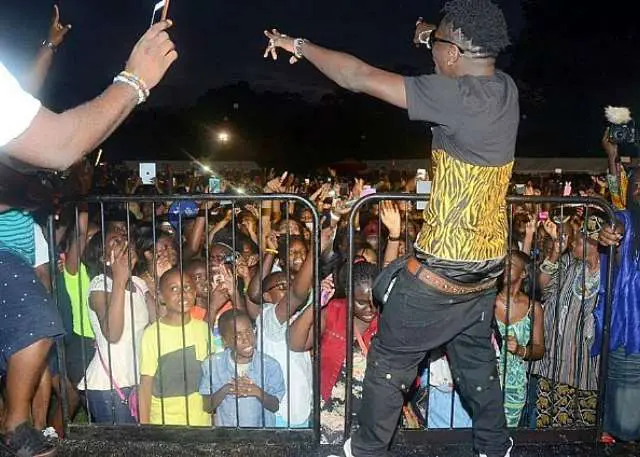
At this year’s ShattaFest, an event that should have celebrated musical excellence, creativity, and the enormous influence artists wield over society, the spotlight shifted from entertainment to something far more troubling. Before thousands of admirers, many of whom regard him as a role model, Shatta Wale abandoned an opportunity to inspire ambition, discipline, innovation, and lawful success. Instead, he ventured into dangerous territory, appearing to rationalize cyber fraud, launching attacks against law enforcement institutions, and projecting himself as a future President of Ghana.
Such declarations may have generated cheers from an emotionally charged audience. They may have dominated social media conversations and generated sensational headlines. Yet governance is not performance, popularity is not competence, and celebrity is not leadership. When the music fades and the lights go out, societies are left not with applause, but with the consequences of the ideas their most influential voices choose to promote.
The Dangerous Normalization of Fraud
The most disturbing aspect of the spectacle was not the political ambition itself. Every Ghanaian, regardless of social status or profession, possesses the constitutional right to aspire to public office. The concern lies in the message being used to market that ambition.
To openly glorify cyber fraud or suggest that economic hardship somehow justifies deception is to send a profoundly dangerous signal to young people. Ghana undoubtedly faces genuine economic challenges, and many young citizens continue to struggle with unemployment and limited opportunities. Yet hardship has never been a moral licence for wrongdoing. No nation has ever built prosperity on a foundation of fraud, and no generation has ever advanced by replacing integrity with criminality.
When influential public figures romanticize unlawful conduct, they do more than merely entertain controversy. They risk convincing young minds that hard work is optional, honesty is naïve, and criminality is just another strategy for survival. The consequences of such messaging are measured not only in criminal prosecutions but also in the gradual erosion of the values that hold society together.
Why Law Enforcement Matters
Equally troubling were the attacks directed at institutions responsible for enforcing the law and protecting public order. In any democracy, constructive criticism of public institutions is both legitimate and necessary. Governments and state agencies must remain accountable to the people they serve.
However, there is a critical distinction between demanding accountability and encouraging public contempt for the rule of law. Institutions such as EOCO, the Ghana Police Service, and international investigative agencies exist to investigate wrongdoing regardless of status, popularity, or wealth. Their legitimacy does not disappear simply because their work becomes inconvenient to public figures.
When celebrities portray law enforcement agencies as enemies rather than guardians of public order, they fuel distrust in institutions that are essential to national security, economic stability, and democratic governance. A society that loses faith in lawful accountability creates fertile ground for disorder, impunity, and corruption. That is why attacks on law enforcement should concern every Ghanaian, irrespective of political affiliation or personal admiration for any public figure.
Music Success Is Not a Qualification for Statecraft
Perhaps the most remarkable claim made at ShattaFest was the suggestion that success in entertainment somehow translates into qualification for the presidency. While such a proposition may resonate with enthusiastic supporters, it reflects a fundamental misunderstanding of governance.
Music is a profession. Governance is a responsibility.
The ability to dominate charts, attract millions of followers, fill stadiums, and build a profitable brand is undeniably impressive. Yet these achievements bear little resemblance to the demands of managing national finances, negotiating international agreements, safeguarding constitutional order, or steering a country through economic and geopolitical challenges.
Leadership at the highest level requires economic literacy, political judgment, institutional respect, diplomatic skill, strategic thinking, and the temperament to make difficult decisions under intense scrutiny. Filling concert venues may demonstrate popularity, but it does not demonstrate preparedness for the enormous burden of governing a republic.
The Ghanaian Electorate Knows Better
History suggests that Ghanaian voters understand this distinction better than some public figures imagine. Citizens may admire entertainers, celebrate athletes, and support celebrities, but when confronted with the solemn responsibility of choosing a national leader, they tend to separate admiration from trust.
Even many of Shatta Wale’s most devoted followers understand the difference between enjoying an artist’s music and entrusting him with the future of the nation. They may sing along to every song, defend him passionately on social media, and celebrate his achievements, yet they appreciate that leadership requires qualities far beyond charisma and popularity.
At the ballot box, slogans give way to scrutiny, excitement gives way to judgment, and spectacle gives way to substance.
The Presidency Is Bigger Than Any Celebrity
There is no denying Shatta Wale’s contribution to Ghana’s music industry. His influence on popular culture is significant, and his entrepreneurial accomplishments deserve recognition. Yet influence is accompanied by responsibility, and the larger the platform, the greater the obligation to elevate public discourse rather than degrade it.
Ghana’s youth need role models who encourage innovation over illegality, discipline over disorder, responsibility over recklessness, and nation building over cynical attacks on public institutions. At a time when the country’s young people are searching for direction, they deserve messages that empower them to succeed within the confines of law and ethical conduct, not messages that glorify shortcuts and rebellion against accountability.
The Final Reality Check
The Presidency of Ghana is not a concert stage. It is not a music award. It is not a social media movement. It is not a platform for rage, provocation, or applause seeking theatrics. It is the highest public trust in the Republic, reserved for individuals capable of placing national interest above personal brand, constitutional order above personal ego, and institutional stability above fleeting popularity.
That is why no amount of noise can substitute for wisdom, no amount of fame can substitute for competence, and no amount of celebrity can substitute for leadership.
For when the campaign slogans fade, when the stage lights are switched off, and when the final song has been played, Ghanaians will confront the only question that truly matters:
Can this person govern the Republic of Ghana?
And unlike a concert crowd, the ballot box does not dance to beats, bow to fame, or surrender to hype.
It demands vision. It demands character. It demands leadership. And those are qualities no microphone can manufacture.
Who can be trusted to build Ghana, uphold its laws, protect its institutions, and lead its people?
And on that defining question, applause is irrelevant.
The ballot box does not dance to riddims. It answers only to reason.
