


By SankofaOnline News Desk
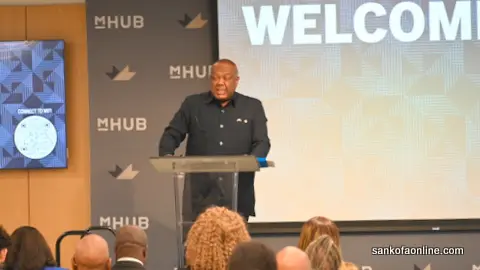
CHICAGO, Illinois |From the innovation halls of mHUB, the Midwest’s premier center for advanced manufacturing and hardtech innovation, Ghana’s Ambassador to the United States, His Excellency Victor Emmanuel Smith, delivered a bold and compelling challenge to American business leaders, institutional investors, and the Ghanaian diaspora: the age of exporting Africa’s raw wealth and reimporting finished products at premium prices must end.

Addressing the Invest Ghana Business Roundtable on Thursday, November 12, 2026, Ambassador Smith unveiled a far-reaching vision that seeks to fuse the industrial strength of Chicago with the economic resurgence of Ghana, positioning the West African nation as a strategic gateway to the continent’s rapidly expanding marketplace.

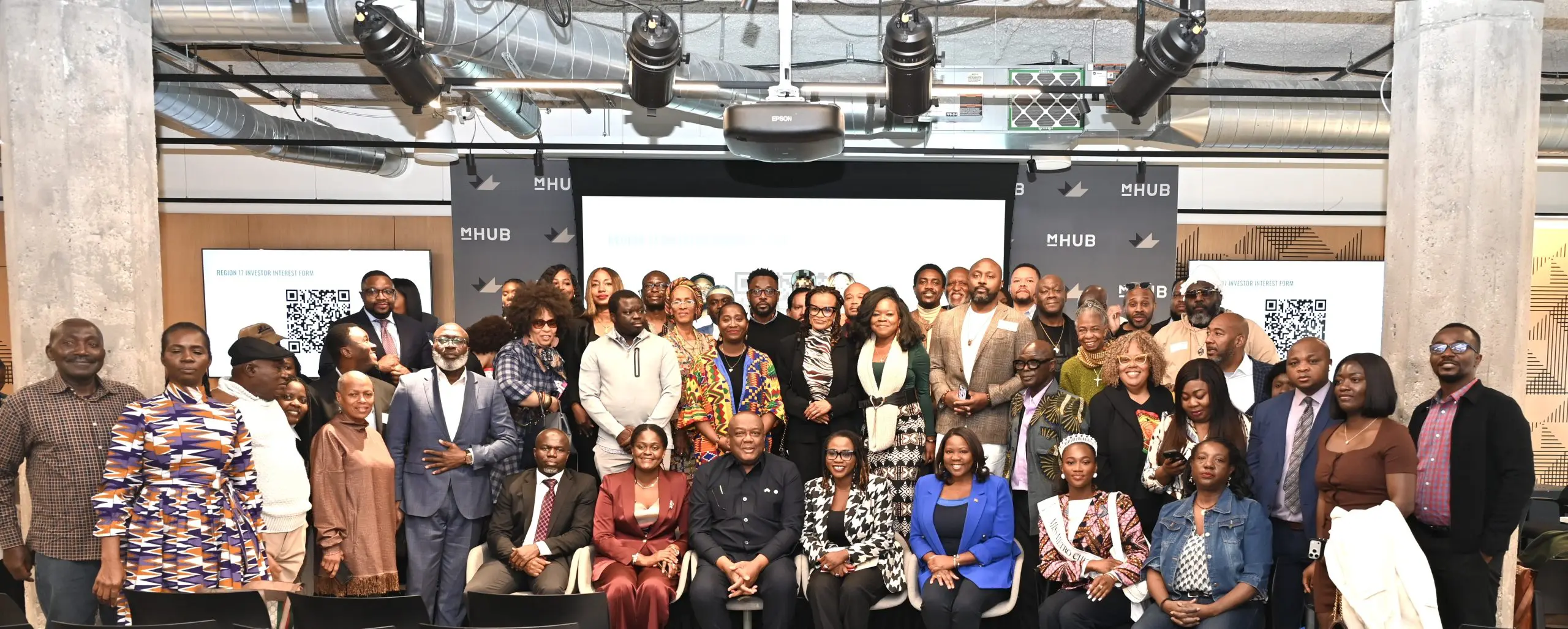
The high-level forum, hosted at mHUB and organized by the Embassy of Ghana in the United States, in collaboration with Region 17, The 17th Region of Ghana (African Diaspora), the Ghana National Council of Metropolitan Chicago (GNC), and mHUB, brought together corporate executives, financiers, entrepreneurs, academics, and diaspora leaders for four hours of focused dialogue on investment, industrialization, and long-term partnership.
Watch the Keynote Address:

Ghana’s Reset Agenda: From Economic Recovery to Industrial Expansion
Opening his remarks, Ambassador Smith highlighted the natural alignment between Illinois and Ghana.
While Chicago remains a global center for capital markets, food processing, transportation, aviation, healthcare innovation, precision manufacturing, and financial services, Ghana offers a powerful combination of political stability, strategic geographic positioning, abundant natural resources, and one of Africa’s youngest and most energetic workforces.
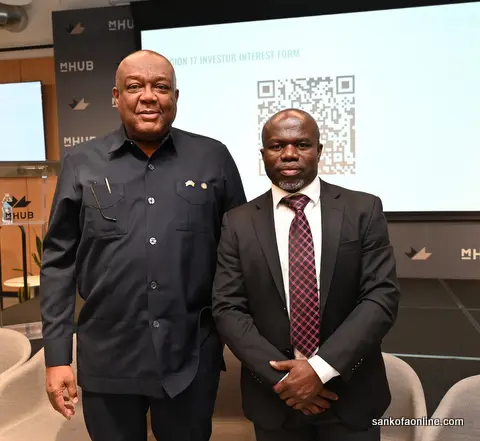
The Ambassador traced Ghana’s economic recovery since President John Dramani Mahama’s return to office in January 2025, noting that the administration inherited significant economic challenges but moved swiftly to restore macroeconomic stability, strengthen fiscal discipline, and rebuild investor confidence.
Yet, he stressed, stabilization alone is not the destination.
“Ghana is now focused on transformation,” Smith emphasized.
For decades, Ghana and much of Africa have been locked into an inequitable global trade structure, exporting cocoa beans, gold, timber, and agricultural commodities while importing higher-value finished products at significantly greater cost.

According to the Ambassador, President Mahama’s Reset Agenda is designed to reverse that cycle by aggressively promoting value addition, local manufacturing, export competitiveness, and industrial growth.
Key pillars of that strategy include the government’s ambitious 24-Hour Economy Initiative, which seeks to maximize productivity and job creation, and the Big Push Infrastructure Program, aimed at modernizing transportation networks, industrial corridors, and energy infrastructure needed to support large-scale private-sector investment.

“The government alone cannot deliver the transformation,” Ambassador Smith said, urging domestic entrepreneurs, diaspora professionals, and international investors to become active partners in Ghana’s economic renaissance.
Ghana Positioned as the Gateway to Africa’s Next Economic Boom
One of the strongest themes of the Ambassador’s address was his appeal for American corporations to view Ghana not merely as a national market, but as a launchpad into the broader African economy.
As multinational companies increasingly seek to diversify supply chains, secure critical minerals, and expand into emerging markets, Africa is becoming one of the most consequential investment destinations of the 21st century.
With accelerating urbanization, rising consumer spending, expanding infrastructure needs, and growing demand for healthcare, technology, food security, transportation, and energy solutions, the continent presents unprecedented opportunities.
Ambassador Smith underscored a key strategic advantage: Accra is home to the Secretariat of the African Continental Free Trade Area (AfCFTA).
That distinction gives companies operating from Ghana access not only to Ghana’s domestic market of approximately 35 million people, but potentially to the world’s largest emerging free-trade zone, encompassing nearly 1.4 billion consumers across Africa.
Coupled with Ghana’s democratic stability, predictable legal environment, and direct Atlantic maritime access, Smith argued that the country stands out as one of Africa’s most attractive destinations for long-term investment.
A Direct Appeal to Midwest Corporate Giants
In a particularly noteworthy portion of his presentation, Ambassador Smith pointed to some of Chicago’s most influential corporations, including Archer Daniels Midland (ADM), Mondelēz International, Kraft Heinz, Conagra Brands, CME Group, Northern Trust, Illinois Tool Works, Motorola Solutions, United Airlines, and GE Healthcare.
He clarified that his remarks should not be interpreted as existing commitments from those companies. Rather, they represent the type of world-class expertise, technology, and capital that Ghana hopes to attract as part of its industrial expansion strategy.
The Ambassador outlined major opportunities across several sectors.
Agribusiness and Food Processing
Ghana is seeking investment in commercial farming, grain storage, cold-chain logistics, edible oil production, poultry, animal feed manufacturing, and cocoa processing.
The objective is clear: shift Ghana from an exporter of raw agricultural commodities to a producer of globally competitive finished products, while empowering local small and medium-sized enterprises.
Advanced Manufacturing and Technical Skills Development
Smith proposed the establishment of a Ghana-Chicago Manufacturing and Technical Training Center, linking the innovation ecosystem of mHUB with Ghanaian universities, technical colleges, and industrial training institutions.
He emphasized opportunities in industrial equipment manufacturing, packaging solutions, construction materials, and agro-processing machinery.
Finance and Capital Markets
The Ambassador encouraged partnerships with banks, private equity firms, institutional investors, and commodity exchanges to help structure and finance large-scale projects in infrastructure, renewable energy, agriculture, housing, and industrial development.
Aviation and Regional Logistics
Drawing on Chicago’s status as one of the world’s most significant aviation hubs, Smith called for collaboration in airline development, aviation training, logistics infrastructure, and Maintenance, Repair and Overhaul (MRO) facilities.
His vision is to position Ghana as the premier aviation gateway for West Africa.
Healthcare and Life Sciences
The Ambassador urged deeper engagement with healthcare innovators, pharmaceutical manufacturers, and medical technology companies to support domestic drug production, improve diagnostic capacity, strengthen research capabilities, and build a more resilient healthcare infrastructure.
Investing in Hope, Dignity, and Opportunity
Perhaps the most powerful moment of the keynote came when Ambassador Smith shifted from economic statistics to human impact.
Every investment decision, he argued, should ultimately be measured by its ability to improve lives.
The central challenge facing policymakers, businesses, and development partners alike is creating sustainable, well-paying jobs that offer young Ghanaians a future at home.
No young person, Smith noted, should be forced by economic hardship to risk dangerous migration journeys simply to pursue opportunity.
Ghana is not seeking investors interested in extracting short-term profits, he said.
It is seeking builders.
Partners who transfer technology.
Partners who develop local talent.
Partners who strengthen domestic supply chains.
Partners who leave behind transformational institutions capable of driving growth for generations.
From Diplomacy to Deals: A 90-Day Action Plan
Determined that the Chicago gathering would not become another ceremonial diplomatic event ending with handshakes and photographs, Ambassador Smith announced the creation of the Ghana-Chicago Strategic Business Investment Partnership Platform.
The initiative will initially focus on five priority sectors:
- Agribusiness
- Advanced Manufacturing
- Financial Services
- Digital Technology
- Aviation
The platform will bring together Midwest corporations, Ghanaian government agencies, diaspora business leaders, academic institutions, and private investors to identify concrete opportunities and accelerate project development.
Under a structured 90-day implementation roadmap, organizers will identify committed corporate participants, assemble a pipeline of investment-ready Ghanaian projects, establish follow-up mechanisms, and prepare a targeted Chicago business delegation to Ghana aimed at converting discussions into signed partnerships and joint ventures.
The Bridge Between Chicago and Ghana Is Open
As applause echoed throughout the mHUB auditorium, one message emerged unmistakably from Ambassador Smith’s address.
The relationship between Ghana and the American Midwest is entering a new chapter.
This is no longer simply a conversation about aid, diplomacy, or cultural exchange.
It is a call for industrial collaboration, technology transfer, capital mobilization, and shared prosperity.
From the shores of Lake Michigan to the Gulf of Guinea, a new economic bridge is being built.
And according to Ambassador Victor Emmanuel Smith, the moment to cross it is now.

Excellent reportage!