


By Sankofaonline.com News Desk
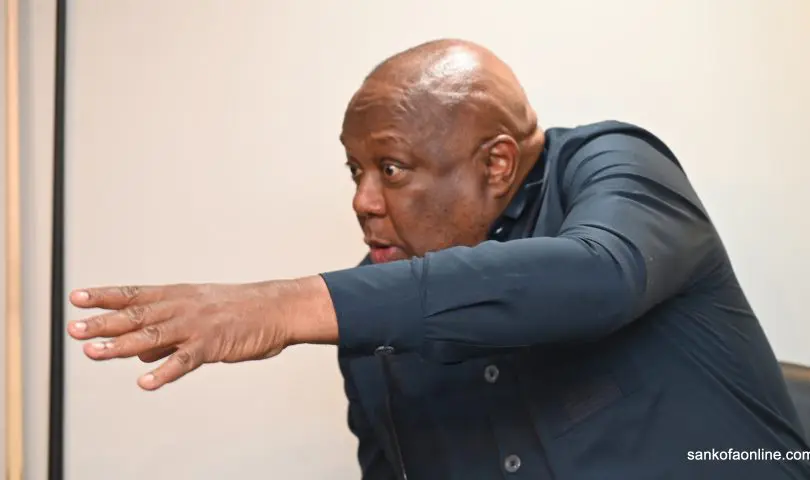
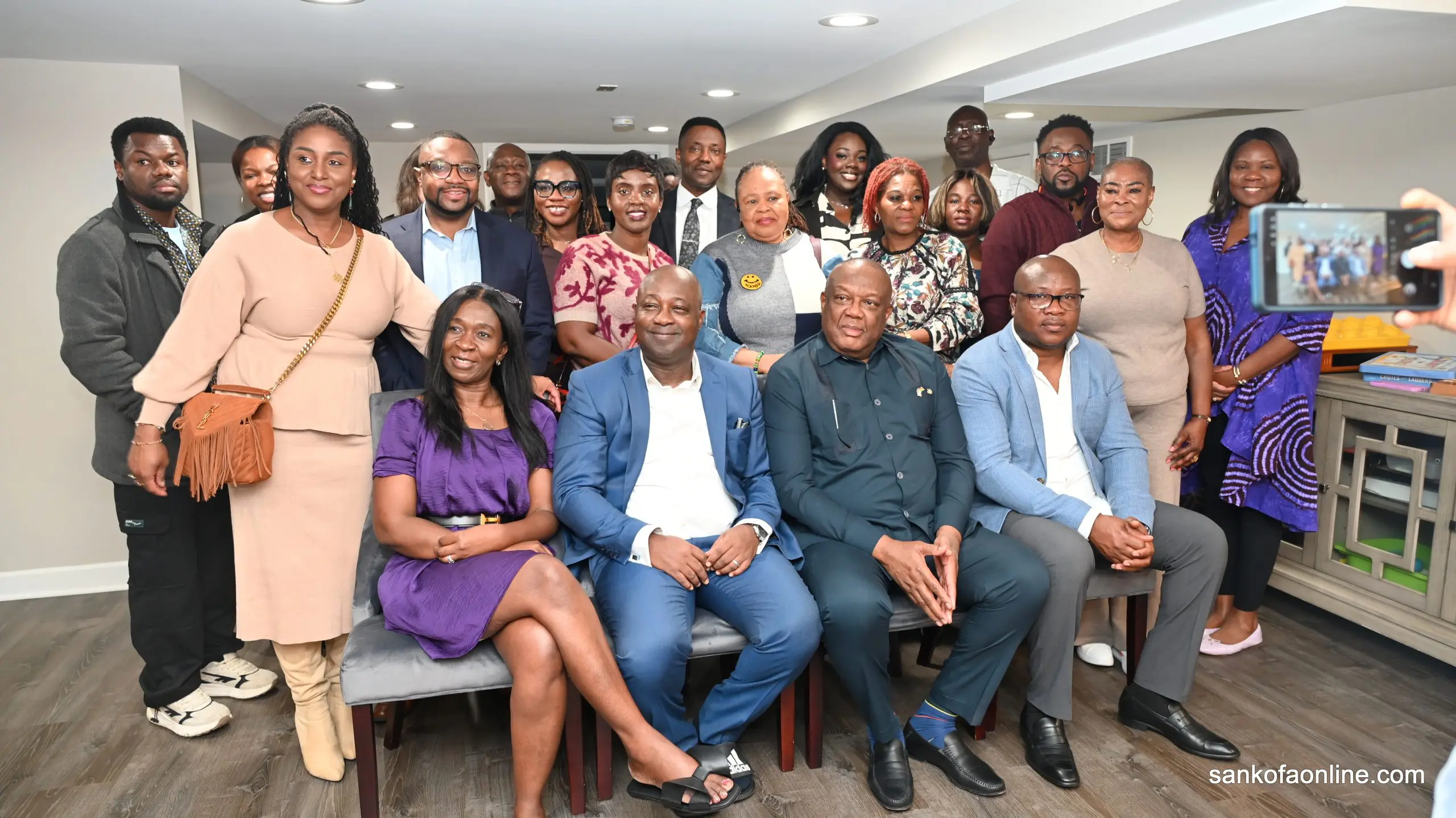
CHICAGO, IL — Following his remarks at the November 11 gathering organized by the NDC USA Chicago Branch, Ghana’s Ambassador to the United States, H.E. Victor Emmanuel Smith, engaged members of the NDC Chicago Branch and others in an extensive and candid question-and-answer session that touched on some of the most pressing concerns facing Ghanaians in the diaspora.
From bureaucratic bottlenecks frustrating investors to calls for a permanent Ghanaian consulate in Chicago, delayed payments owed to diaspora contractors, challenges clearing humanitarian donations through Ghana’s ports, and financial hardships confronting Ghanaian students abroad, attendees used the opportunity to seek answers and accountability from the Ambassador.
Ambassador Promises Support for Investors Facing Bureaucratic Roadblocks
Opening the discussion, community member Elias Wutamanya praised the Ambassador’s address but raised concerns about the bureaucratic obstacles many investors encounter when attempting to do business in Ghana.
According to Wutamanya, investors are often forced to navigate multiple ministries, parastatal institutions, and government agencies, a process that can become so frustrating that some eventually abandon their projects altogether.
Ambassador Smith acknowledged the concern, describing excessive bureaucracy as one of the most frequent complaints he has encountered during the numerous investment forums he has hosted throughout his first year in office.
He revealed that government officials are working closely with the Ghana Investment Promotion Centre (GIPC), which is currently transitioning into an Authority, to simplify and streamline investment procedures.
Providing a personal assurance to prospective investors, Ambassador Smith said he routinely shares his direct contact information with participants at investment forums and stands ready to intervene when legitimate investment projects become stalled by administrative delays.
“Because I open doors, I can assure you on that one. Whether at the ministerial level or even at the President’s level, I will make a phone call and the obstacles will be removed so you can go on and invest your funds,” he pledged.
Chicago Identified as Priority Location for Future Ghana Consulate
The issue of consular services also featured prominently during the discussion.
One attendee highlighted the inconvenience experienced by Ghanaians living throughout the Midwest, many of whom must either travel long distances or mail important documents to Washington, D.C., or New York to access visa and passport services.
Responding to the concern, Ambassador Smith disclosed that previous local consular arrangements had been shut down after investigations uncovered serious irregularities, including instances where unauthorized individuals were reportedly issuing visas outside approved channels.
He explained that following a comprehensive review, recommendations have been submitted to establish permanent Ghanaian consulates in approximately four major U.S. cities beyond Washington, D.C., and New York.
While the proposal remains subject to official ratification, the Ambassador assured participants that Chicago is being considered a top priority once approvals are secured.
Diaspora Contractor Raises Alarm Over Delayed Government Payments
A particularly emotional exchange emerged when Delali Asamani, Communications Officer-Elect of the NDC USA Chicago Branch and a contractor operating in Ghana, recounted his experience executing a construction project under the Ghana Education Trust Fund (GETFund).
According to Asamani, despite an agreement that payment would be made within three months, nearly two years had elapsed without compensation being received.
He urged the Ambassador to advocate for prompt payment of certified contracts, particularly for diaspora entrepreneurs who commit substantial personal resources to development projects in Ghana.
In response, Ambassador Smith attributed the delays partly to ongoing efforts by the Ministry of Finance to enforce stricter fiscal discipline and restore confidence in public financial management.
The Ambassador expressed optimism that contractors with valid completion certificates would soon begin receiving payment, noting that the Finance Minister was expected to address outstanding arrears following the presentation of the national budget.
At the same time, he encouraged entrepreneurs not to rely exclusively on government contracts, citing prominent Ghanaian businessman Ibrahim Mahama as an example of success achieved through private-sector opportunities and international business partnerships.
Port Clearance Challenges Threaten Humanitarian Projects
The discussion then shifted to the challenges facing charitable organizations seeking to ship donated goods to Ghana.
NDC Chicago Branch Organizer Ebenezer Ekuban, popularly known as “Asonaba,” detailed what he described as significant obstacles encountered when clearing humanitarian shipments through Ghana’s ports.
He recounted the loss of two 40-foot containers filled with new school desks and chairs after prolonged delays resulted in overwhelming demurrage charges. He also referenced a more recent shipment involving seven 40-foot containers of school furniture donated by Chicago-based Bishop Dr. Lance Davis.
According to Ekuban, despite assurances that the shipment would receive duty-free clearance through the Ghana Library Authority and additional funds reportedly sent to facilitate administrative processing, the containers remain held at the port.
The delays have become so concerning, he said, that Bishop Davis traveled to Ghana personally to follow up on the matter.
Seeking a practical solution, Ambassador Smith requested that all shipment documentation be forwarded to his office for review.
He further proposed utilizing the District Assemblies Common Fund (DACF) as a coordinating mechanism for future donations, explaining that donors who identify the beneficiary schools and districts could benefit from direct intervention through the Fund to facilitate clearance and distribution.
Embassy Encourages Students Affected by MPOWER Loan Suspension to Seek Assistance
The final issue raised centered on higher education funding for Ghanaian students studying in the United States.
A graduate student expressed concern that MPOWER Financing, a private lender that had previously supported many Ghanaian students, had reportedly suspended loans to Ghanaian applicants while continuing to provide financing to students from several other countries.
The student appealed to the Ambassador for intervention.
Ambassador Smith clarified that because MPOWER is a private financial institution, the Embassy lacks the authority to compel the company to reinstate lending programs.
Nevertheless, he acknowledged the broader challenges facing Ghanaian students abroad and referenced ongoing embassy efforts to address inherited scholarship-related disputes involving Ghanaian students in the United States.
He encouraged affected students to submit formal written petitions to the Embassy outlining their circumstances.
According to the Ambassador, those cases could then be referred to GETFund to explore the possibility of incorporating qualified students into existing government scholarship support programs, allowing them to complete their education and eventually contribute their skills and expertise to Ghana’s national development.
Diaspora Engagement Continues
The interactive session underscored the growing demand among Ghanaians abroad for stronger engagement with government institutions and practical solutions to challenges affecting investment, education, business operations, and consular services.
For many attendees, the discussion provided a rare opportunity to raise concerns directly with Ghana’s chief diplomat in the United States and obtain public commitments on issues that continue to impact the diaspora community.
