
Sankofaonline Editorial Board: May 5,2026
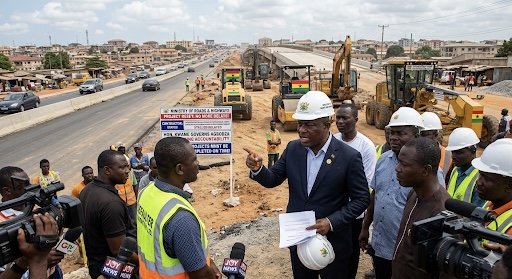
The infrastructure of a nation is more than asphalt and concrete; it is the skeletal system through which the body politic moves, trades, and breathes. When road projects stall, the national pulse slows. It is within this context of urgency that the Minister for Roads and Highways, Hon. Kwame Governs Agbodza, has taken an uncompromising stance against contractor negligence.
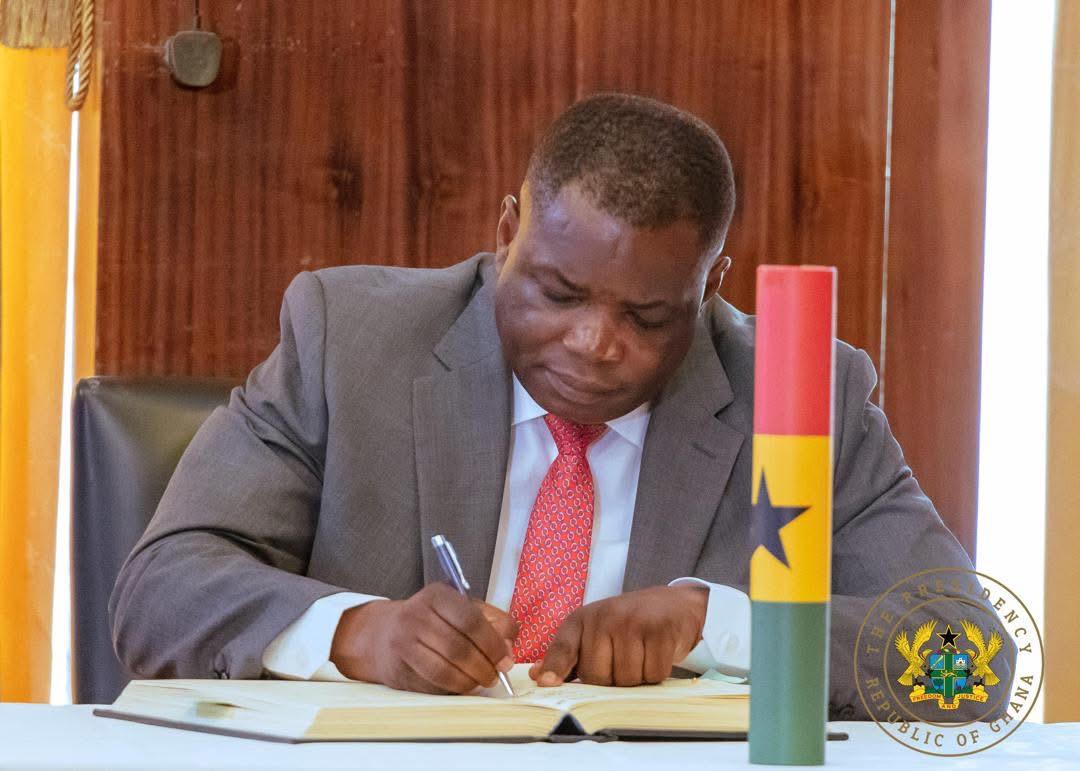
By publicly calling out companies that have turned national development priorities into indefinite waiting games, the Minister has signaled that the era of “business as usual” is over.
The Paradox of Empowerment
For years, a damaging narrative suggested that only foreign firms possessed the technical prowess to execute major infrastructure projects. A deliberate shift under the Mahama administration sought to break this dependency. The policy was clear: empower the Ghanaian contractor, retain capital within our borders, build local technical capacity, and ensure that taxpayer-funded development strengthened the Ghanaian middle class.
Yet today, the nation stands at a frustrating crossroads. While many local firms have risen to the challenge, others have responded to this patriotic opportunity with a laxity that borders on economic sabotage. The irony is painful: the reliability Ghana sought to demonstrate to the world is being undermined from within. A “Buy Ghana” or “Build Ghana” agenda cannot thrive if local alternatives fail to meet the basic standards of punctuality and professionalism.
Beyond the Mobilization Trap
The Minister’s warning on mobilization funds is perhaps the most critical element of this Accountability Reset. For too long, mobilization funds has been treated by some contractors as a windfall rather than a fiduciary responsibility.
- The Mobilization Clause: Ghana must move toward a system where mobilization funds are tightly monitored through escrow arrangements or performance bonds.
- The Penalty of Negligence: As Hon. Agbodza emphasized, contractors who willfully delay projects must face more than verbal reprimands. Termination is only the first step; a comprehensive blacklist from future state-funded projects must follow.
The Reset Mandate: Competence as Patriotism
Ghana’s development demands a new wave of industrial discipline. Experience and technical mastery are not gained by sitting on contracts, they are forged on active construction sites, through the timely delivery of interchanges, bridges, and rural arteries.
If Ghana is to truly reset its national development trajectory, indigenous firms must grasp that patriotism is not a feeling, it is a performance standard. A project meant for twenty‑four months must never be allowed to sprawl into a decade. Every unfinished road is a farmer’s harvest wasted, a student delayed, an ambulance stranded, and a preventable accident claiming or maiming yet another Ghanaian life.
A Call to Order
The Ministry’s bold posture sets a new benchmark for all sectors of the economy. Government must remain steadfast in these reforms. Contracts should go to those Ghanaian or foreign companies who respect deadlines and the value of the Cedi.
To our local contractors: the floor is yours. Government has opened the door; do not be the ones to shut it for the generations of engineers and entrepreneurs who will follow. Let us build Ghana not with rhetoric, but with the unrelenting precision of timely execution.