
By Daniel Nii Okine, Sankofaonline
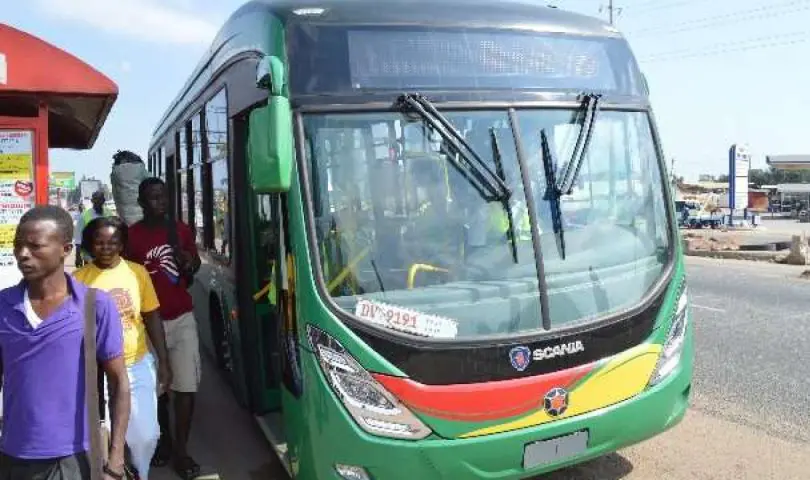
Accra’s long awaited Aayalolo contra flow pilot launched today, September 29, 2026, and the early verdict from passengers and transport officials is strikingly clear.
The system worked, travel times dropped sharply, comfort improved, and commuters expressed renewed confidence in the city’s public transport vision. While a few logistical hitches surfaced, the overall reception was overwhelmingly positive, setting the tone for what many hope will become a permanent feature of Accra’s mobility landscape.
From dawn, passengers on the Amasaman to Accra, Adenta to Accra, and Kasoa to Accra corridors reported a dramatic shift in their morning commute. One driver on the Amasaman route described the experience as nothing short of transformational. The entire journey took about thirty five minutes, reaching Abeka Junction in fifteen minutes and the Accra center in another fifteen. For a city accustomed to grinding morning gridlock, this was a revelation.
Commuters also praised the comfort and space inside the buses. Several noted that unlike standard public transport where vehicles are packed to the brim, today’s Aayalolo ride felt spacious and orderly. Passengers who had abandoned the service in previous months said they were ready to return, citing the improved experience as a major incentive.
Safety was another major point of comparison. Riders contrasted the disciplined Aayalolo system with the unpredictable behavior of trotro operators, who often overload vehicles and stop at unsafe locations. The dedicated lane approach, they said, offered a sense of security that Accra’s transport system has long lacked.
The pilot was not without minor challenges. As traffic conditions worsened later in the morning, police personnel had to board buses or assist along the route to keep the contra flow lanes clear. Transport officials from the Greater Accra Passenger Transport Executive acknowledged these issues but described them as manageable and expected during a first day rollout.
Public reaction has been swift and encouraging. Videos shared on social media drew praise for what many called a refreshing, practical solution to Accra’s chronic congestion. Citizens applauded the authorities for thinking creatively and acting decisively. Still, some observers raised concerns about sustainability, questioning whether discipline in the dedicated lanes can be maintained and whether other corporate vehicles might attempt to exploit the convoy routes.
With the morning phase completed, authorities are now monitoring data and preparing for the evening peak period beginning at four o’clock. The second phase will be critical in determining whether today’s success can be replicated under heavier traffic pressure.
Accra has seen many transport experiments come and go, but today’s rollout suggests that the Aayalolo contra flow system may finally offer a breakthrough. If discipline holds and logistics are refined, the city may be witnessing the beginning of a new era in urban mobility.