
By Nii Okine Namoale , Accra.
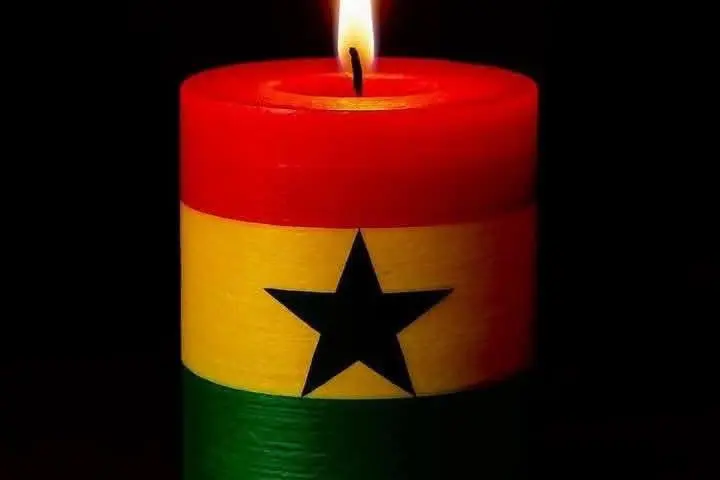
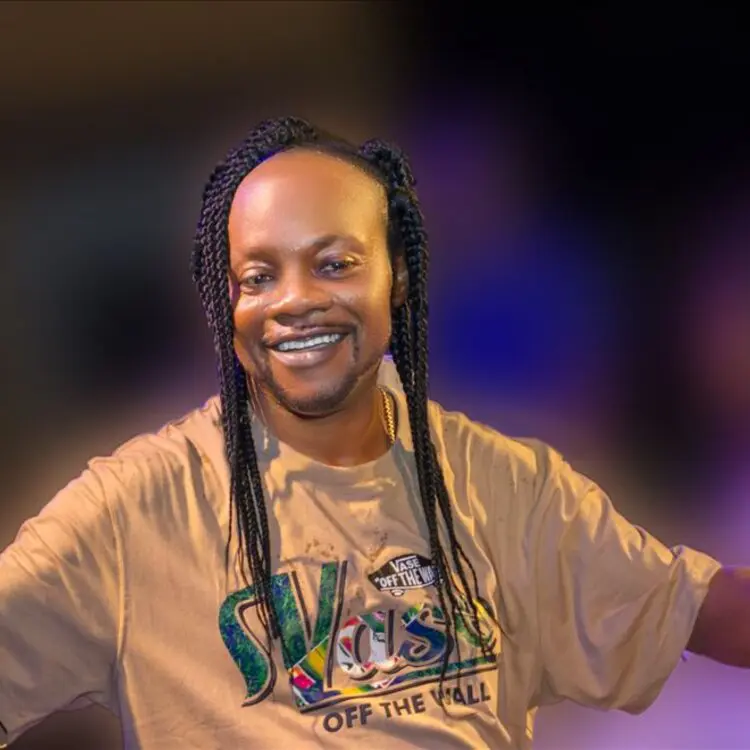
The news arrived in a torrent of grief, a cascade of sorrow that has washed over the heart of Ghana. Within a single, brutal week, the nation has been brought to its knees, reeling from a confluence of tragedies that defies comprehension. First, the silent, profound loss of our musical sage, Daddy Lumba, a man whose voice was the very soundtrack of our lives, whose lyrics wove the tapestry of our shared joy and heartbreak. His passing felt like a national eulogy, a final stanza in a song that had no end.
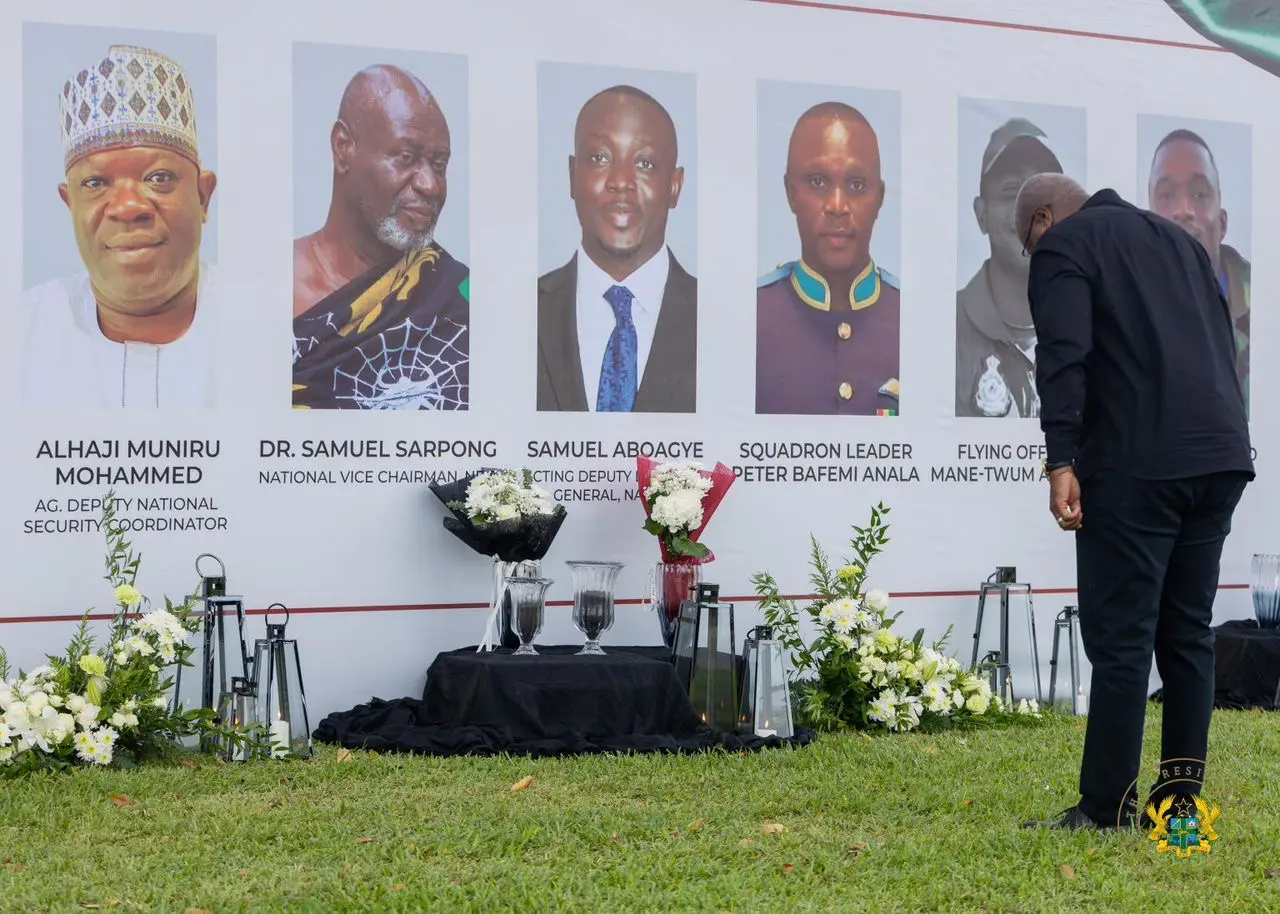
Then, the unthinkable: a plane crash, a fiery, final full stop to the lives of our Interior Minister, Minister of Defense, and six other dedicated servants of the republic. The list of the fallen is not just a roster of names; it is a catalog of hopes, of promises, of a future abruptly extinguished. These were leaders, husbands, fathers, and brothers . They were the architects of our security, the guardians of our peace, and their absence leaves a void that feels both immense and terrifying.
In this moment of profound collective sorrow, as the air hangs heavy with the weight of our tears, it is easy to feel a sense of despair. The question on every Ghanaian’s lips, whispered in homes and shouted in market squares, is “Why?” Why now? Why so much loss, so fast?
Yet, it is precisely in this moment of darkness that the spirit of Ghana must rise. We are a nation forged not in tranquility, but in the fire of struggle and the crucible of resilience. This is not the first time Ghana has faced a crisis that threatened to break its spirit. This is a country born from a history of enduring unimaginable pain and emerging stronger on the other side.
Our very name, Ghana, is a declaration of pride, a nod to the ancient empire that once ruled the land. And our national journey, from the Gold Coast to the beacon of African liberation, is a testament to our indomitable will. We remember the struggle for independence, a long, arduous fight led by patriots who believed in a future free from oppression. They faced setbacks, arrests, and the grim reality of colonial power, but they never lost faith. Their battlecry, “at long last, the battle has ended,” wasn’t just a statement of victory; it was an affirmation of a people who had refused to be broken.
That same spirit lives in us today. It is the same resilience that has seen us through political instability, economic hardship, and social upheaval. We are a nation that has consistently chosen dialogue over discord, unity over division. We have rebuilt our institutions, fostered a vibrant democracy, and become a model for others on the continent. The Ghana we know is one that mourns deeply, but never gives up.
This present sorrow is a different kind of challenge. It is an internal wound, a personal and public loss that cuts to the very core of our being. But just as our ancestors found strength in their collective struggle, we too must find solace in our shared mourning and purpose in our shared future.
And then, as if to underscore the fragile line between fate and fortune, another layer of the story emerged,one that offers a powerful and profound twist of divine intervention. We have now learned that our President was scheduled to be on that very helicopter. By a twist of fate, or as some might say, by the grace of God, he did not feel well that morning. Guided by the counsel of his pastor, he attended a church Program instead, a decision that saved his life.
This is not a mere detail; it is a powerful sign. In a week that has delivered nothing but sorrow, this revelation offers a glimmer of hope, a poignant reminder that even in our darkest hour, we are watched over. The survival of our President is not just a personal story of providence; it is a national one. His presence, his leadership, and his steady hand are a beacon for a nation in mourning. In this act of grace, we see a second chance, a renewal of purpose, and a powerful symbol of our collective resilience. It is a story to hold onto, a narrative that can transform our despair into an opportunity for spiritual reflection and renewed faith.
So, where do we go from here? How do we, as a nation, transform this overwhelming grief into a force for positive change? The roadmap to recovery is not a set of simple steps, but a deeply personal and national commitment.
First, we must honor the fallen by redoubling our commitment to service. The ministers who perished in the line of duty, and all who have dedicated their lives to the betterment of Ghana, deserve more than our tears. We must honor their memory by ensuring that the work they started does not stop. We must continue their missions, pursue their goals, and hold ourselves to the same high standards of service. This is not just a tribute; it is our national duty.
Second, we must embrace unity in this time of division. Tragedy, for all its pain, has a strange power to unite. It strips away the political rhetoric, the partisan divides, and the social differences that often separate us. In this moment, we are all simply Ghanaians, bound by a common heartache. We must hold on to this feeling of unity, carry it forward, and use it to build bridges where there were once walls. Let this tragedy be a catalyst for a new era of national solidarity.
Finally, we must look to our future with the same hope and determination that has always defined us. Our economic indicators are strong, our democratic institutions are robust, and our people are among the most creative and hardworking in the world. We are a nation on the rise. This tragedy is a setback, but it is not the end of our story. We must pick up the pieces, dust ourselves off, and continue to build the Ghana we all dream of: a land of prosperity, peace, and progress.
The road ahead is not easy. It will be a journey of sorrow and healing. But let us take comfort in the fact that we do not walk it alone. We walk it as one Ghana, a people who know that even in the darkest night, the Sankofa bird with its head turned back but its feet moving forward—reminds us to learn from the past, even as we build a brighter future.
Daddy Lumba’s songs will forever echo in our hearts, a testament to the joy he brought us. The ministers who gave their lives in service will be remembered as patriots who made the ultimate sacrifice. Their legacy is our responsibility. Let us rise, Ghana. Let us grieve, and then let us rebuild. For the sun will rise again on our beautiful land, and our hope, like our resolve, will be stronger than ever before.