


By Daniel Nii Okine , Accra
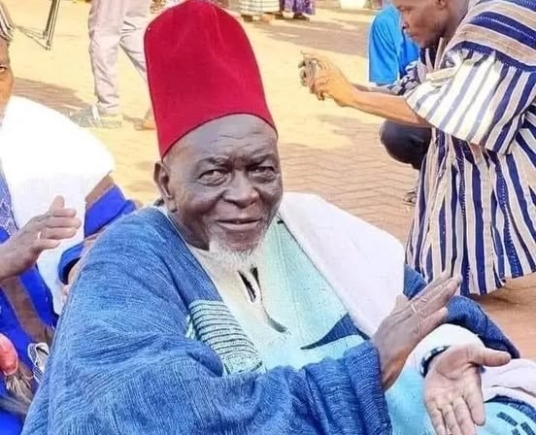
Ghana’s chieftaincy institution, ancient, revered, and constitutionally protected, continues to sit at the crossroads of culture, law, and community identity. Few cases illustrate this tension more vividly than the ongoing prosecution of Alhaji Seidu Abagre, the 79‑year‑old retired educationist whose removal from Bawku on December 24, 2025, followed the landmark mediation recommendations issued by the Asantehene, Otumfuo Osei Tutu II. That mediation effort, commissioned to help calm decades of conflict in the area, sought to restore order and reaffirm the legal boundaries of traditional authority. Today, those boundaries are being tested in the courtroom.
Prosecutors have levelled four charges against Alhaji Abagre, the most consequential being the allegation that he held himself out as a chief without lawful authority. Under Ghana’s Chieftaincy Act, particularly provisions that criminalize the assumption of a stool or skin without proper enstoolment or gazetting, such conduct is not merely a breach of custom; it is a statutory offence. The law is explicit: only persons duly nominated, elected, enstooled or enskinned, and formally recognized under the National House of Chiefs’ registry may exercise the powers and privileges of a chief. Any deviation, however symbolic or ceremonial, is treated as an encroachment on a constitutionally recognized institution.
The remaining charges deepen the gravity of the matter. He is accused of conduct likely to provoke a riot, an offence grounded in Section 200 of the Criminal Offences Act, 1960 (Act 29). Additional counts include offensive behavior deemed capable of disturbing public peace, as well as engaging in a confrontation involving weapons. Alhaji Abagre has pleaded not guilty to all allegations, maintaining his innocence as the legal process unfolds.
On Monday, after hearing arguments from both the defence and state attorneys, the High Court in Accra, presided over by Justice Halimah El‑Alawa Abdul‑Baasit, declined a request for bail. The ruling underscores the court’s concern for public order in a region where tensions have historically escalated with little warning. It also signals the judiciary’s commitment to upholding the rule of law in matters where tradition and legality intersect.
Yet beyond the courtroom lies a broader national conversation, one that touches not only Bawku but Ghana’s diaspora communities as well. The case invites reflection on the growing phenomenon of individuals who adopt or are accorded ceremonial titles as “chiefs” or “queens” without any grounding in Ghana’s legal or customary frameworks. While many such titles are harmless expressions of cultural pride or community leadership abroad, they raise complex questions when they begin to mimic or claim parity with constitutionally recognized stools and skins.
What distinguishes a cultural honorific from an unlawful assumption of authority? Where does tradition end and legal jurisdiction begin? And how should Ghana navigate the delicate balance between respecting diaspora cultural expression and protecting the integrity of its chieftaincy system?
These questions are not academic, they strike at the heart of identity, belonging, and the meaning of leadership in a globalized Ghanaian community. The law is clear about who may act as a chief within Ghana’s jurisdiction. But the lived reality, especially in diaspora settings where communities recreate fragments of home, is far more nuanced.
As the case of Alhaji Seidu Abagre proceeds, it will undoubtedly shape future interpretations of the Chieftaincy Act and influence how Ghana manages disputes involving traditional authority. It also offers an opportunity for national introspection: to reaffirm the sanctity of the chieftaincy institution while acknowledging the evolving ways Ghanaians express cultural identity across borders.
In the end, this is more than a legal battle. It is a reminder that tradition, when misapplied, can fracture communities, but when grounded in law, respect, and clarity, it remains one of Ghana’s most enduring pillars of unity.

If chieftaincy in the diaspora would only respect the by-laws of their respective associations, there should be no reason for discord. When chiefs assign authority not granted to them by their associations that’s what leads to disharmony. Executives of associations must stamp their authority.